Jason Arday's family 'still coming to terms' with his death as vigil held
Source Entity
BBC News
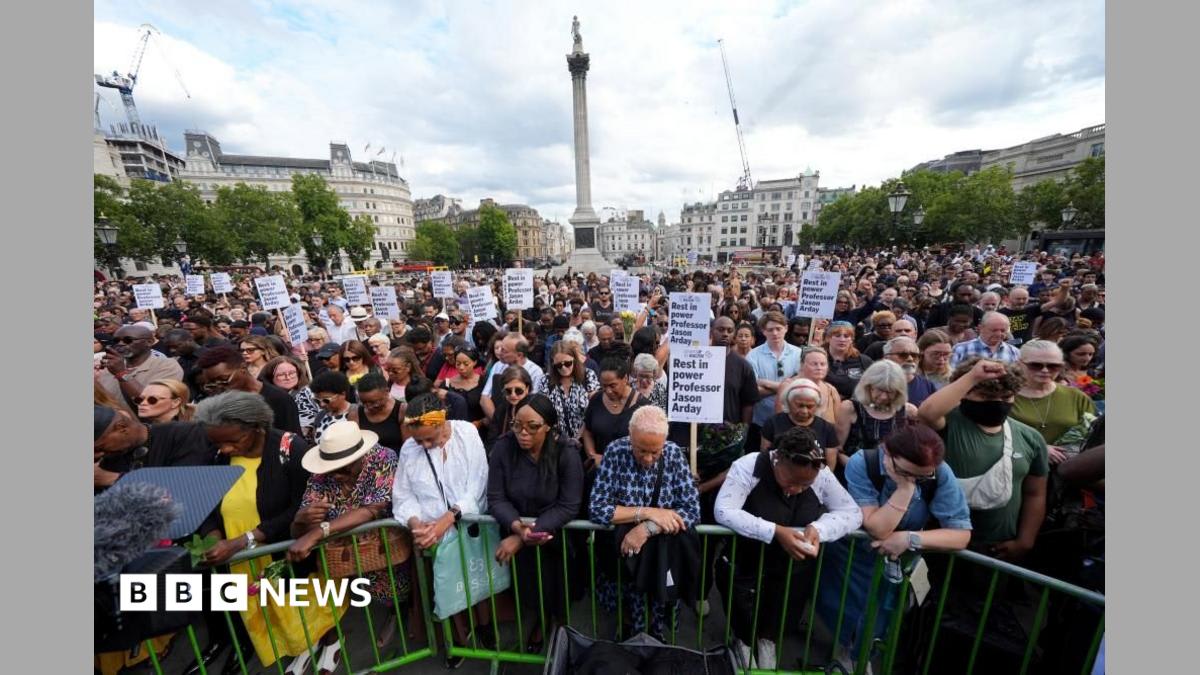
The family of Professor Jason Arday has attributed his recent death to the intense public scrutiny and misinformation he faced following plagiarism allegations. Vigils in London and Cambridge have honored his legacy as a pioneering Black academic.
The Tragic Loss of Professor Jason Arday
The academic community and the public are mourning the sudden passing of Jason Arday, the esteemed sociology professor who made history in 2023 by becoming the youngest Black professor at the University of Cambridge. His death, which occurred at an address in Battersea, has prompted an outpouring of grief and reflection, culminating in emotional vigils held in Trafalgar Square and Cambridge. These gatherings have served not only as a space for remembrance but as a forum to address the circumstances surrounding his final weeks.
The Impact of Public Scrutiny
In the period leading up to his death, Professor Arday had been the subject of intense media coverage regarding allegations of plagiarism and questions concerning his professional achievements. While Arday consistently denied these claims, the persistence of the scrutiny placed him at the center of a volatile public discourse. His family has explicitly stated that the "public cruelty" and the "campaign of misinformation" he endured were factors that proved too burdensome for him to bear, highlighting the devastating human cost of aggressive media cycles.
Institutional Context and Academic Pressure
Arday’s tenure at Cambridge was marked by his groundbreaking contributions to the sociology of education. As a prominent Black academic in a historically elite institution, his presence was significant in ongoing conversations regarding diversity and representation in academia. The allegations against him—and the subsequent resignation—have now cast a shadow over his legacy, leading to broader questions about the institutional support provided to high-profile academics facing public pressure. The "lens on Cambridge" mentioned in recent reports underscores the scrutiny now facing the university regarding how it manages such crises.
Community Response and Solidarity
The vigils organized by groups like Stand Up to Racism and attended by hundreds of supporters reflect a deep sense of injustice felt by those who knew his work. Labour MP Bell Ribeiro-Addy, acting as a spokesperson for the family, articulated the pain caused by the public treatment of the professor. By framing his death within the context of systemic cruelty, these tributes seek to reclaim his narrative from the allegations that dominated his final days, emphasizing instead his role as a mentor and a transformative figure in the lives of his students.
Future Implications for Academic Discourse
This tragic event serves as a somber reminder of the intersections between media accountability and personal well-being. As the academic community moves forward, the case of Jason Arday will likely prompt further debate on how institutions handle allegations against their faculty and the ethics of media reporting on individuals in high-pressure roles. The focus remains on ensuring that the pursuit of truth does not devolve into the dehumanization of those at the center of public inquiry, a sentiment echoed by the students and colleagues who gathered to "hold their pain" together in his memory.