Jensen Huang Says Nvidia Can Grow 70% Next Year. Here’s Why He May Be Right.
Source Entity
Yahoo Finance
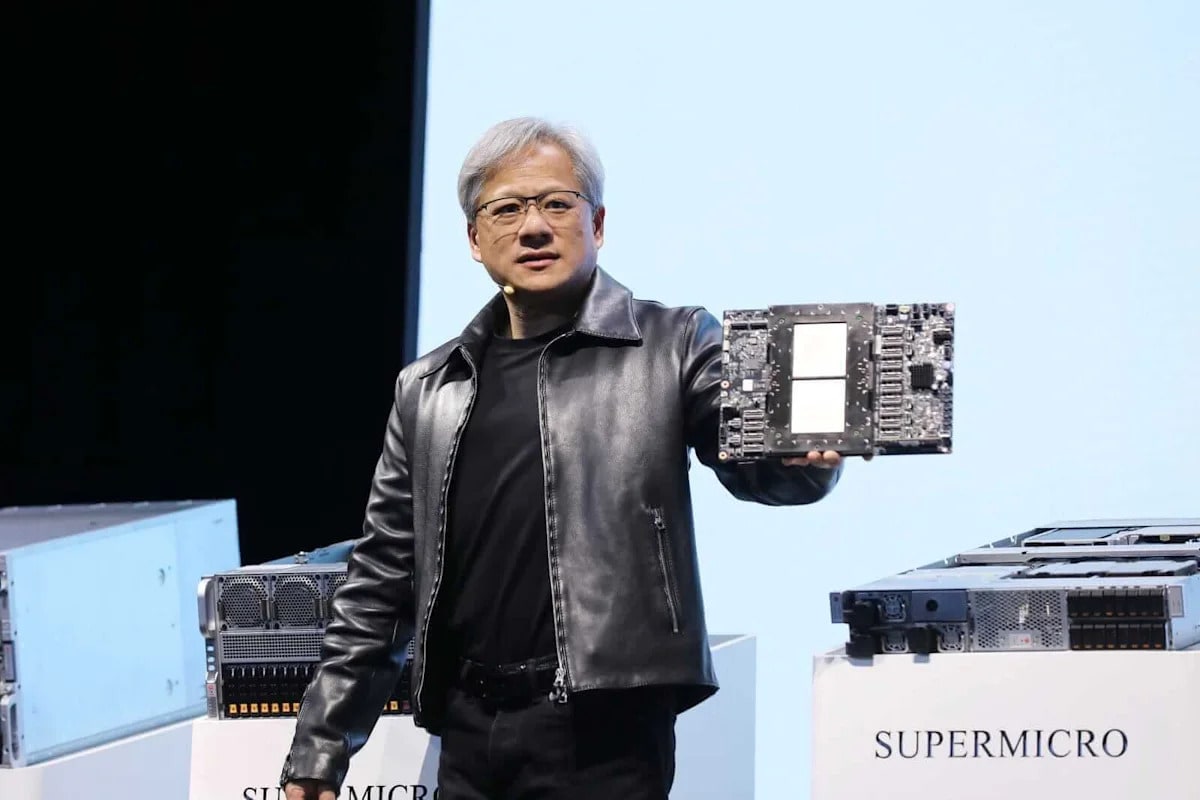
Nvidia CEO Jensen Huang forecasts a potential 70% revenue growth for the company, driven by sustained global demand for AI infrastructure. This ambitious projection rests on Nvidia's central role in the ongoing artificial intelligence buildout.
The Ambitions of Nvidia: A Growth Forecast for the AI Era
Nvidia (NVDA) CEO Jensen Huang has recently articulated a bold vision for the company's future, projecting a potential 70% revenue growth in the coming year. This forecast, which would see annual sales climb from approximately $400 billion to $680 billion, serves as a significant marker of the company's confidence in the enduring momentum of the artificial intelligence sector. By positioning Nvidia at the core of the global AI buildout, Huang is signaling that the current technological shift is not merely a transient trend but a foundational restructuring of computational infrastructure.
The Mechanics of Hyper-Growth
Achieving such a staggering increase in revenue requires more than just product availability; it necessitates a continued, heavy capital expenditure by the world’s largest hyperscalers and data center operators. Huang argues that the demand for Nvidia’s specialized computing systems remains far from saturation. This sentiment reflects the reality that modern AI models—ranging from large language models to complex predictive analytics—require a constant upgrade cycle of high-performance hardware, ensuring that Nvidia remains the primary beneficiary of this massive transition.
Market Sentiment and Investor Skepticism
While the 70% growth target appears ambitious to some market observers, it is supported by Nvidia’s recent performance, including a 14% gain in share price year-to-date. Investors are currently weighing the sustainability of this growth against the broader economic landscape. The critical inquiry for the market is whether the capital investment into AI infrastructure by major tech firms can maintain the velocity required to support such a massive revenue jump, or if the market will eventually hit a plateau in chip deployment.
The Role of Infrastructure in AI Supremacy
Nvidia’s dominance is anchored in its ability to provide the "picks and shovels" of the AI revolution. As organizations globally race to integrate machine learning into their operational workflows, the dependency on Nvidia’s GPUs and computing architecture becomes more entrenched. This creates a feedback loop where the more advanced the AI models become, the more specialized and high-capacity the hardware demand grows, effectively insulating Nvidia from commoditized chip competition.
Future Trends and Strategic Outlook
Looking ahead, the trajectory of Nvidia will likely be dictated by its ability to execute its product roadmap while managing supply chain complexities. If Huang’s forecast holds true, it would represent one of the most significant scaling efforts in the history of the semiconductor industry. Should the demand for AI infrastructure remain inelastic, Nvidia is positioned to redefine its financial baseline, setting a new standard for what a hardware company can achieve in the software-driven age of artificial intelligence.
Conclusion
Jensen Huang’s projection is a testament to the transformative power of AI in the current economic climate. While the path to a 70% growth rate is fraught with execution risks and market volatility, the underlying demand signals suggest that Nvidia is well-positioned to capitalize on the ongoing digital industrialization. Investors will be watching closely to see if the company can convert these high expectations into tangible, record-breaking financial results.