Trump’s accounts traded up to $97.5 million in Nvidia as Huang gained White House access
Source Entity
US Top News and Analysis
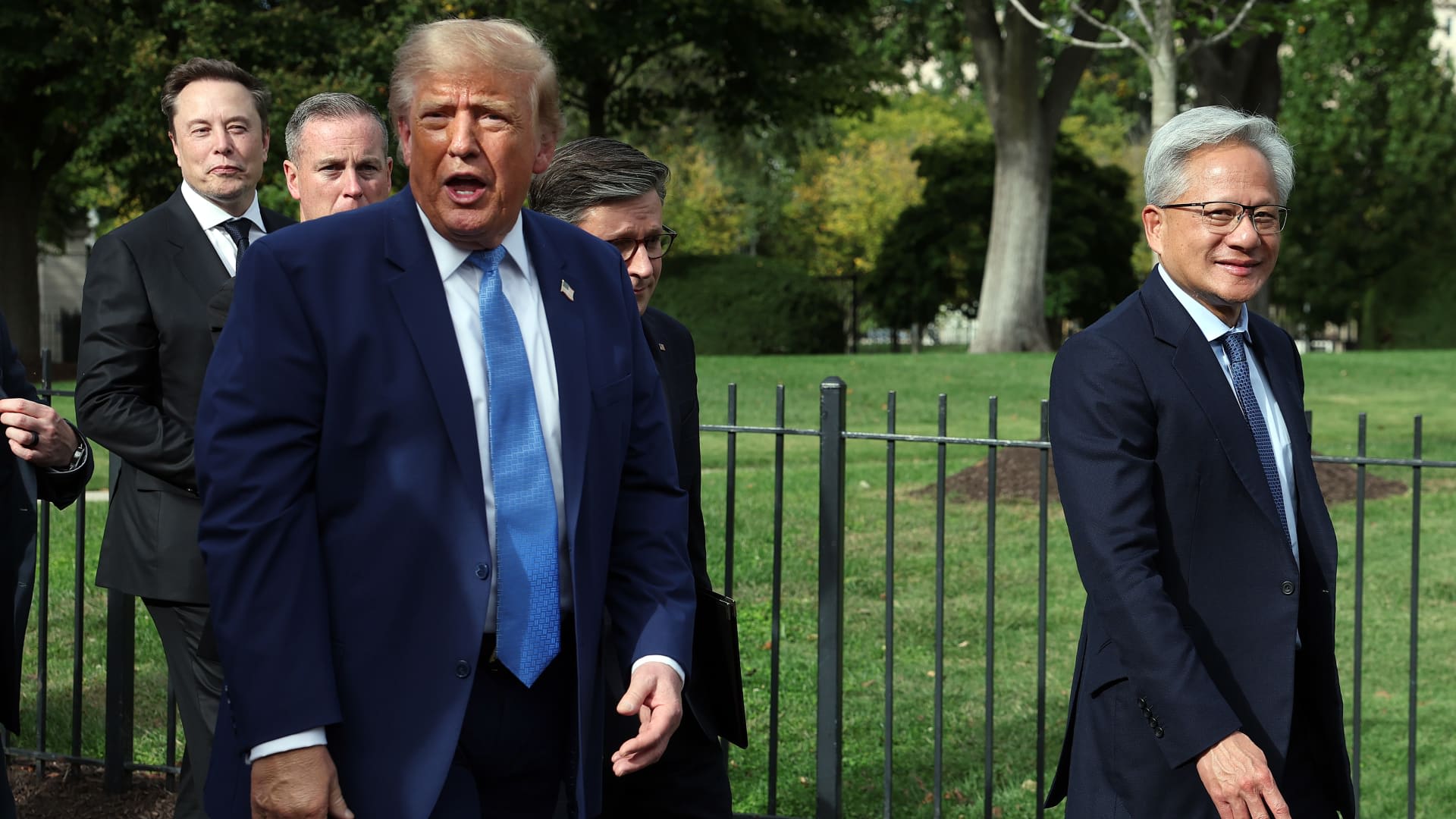
Former Nvidia CEO Jensen Huang has expressed regret over personal scandals involving alleged intelligence links, while President Trump has signaled openness to his potential reinstatement. Huang is reportedly actively campaigning for a return to lead the semiconductor giant.
The Unprecedented Potential Return of Jensen Huang
A Leadership Crisis Unfolds
The technology sector has been gripped by the sudden resignation of Nvidia CEO Jensen Huang, a move prompted by revelations regarding his personal conduct. Reports have surfaced detailing extramarital affairs, most notably with a businesswoman suspected by U.S. intelligence of having ties to Chinese intelligence services, alongside a separate internal relationship with an Nvidia executive. These disclosures have created significant corporate governance challenges, forcing the company to navigate a delicate balance between leadership continuity and the preservation of its reputation.
Huang’s Path to Reinstatement
In his first public statement since his departure, Jensen Huang acknowledged committing "serious mistakes" that burdened the Nvidia board of directors. Despite the gravity of the situation, Huang has made it clear that he remains open to returning to the CEO role, provided the board determines such a move aligns with the interests of shareholders, employees, and the broader national interest. This pivot marks the beginning of what appears to be a coordinated effort to secure his comeback, with reports indicating that Huang has mobilized a "war room" of Silicon Valley allies to advocate for his return.
The Political Dimension
The potential reinstatement of Huang has ascended to the highest levels of American politics. U.S. President Donald Trump has publicly weighed in on the matter, expressing that he "would not mind" seeing Huang back at the helm of the semiconductor firm. Trump’s endorsement, predicated on his belief that Huang has "learned a big lesson," introduces a complex layer of geopolitical scrutiny, particularly given the ongoing investigations into alleged foreign intelligence interference.
Geopolitical and Security Implications
Central to the controversy is the nature of Huang’s personal associations. While questions persist regarding the validity of claims that the businesswoman involved in the affair is a Chinese intelligence asset, the mere association has triggered alarm bells within the U.S. national security apparatus. Nvidia, as a critical provider of high-performance computing and AI infrastructure, occupies a central position in the U.S.-China technology competition. Any leadership change at the company is therefore not merely a corporate matter but a geopolitical one.
Future Trends in Corporate Governance
The situation serves as a stark case study in the intersection of personal morality and corporate liability. As the board of directors weighs the "best interests" of the company, they must reconcile the immense value of Huang’s leadership—which he describes as the "privilege of his life"—against the risks of maintaining a leader with compromised security clearance or public perception. The outcome of this "war room" campaign will likely set a precedent for how major technology firms handle executive misconduct in an era of heightened geopolitical tension.
Multiple Citing Sources