JetKVM Mini
Source Entity
Hacker News
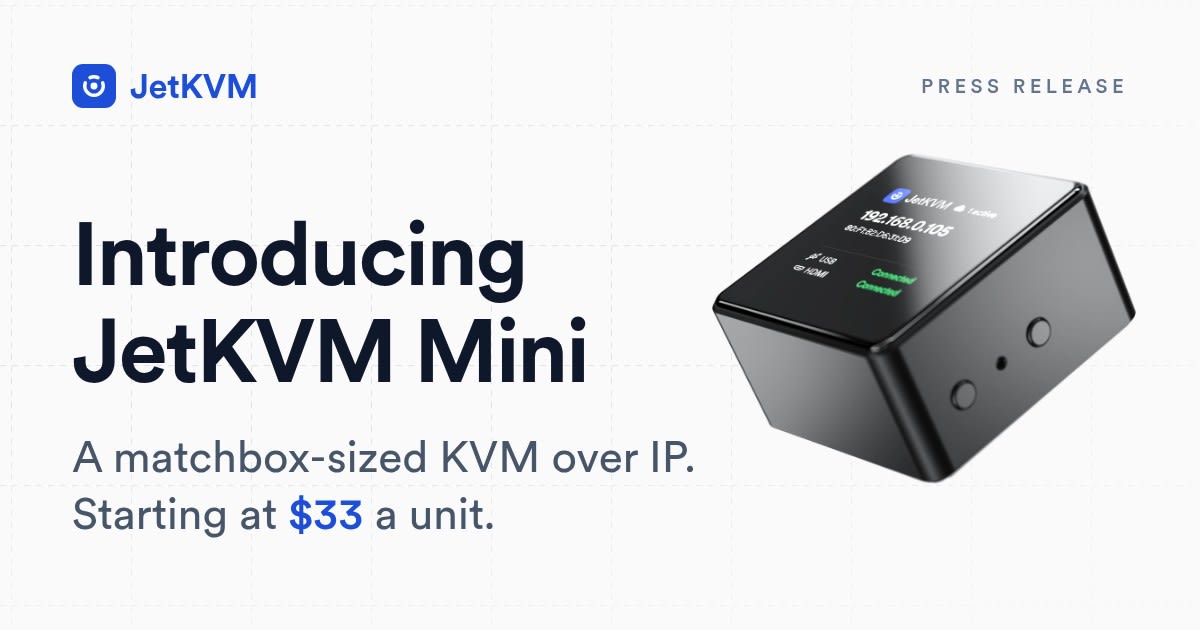
The JetKVM Mini is a compact hardware device designed to provide remote keyboard, video, and mouse control. It serves as a specialized tool for IT professionals and remote system administrators requiring low-latency access to target machines.
Understanding the JetKVM Mini: Remote Access Technology
The Role of KVM Hardware in Modern IT
Keyboard, Video, and Mouse (KVM) technology has long been a cornerstone of data center management and remote server administration. The emergence of devices like the JetKVM Mini represents a shift toward miniaturized, specialized hardware solutions that prioritize portability and ease of deployment. By allowing administrators to control a host machine from a remote location as if they were physically present, such devices eliminate the need for dedicated crash carts or physical proximity to hardware.
Technical Utility and Operational Efficiency
At its core, the JetKVM Mini is designed to streamline the troubleshooting process. In scenarios where a server or workstation becomes unresponsive, software-based remote desktop solutions often fail because they rely on the host operating system being functional. Hardware-based KVM solutions operate independently of the host OS, providing a vital bridge to BIOS-level access, system reboots, and OS re-installation tasks that are otherwise impossible to perform remotely.
Form Factor and Deployment Context
The 'Mini' designation in the JetKVM product line highlights a growing industry trend toward space-efficient infrastructure tools. Modern IT environments, ranging from edge computing deployments to localized server closets, often lack the physical space for traditional rack-mount KVM switches. The compact nature of the JetKVM Mini allows technicians to carry a high-performance remote access tool in a laptop bag, facilitating rapid response times for field support and hardware maintenance.
Security and Connectivity Implications
When deploying hardware-based remote access tools, security remains a paramount concern. Unlike software agents, physical KVM devices sit directly on the video and input lines of the target machine. Consequently, the JetKVM Mini must be evaluated based on its encryption standards, authentication protocols, and the integrity of the network path it utilizes. Proper integration of such devices requires a robust understanding of network segmentation to ensure that remote access hardware does not become an entry point for unauthorized lateral movement within a corporate network.
Future Trends in Remote Management
As the industry continues to move toward decentralized infrastructure, the demand for hardware that bridges the physical-digital divide will likely increase. We are seeing a shift where remote management is no longer a luxury but a necessity for maintaining high availability. The JetKVM Mini fits into a broader ecosystem of 'out-of-band' management tools that prioritize reliability and low-latency performance. Moving forward, the integration of automation and cloud-based management interfaces into these compact devices will likely be the next stage in their evolution, further simplifying the life of the modern system administrator.