‘J’khand’s identity should be defined by ‘human capital’, not just population numbers’
Source Entity
Latest News: Today's Latest News Headlines from India & World | Hindustan Times | Hindustan Times
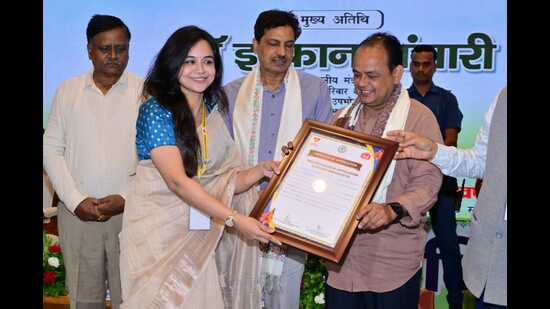
Jharkhand's health minister emphasizes viewing population as an asset, advocating for health, education, and skills to boost development on World Population Day.
Redefining Demographics: Jharkhand's Pivot Toward Human Capital
On the occasion of World Population Day, the Health Minister of Jharkhand delivered a poignant critique of traditional demographic metrics, arguing that the state's identity and future success should not be measured by raw population numbers, but by the quality of its 'human capital.' This statement represents a significant conceptual shift in governance, moving away from the perception of a large population as a socio-economic burden and toward a vision where a populous state is viewed as a strategic asset. By emphasizing the transformation of people into productive assets, the minister is aligning Jharkhand's developmental goals with modern economic theories of human-centric growth.
The Economics of Human Capital
At the core of the minister's argument is the principle of human capital—the collective skills, knowledge, and health that people possess, which can be utilized to create economic value. For a state like Jharkhand, which is historically rich in mineral resources but has struggled with systemic poverty and underemployment, this shift is critical. While the state possesses vast natural wealth, the minister suggests that the true engine of sustainable development is the intellectual and physical wellbeing of its citizens. By focusing on the 'quality' of the population rather than the 'quantity,' the administration aims to break the cycle of dependency and foster an environment of self-reliance and innovation.
Health and Education as Foundational Pillars
To realize this vision, the minister explicitly highlighted health and education as the primary levers of change. In the context of Jharkhand, improving healthcare is not merely about treating illness but about ensuring a healthy, productive workforce that can contribute consistently to the economy. Similarly, education serves as the gateway to skill acquisition. When the state invests in primary and secondary education, it reduces the vulnerability of its population to low-wage, unskilled labor. The integration of health and education ensures that the youth of Jharkhand are not just present in number, but are physically and mentally equipped to compete in a globalized economy.
Bridging the Skill Gap for Industrial Growth
Beyond basic education, the emphasis on 'skills' points toward a strategic alignment with Jharkhand's industrial landscape. As a hub for mining and metallurgy, the state requires a workforce capable of handling modern technology and sustainable industrial practices. By advocating for skill development, the government seeks to bridge the gap between the available labor force and the requirements of high-growth industries. This approach aims to mitigate the paradox of having high unemployment rates alongside a high demand for skilled technical labor, effectively turning the state's demographic dividend into a tangible economic advantage.
Long-term Implications and Future Trends
If this policy shift is successfully implemented, Jharkhand could transition from a resource-extraction economy to a knowledge- and skill-based economy. The long-term implication is a reduction in migration for low-skilled work and an increase in local entrepreneurship. Future trends suggest that states which prioritize human capital over mere population control will see higher GDP growth and better social indicators. However, the success of this initiative will depend on the state's ability to scale its healthcare infrastructure and modernize its vocational training centers to meet the evolving needs of the 21st-century job market.
Conclusion
Jharkhand's call to define its identity through human capital marks a sophisticated evolution in its approach to public policy. By prioritizing health, education, and skills, the state is attempting to rewrite its narrative from one of demographic pressure to one of demographic opportunity. This holistic approach recognizes that while population numbers are static facts, human capital is a dynamic investment that, if nurtured, can drive the state toward unprecedented prosperity and social equity.
Verification Required?