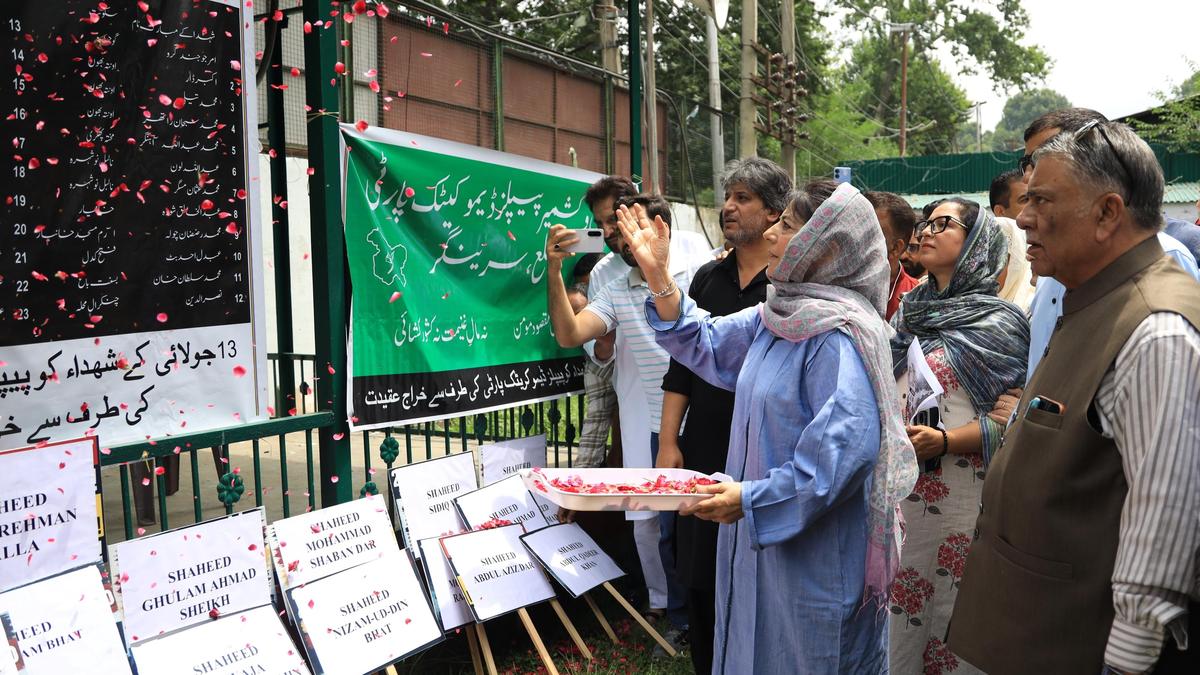
Amid ‘restrictions’, J&K parties pay tributes to 1931 ‘martyrs’
Source Entity
India Latest News: Top National Headlines Today & Breaking News | The Hindu
Died fighting Britishers, nothing religious about 1931 uprising, says Omar Abdullah
Commemorating the 1931 Uprising: Political Identity and Resistance in Jammu and Kashmir
The annual commemoration of the 1931 uprising in Jammu and Kashmir remains a potent symbol of political identity and historical resistance. Recent reports indicate that various political parties in the region have paid tributes to those who died during this pivotal event, despite facing significant administrative 'restrictions.' This act of remembrance is not merely a look back at history but a contemporary political statement regarding the region's struggle for autonomy and representation.
The Historical Significance of 1931
To understand the weight of these tributes, one must look back at the events of 1931. This period marked a watershed moment in the socio-political history of Jammu and Kashmir, characterized by an uprising against the autocratic rule of the Dogra dynasty and the overarching influence of the British Raj. The events of 1931 are widely regarded as the birth of organized political consciousness in the region, shifting the discourse from isolated grievances to a structured demand for civil liberties and political rights. By honoring these 'martyrs,' current political leaders are attempting to draw a direct line from the anti-colonial struggles of the past to the current political aspirations of the people.
Deconstructing the Narrative: Secularism vs. Religion
A critical element of the current commemoration is the insistence by leaders like Omar Abdullah that the 1931 uprising had "nothing religious" about it. This is a strategic and historical clarification. In many historical interpretations, the events of 1931 have been framed through a communal or religious lens. By explicitly stating that the martyrs died fighting the Britishers and the oppressive structures of the time, Abdullah is reframing the event as a secular, anti-imperialist struggle. This narrative serves to broaden the appeal of the movement, positioning it as a fight for human rights and justice that transcends religious boundaries, thereby challenging any attempts to marginalize the movement as purely sectarian.
The Implications of 'Restrictions'
The mention of 'restrictions' surrounding these tributes highlights the ongoing tension between the local political leadership and the central administration. When the state imposes limits on the gathering of political parties to commemorate historical events, it often signals a desire to control the public narrative and limit the mobilization of political sentiment. The fact that parties persisted in paying tribute despite these hurdles underscores the symbolic importance of the 1931 date. It transforms a simple act of remembrance into an act of defiance, suggesting that the spirit of the original uprising remains relevant in the face of current governance models.
Broader Political Context and Future Trends
In the post-Article 370 era, the battle over historical narratives in Jammu and Kashmir has intensified. The 1931 uprising serves as a touchstone for those seeking to emphasize a legacy of indigenous political struggle. Moving forward, it is likely that such commemorations will continue to be flashpoints for political expression. As local parties seek to rebuild their influence and navigate a complex security landscape, the use of historical milestones will be essential in mobilizing their base and articulating their vision of democratic restoration.
Conclusion
The tributes paid to the 1931 martyrs are far more than a ritualistic observation. They represent a complex intersection of historical memory, secular political framing, and current resistance against administrative constraints. By anchoring their current political struggle in the anti-colonial fight against the British, leaders like Omar Abdullah are attempting to legitimize their current demands through the lens of a long-standing tradition of seeking justice and liberty.
Verification Required?