‘No change’: Masked Karnataka transport minister ordered off Bengaluru bus by conductor
Source Entity
The Indian Express
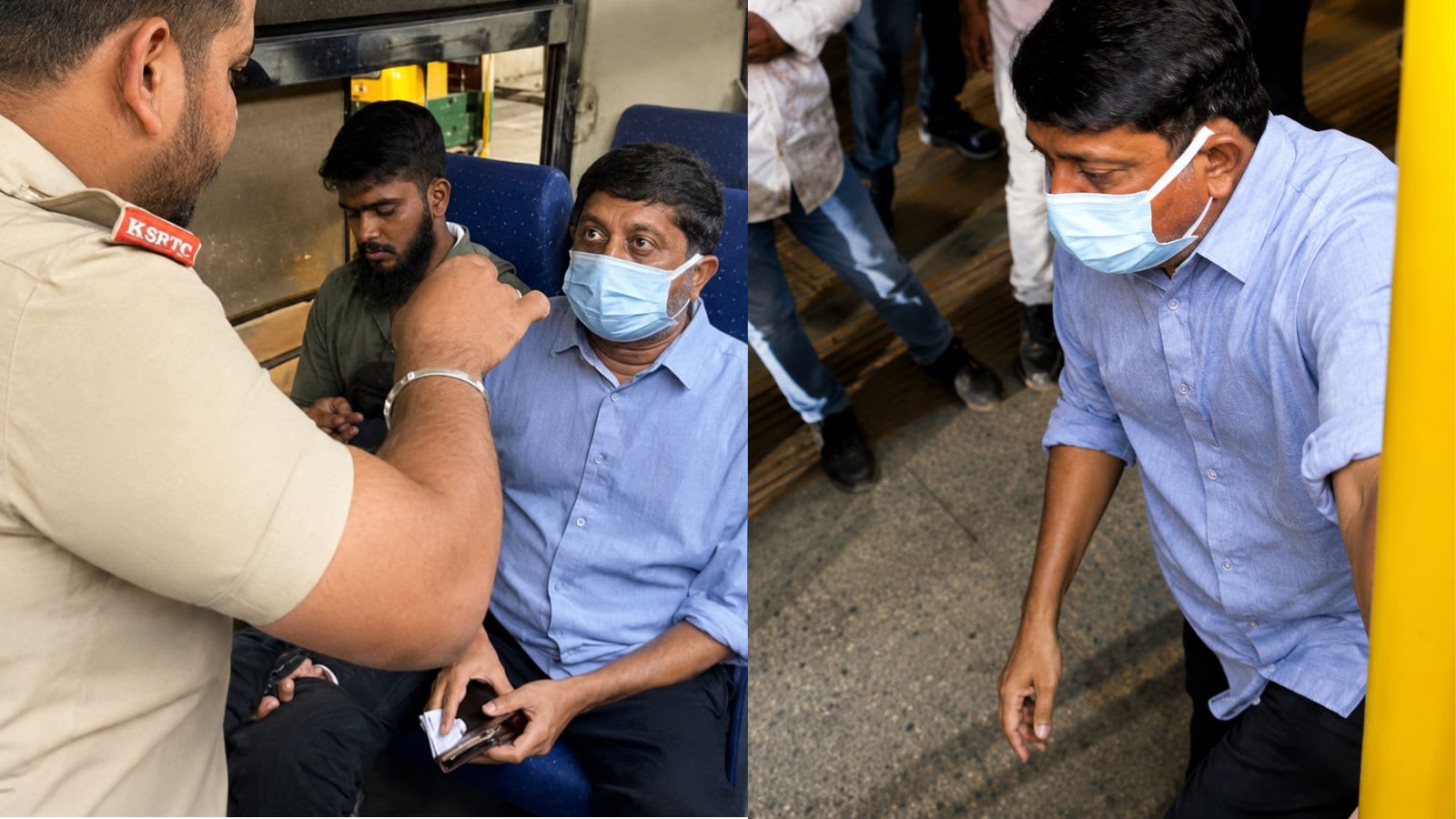
Karnataka Transport Minister Byrathi Suresh went undercover on a BMTC bus in Bengaluru and was forced off the vehicle after failing to provide exact change (Images from screengrabs; enhanced using AI)...
The Irony of Governance: Minister's Undercover Trip Ends in Eviction
In a striking instance of political irony, Karnataka Transport Minister Byrathi Suresh found himself on the receiving end of the very system he oversees. While attempting an undercover inspection of the Bangalore Metropolitan Transport Corporation (BMTC) services, the Minister was ordered off a bus by a conductor. The cause of the confrontation was a common grievance for thousands of daily commuters in Bengaluru: the lack of exact change for the bus fare. This incident serves as a vivid illustration of the friction between administrative oversight and the ground-level reality of public utility management.
The Undercover Operation and the 'Change' Conflict
Minister Byrathi Suresh chose to mask his identity to gain an authentic perspective on the commuter experience, avoiding the typical VIP treatment and curated tours usually provided to high-ranking officials. However, the operation hit a snag when the conductor demanded the precise fare. When the Minister could not produce the exact change, the conductor—adhering strictly to the operational protocols of the BMTC—insisted that he leave the vehicle. The event highlights a systemic issue within the city's bus network where the struggle for small currency often leads to heated arguments between staff and passengers.
Analyzing the BMTC Operational Landscape
The Bangalore Metropolitan Transport Corporation is the lifeline for millions in India's tech hub. For years, the 'change' problem has been a recurring theme in passenger complaints. Conductors often struggle to maintain a float of small coins and notes, leading to situations where passengers are either overcharged or, as seen in this case, asked to leave. By experiencing this firsthand, the Minister was inadvertently exposed to the operational stressors that BMTC employees face daily, as well as the frustration of the riding public.
Political Optics vs. Administrative Audit
From a political perspective, such 'undercover' missions are often viewed as a double-edged sword. On one hand, they signal a leader's willingness to engage with the common citizen and identify failures without the filter of bureaucracy. On the other hand, critics often dismiss these actions as publicity stunts. However, the fact that the Minister was actually forced off the bus adds a layer of authenticity to the experience, proving that the conductor's adherence to rules—or perhaps their rigidity—is consistent regardless of the passenger's true identity.
Broader Implications for Public Transport Reform
This incident underscores the urgent need for the modernization of fare collection in Bengaluru. The transition toward digital payments, such as UPI-integrated ticketing, smart cards, and mobile apps, is no longer just a convenience but a necessity to eliminate the 'no change' conflict. If the head of the transport department can be evicted over a few rupees, it demonstrates that the current cash-based system is prone to failure and inefficiency, regardless of who is boarding the bus.
Conclusion and Future Outlook
Ultimately, the encounter between Byrathi Suresh and the BMTC conductor is a microcosm of the challenges facing urban governance in India. While the event may seem anecdotal or humorous, it points toward a deeper need for systemic digital transformation within the transport sector. Moving forward, this experience is likely to accelerate the push for cashless ticketing to ensure that neither a common citizen nor a government minister is denied transport due to the absence of exact change.