Kavach: What makes Indian Railways indigenous world-class tech special
Source Entity
SMRITI JAIN
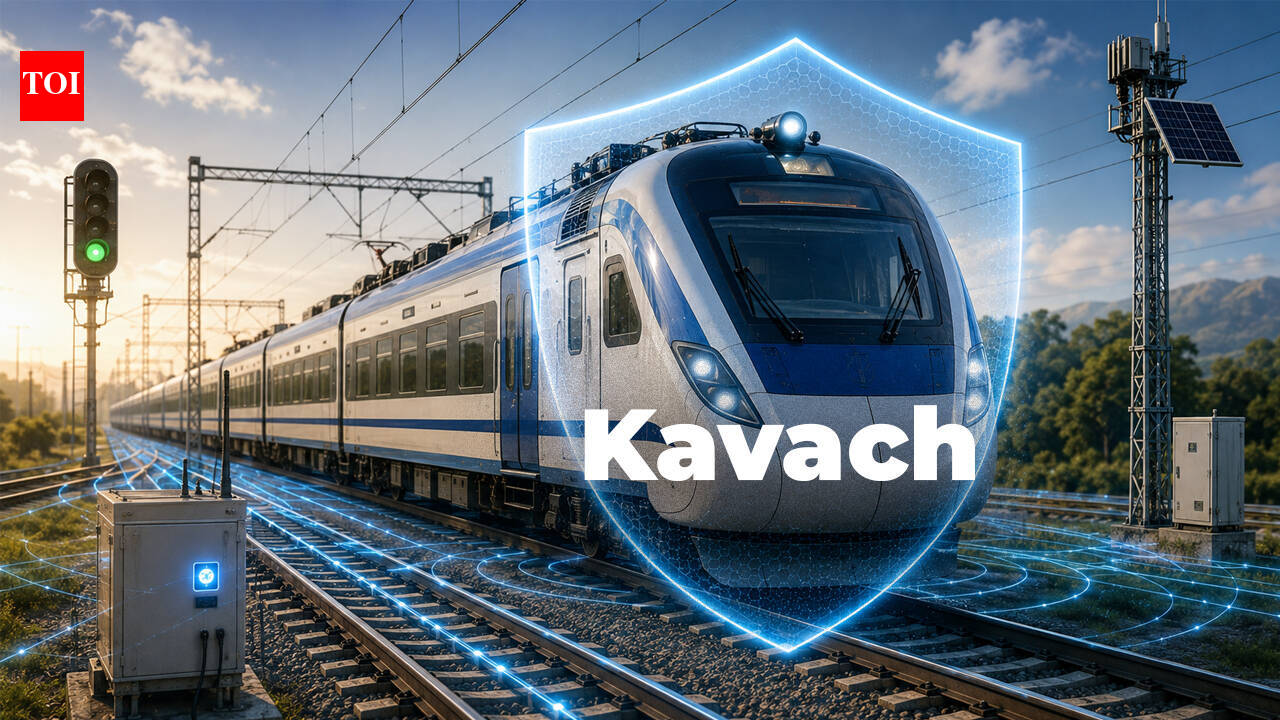
Indian Railways is scaling its indigenous Automatic Train Protection system, Kavach, to enhance safety across high-density routes. The upcoming Kavach 5.0 version aims to optimize suburban rail efficiency through advanced signal automation.
The Evolution of Rail Safety: Understanding India's Kavach System
Indian Railways is currently undergoing a significant technological transformation by prioritizing the deployment of Kavach, an indigenous Automatic Train Protection (ATP) system. Designed to act as a digital shield for train operations, this technology represents a critical shift toward self-reliance in critical infrastructure. By focusing on high-density and highly utilized network routes—which account for nearly 96% of the total railway traffic—the organization is strategically addressing the areas where safety interventions can have the most profound impact.
Mechanics of the Indigenous Shield
At its core, Kavach functions as a sophisticated safety layer that prevents accidents by automatically applying brakes if a train operator fails to respond to signals or speed restrictions. As an indigenously designed system, it reduces reliance on expensive foreign technologies while ensuring that the safety architecture is tailored specifically to the unique operational requirements of the Indian rail network. This system continuously monitors speed and signal status, creating a fail-safe environment that significantly minimizes the risk of human error.
Scaling for the Future: Kavach 5.0
The project is not static; it is rapidly evolving to meet the demands of modern transit. The development of Kavach 5.0 signifies a leap forward, specifically targeting suburban rail operations. Given that suburban networks often operate with high train frequencies and require precise timing, this next-generation iteration is designed to support more complex scheduling. By integrating higher frequency support, Kavach 5.0 aims to improve the efficiency of urban mobility without compromising the stringent safety standards established by its predecessors.
Global Benchmarks and Economic Viability
One of the most compelling aspects of the Kavach initiative is its cost advantage compared to global ATP systems. By developing the technology locally, Indian Railways has created a scalable solution that is more economically feasible than importing international alternatives. This cost-effectiveness allows for a faster rollout across the vast Indian network, ensuring that safety technology is not just a premium addition but a standard feature across the country's most vital transport arteries.
Navigating Deployment Challenges
The transition to a fully protected rail network is not without its hurdles. Scaling an ATP system across thousands of kilometers of track involves complex logistical challenges, ranging from the installation of trackside equipment to the retrofitting of existing locomotive fleets. However, the commitment to Kavach suggests that the long-term benefits—namely the drastic reduction in collision risks and the enhancement of operational reliability—far outweigh the initial implementation difficulties.
Conclusion: A Safer Railway Future
As Indian Railways continues to modernize, the integration of Kavach stands as a cornerstone of its technological roadmap. By focusing on high-density corridors and continuously iterating through versions like Kavach 5.0, the system is poised to become a global benchmark for rail safety. This indigenous approach not only fosters local innovation but also provides a sustainable framework for the future of mass transit in India, ensuring that the rail network can handle increasing traffic with a robust, automated safety net.