Kerala HC asks Centre if better health care in State is a “handicap” for establishing AIIMS
Source Entity
India Latest News: Top National Headlines Today & Breaking News | The Hindu
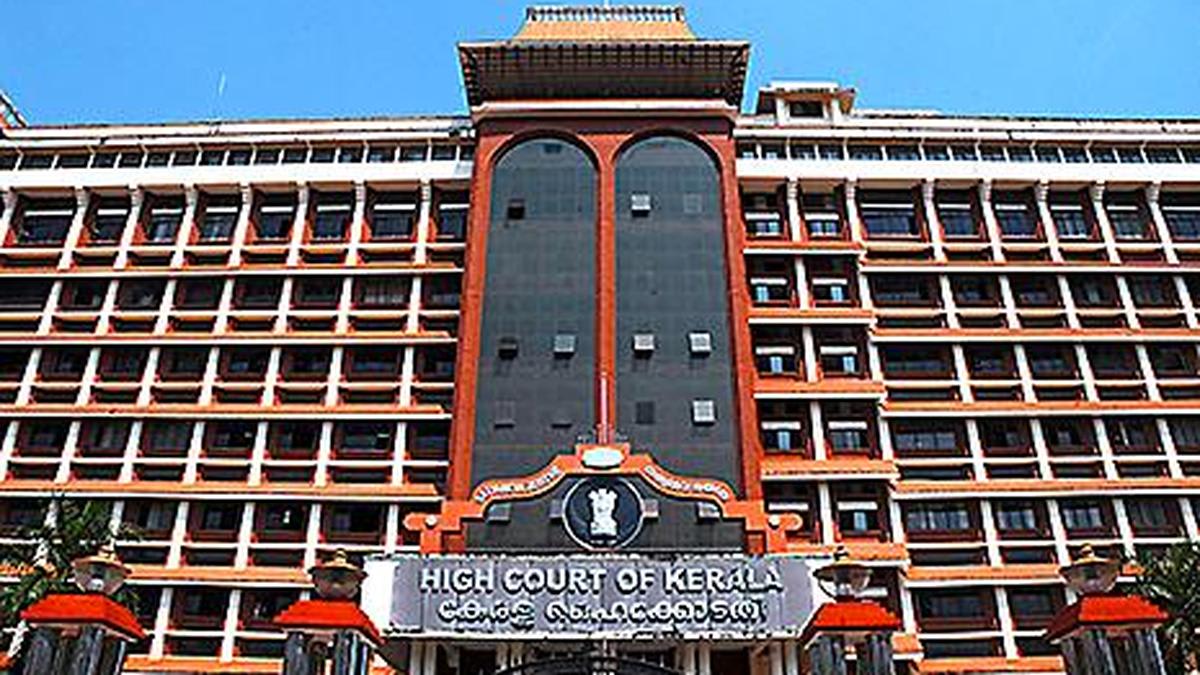
The Centre's recent submission to the Kerala High Court denying priority for an AIIMS in the state has sparked a political backlash. Opposition parties and the state government are questioning the logic of penalizing Kerala for its superior healthcare indicators.
The AIIMS Controversy in Kerala: A Political and Legal Impasse
The Core Conflict
A significant political firestorm has erupted in Kerala following the Union government’s recent submission to the Kerala High Court. The Centre explicitly stated that Kerala is not currently a priority for the establishment of an All India Institute of Medical Sciences (AIIMS). This stance has drawn sharp criticism from the Congress, CPI(M), and CPI, who argue that the Union government’s position contradicts previous assurances made by Thrissur MP and Union Minister Suresh Gopi regarding the project's viability.
The Centre's Rationale vs. Judicial Inquiry
The Union government justifies its position by asserting that the Pradhan Mantri Swasthya Suraksha Yojana (PMSSY) prioritizes states with weaker healthcare infrastructure. According to the Centre, Kerala’s comparatively advanced healthcare system places it lower on the priority list. Furthermore, the Centre clarified that no in-principle approval has been granted for an AIIMS in the state, and the project has never been formally included in any Union Budget announcement, placing the proposal in a state of indefinite inter-ministerial consultation.
Judicial Intervention and Public Sentiment
The Kerala High Court has adopted a critical stance toward the Centre’s logic, pointedly asking whether the state’s success in achieving superior healthcare outcomes should effectively act as a "handicap" in federal resource allocation. The Division Bench, led by Chief Justice Soumen Sen and Justice V.M. Syam Kumar, noted that the proposal has been pending for nearly a decade. The court has urged the Union government to reconsider its decision, citing the state’s high population density as a key factor that necessitates enhanced medical infrastructure.
Political Backlash and Historical Precedent
State leaders, including Health Minister K. Muraleedharan, have criticized the Centre’s "adamant" stance, suggesting that the Union government has historically shifted its justifications for denying the project. Previous arguments regarding the unsuitability of identified land in Kozhikode are now being contrasted with the current assertion that Kerala is "too developed" for the scheme. This has led to accusations from the Congress and the Left parties that the denial is based on political or regional considerations rather than objective health metrics.
Future Implications and Policy Trends
The resolution of this matter remains tied to the future of the PMSSY scheme, specifically its continuation from FY 2026-27 to FY 2030-31. Until the government approves this extension, the legal and political debate is expected to remain in a stalemate. The situation highlights a growing tension between federal prioritization policies and the expectations of states that have invested heavily in their own human development indicators, only to potentially be excluded from central infrastructure initiatives as a result.
Conclusive Summary
Ultimately, the dispute over AIIMS in Kerala serves as a microcosm of the friction between center-state administrative priorities. While the Centre maintains that its resources must target the most vulnerable regions, the state government and the judiciary are challenging the fairness of a system that appears to punish efficiency. As the case continues in the High Court, the political discourse in Kerala will likely remain focused on these conflicting views of equity and development.
Verification Required?