Kerala CM defends government pleader postings, says AG was consulted and competence assessed
Source Entity
India Latest News: Top National Headlines Today & Breaking News | The Hindu
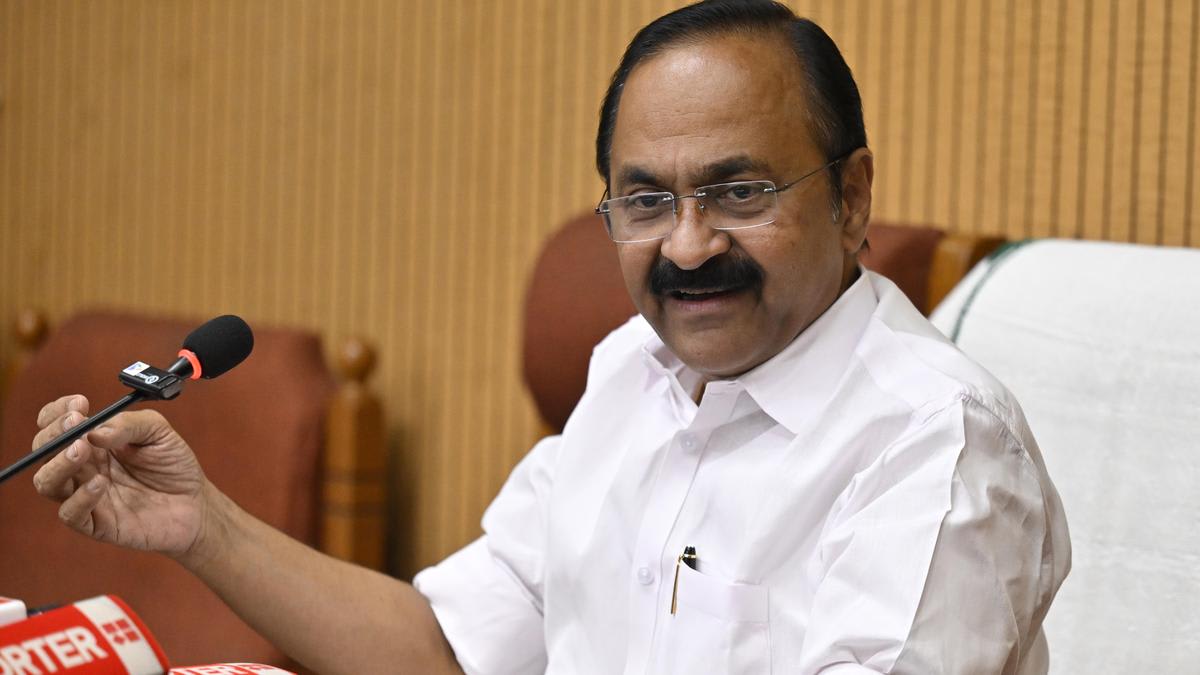
The Kerala Chief Minister has defended the appointment of government pleaders, asserting that the Attorney General was consulted and the candidates' professional competence was thoroughly assessed. This comes amid a controversy regarding the appointees' alleged links to the SFI and ABVP, with the government clarifying that the recommendations came via the Indian Lawyers’ Congress.
Defense of Judicial Appointments: Analyzing the Kerala Government Pleader Controversy
The appointment of government pleaders in Kerala has recently become a focal point of political friction, sparking a debate over the intersection of political affiliation and professional merit. The Kerala Chief Minister has stepped forward to defend these postings, emphasizing that the process was not arbitrary but was grounded in a structured assessment of competence. By asserting that the Attorney General (AG) was consulted, the administration seeks to project an image of legal rigor and adherence to protocol, attempting to neutralize accusations of nepotism or political favoritism.
The Nexus of Politics and Legal Appointments
At the heart of the controversy are allegations that certain appointees possess strong links to student political wings, specifically the Student Federation of India (SFI) and the Akhil Bharatiya Vidyarthi Parishad (ABVP). In the highly polarized political landscape of Kerala, such affiliations are often viewed through a lens of bias. Critics argue that government pleaders, who represent the state in legal matters, must maintain a facade of absolute neutrality to ensure the integrity of the judicial process. The inclusion of individuals with known political ties raises concerns about whether the state's legal representation is based on the rule of law or political loyalty.
Procedural Justification and the Role of the ILC
To counter these claims, the government has highlighted the role of the Indian Lawyers’ Congress (ILC). According to statements provided, the names under scrutiny were not hand-picked in a vacuum but were recommended by both the Kerala committee and the High Court unit of the ILC. By shifting the origin of the recommendations to a professional body, the government is attempting to validate the appointments as meritocratic. This strategic defense suggests that the candidates' legal acumen outweighs their past or present political associations, framing the appointments as a professional necessity rather than a political reward.
Broader Implications for State Governance
This event reflects a broader, recurring tension in Indian state politics where the appointment of government counsel often becomes a battleground between the ruling party and the opposition. When the government defends such moves by citing the consultation of the Attorney General, it is attempting to establish a 'legal shield' against political criticism. However, the persistence of the row indicates a deeper public anxiety regarding the 'politicization of the judiciary' and the executive's influence over legal officers who are tasked with upholding the state's interests impartially.
Historical Context and Future Trends
Historically, the role of government pleaders has often been subject to changes in administration, with new governments frequently reviewing the competence and loyalty of the legal team. The current situation in Kerala underscores a trend where the transparency of the selection process is increasingly scrutinized by the public and opposition parties. Moving forward, it is likely that such appointments will face stricter demands for transparency, possibly leading to the establishment of more independent screening committees to avoid the optics of political patronage.
Conclusion
In summary, the Kerala government's defense of the government pleader postings rests on the pillars of professional recommendation and high-level legal consultation. While the administration maintains that competence was the primary driver, the controversy surrounding SFI and ABVP links highlights the enduring difficulty of separating political identity from professional appointment in a politically active state. The resolution of this row will likely depend on whether the appointed pleaders can demonstrate impartial professional excellence in their roles.
Verification Required?