Remove 'Adopted' Tag From Children's Official Records: Kerala High Court
Source Entity
NDTV News Search Records Found 1000
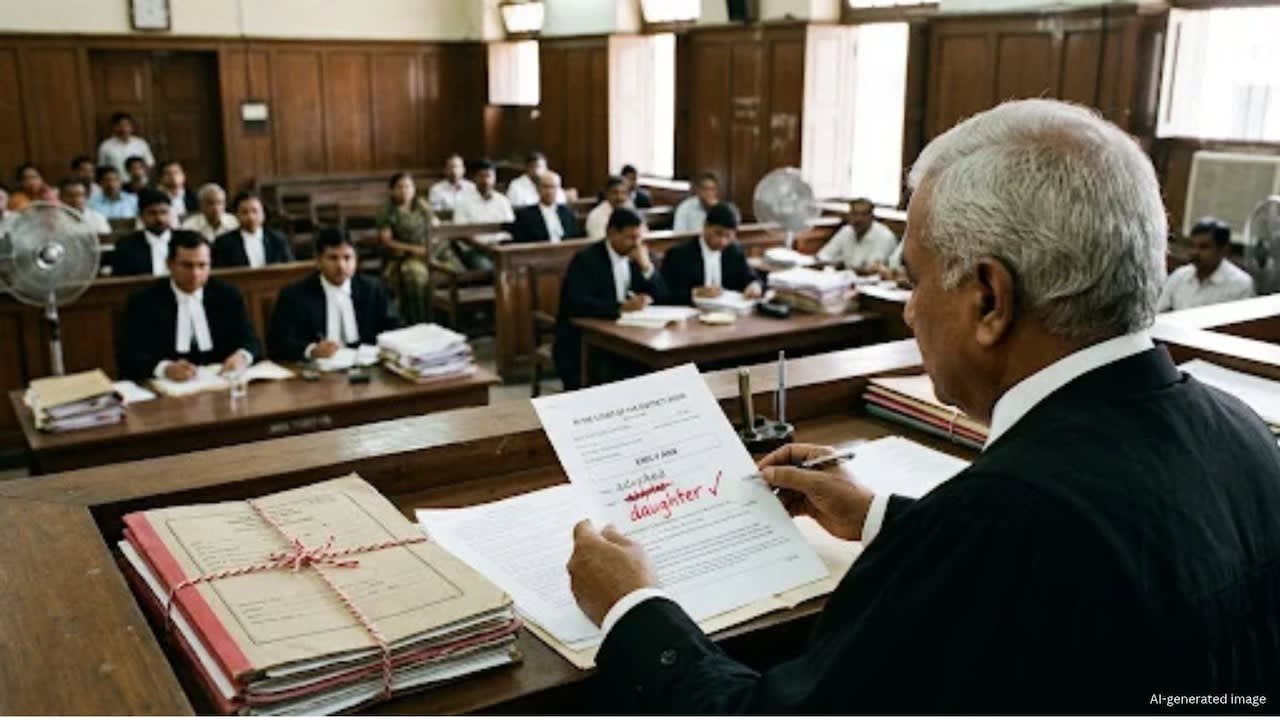
The Kerala High Court has directed authorities to remove the 'adopted' tag from a child's official records. The court emphasized that the law treats adopted children as equivalent to biological children for all legal purposes.
Kerala High Court Mandates Removal of 'Adopted' Label
In a landmark observation, the Kerala High Court has issued a directive aimed at safeguarding the dignity and legal status of adopted children. The court ruled that the term 'adopted' should be removed from official records, asserting that the law recognizes an adopted child as a child in every capacity, indistinguishable from a biological offspring.
Legal Parity and Social Integration
This judicial intervention underscores the principle of legal parity. By mandating the removal of the 'adopted' tag, the court seeks to eliminate the social stigma that often follows children who are adopted. When official documents explicitly label a child as 'adopted,' it can create unnecessary hurdles in educational, professional, and social spheres, effectively 'othering' the child despite the legal finality of the adoption process.
The Legal Framework of Adoption
Under existing Indian law, once an adoption is finalized, the child becomes the legal child of the adoptive parents for all intents and purposes. The Kerala High Court’s ruling reinforces the Juvenile Justice (Care and Protection of Children) Act, which aims to provide adopted children with the same rights, privileges, and responsibilities as biological children. The court’s stance is that the state should not perpetuate a distinction that the law itself has sought to dissolve.
Implications for Official Documentation
This decision has significant implications for how government departments and administrative bodies handle birth certificates and school records. By removing labels that serve no functional purpose other than to identify the child’s origin, the state can better protect the privacy and mental well-being of the child. This shift aligns with modern standards of child rights, focusing on the child’s identity as a member of their new family unit rather than their history.
Broader Societal Impact
Beyond the courtroom, this ruling sends a strong signal to society at large. It encourages the normalization of adoption and discourages the archaic mindset that treats adopted children as secondary. By ensuring that official documents reflect a child’s status as a full family member, the court is facilitating a more inclusive environment for families formed through adoption.
Future Trends in Child Rights
Looking ahead, this precedent is likely to influence similar judicial decisions across other Indian states. As the legal system continues to evolve toward a more child-centric approach, we can expect further reforms aimed at simplifying bureaucratic processes that currently burden adoptive families. This ruling represents a vital step toward ensuring that the rights of adopted children are not just theoretically protected, but practically enforced in daily life.
Verification Required?