Show HN: Laser Graffiti
Source Entity
Hacker News
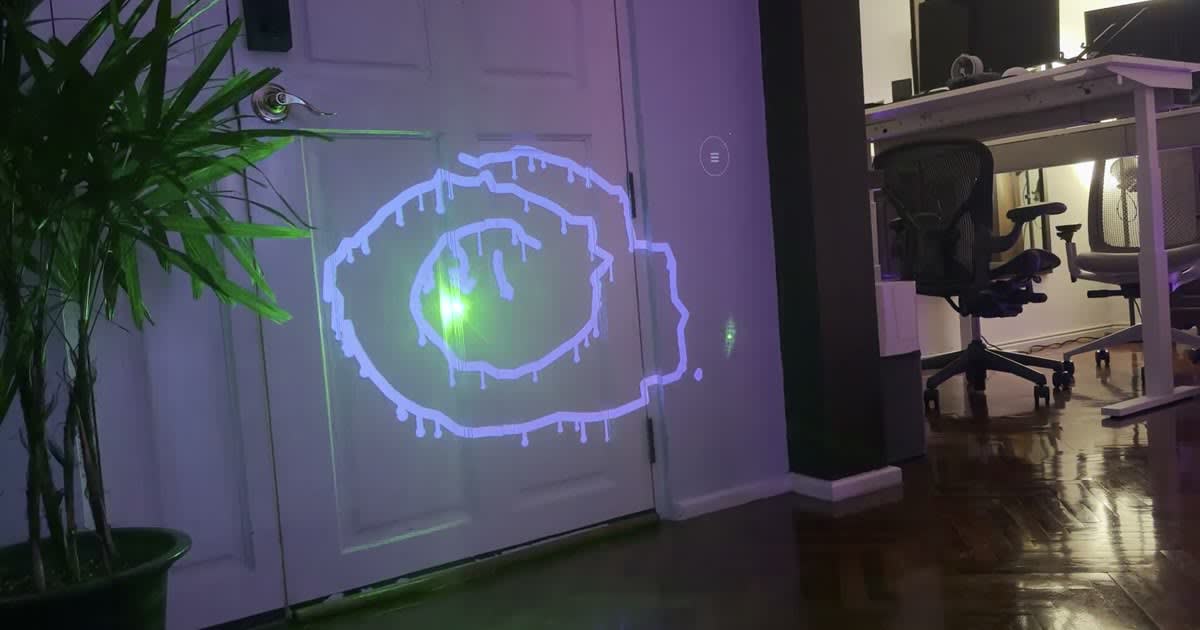
Laser Graffiti is an interactive art project that uses a projector and webcam to track laser pointer movements. This setup enables users to create digital drawings on physical walls in real-time.
The Intersection of Light and Interaction: Laser Graffiti
Laser Graffiti represents a fascinating synthesis of computer vision and creative expression. By utilizing a simple hardware stack—a projector, a webcam, and a laser pointer—the system creates a bridge between digital software and physical infrastructure. The core mechanism relies on the webcam tracking the high-intensity light of the laser pointer against a wall, while the projector simultaneously renders the digital strokes in real-time, effectively turning any surface into a dynamic canvas.
Technical Mechanics and Real-Time Processing
At its technical core, this project leverages basic image processing algorithms to detect the specific wavelength and intensity of a laser pointer. Once the software identifies the coordinates of the laser, it maps those points to the projector's output buffer. By applying digital effects—such as neon glows, dripping textures, or 3D rotations—the system transforms a simple point of light into complex, aesthetically pleasing visual art. This demonstrates the increasing accessibility of interactive projection mapping technologies for hobbyists and developers.
The Historical Context of Projection Art
This project draws direct inspiration from earlier, more ambitious 'laser tagging' experiments conducted years ago. Those early iterations often involved high-powered projectors and custom software to overlay light onto architectural facades, gaining notoriety for their ability to temporarily reclaim public space with ephemeral art. By revisiting this concept in a 'Show HN' (Hacker News) context, the project highlights how hardware costs have dropped, allowing complex spatial interaction to move from large-scale installations to desktop-tinkering levels.
Broader Implications for Interactive Design
Beyond the novelty of drawing on walls, the underlying technology has significant implications for human-computer interaction (HCI). The ability to use a remote light source as a cursor for a large-scale display suggests potential future applications in collaborative workspaces, interactive classrooms, and dynamic signage. By removing the need for touch-screen hardware, this approach allows for large-scale interactivity on surfaces that were previously considered inert, such as concrete walls or non-conductive materials.
Future Trends and Limitations
While the project is currently a creative tool, the evolution of this technology points toward more robust spatial awareness. Future iterations could integrate depth-sensing cameras or multiple tracking points to allow for multi-user collaboration. However, developers must navigate challenges such as ambient light interference, which can obscure laser detection, and the physical constraints of projector brightness. As computer vision libraries continue to mature, we can expect such 'light-painting' systems to become more precise and user-friendly, pushing the boundaries of physical-digital convergence.