Lindsey Graham spent his last few weeks pushing for Saudi-Israel peace. Here's why
Source Entity
Latest News: Today's Latest News Headlines from India & World | Hindustan Times | Hindustan Times
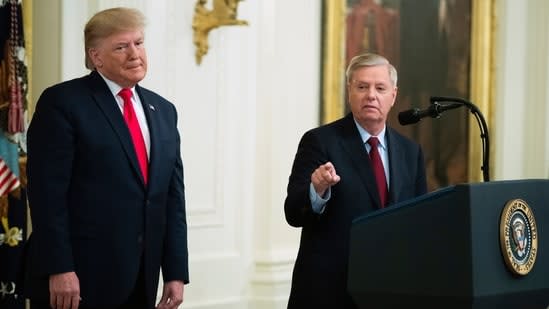
US Senator Lindsey Graham viewed Saudi-Israel ties normalisation as the biggest achievement in a wider post-war plan for West Asia.
The Strategic Push for Saudi-Israel Normalization
US Senator Lindsey Graham has recently intensified his diplomatic efforts to facilitate the normalization of ties between Saudi Arabia and Israel. This initiative is not merely a bilateral agreement but is framed as the cornerstone of a comprehensive post-war architectural plan for West Asia. By positioning this normalization as the 'biggest achievement' of a wider regional strategy, Graham is signaling that a formal alliance between the Kingdom of Saudi Arabia and Israel could serve as the primary catalyst for long-term stability in a region historically defined by volatility and conflict.
Historical Context and the Abraham Accords
To understand the significance of Graham's push, one must look back at the Abraham Accords of 2020, which saw the UAE, Bahrain, Morocco, and Sudan normalize relations with Israel. While those agreements broke a decades-long taboo, Saudi Arabia—given its status as the custodian of the Two Holy Mosques and a leader in the Arab world—carries far more symbolic and strategic weight. Unlike the smaller Gulf states, a Saudi-Israeli deal would represent a fundamental shift in the geopolitical alignment of the Middle East, moving away from the traditional Arab League consensus that demanded a full resolution of the Palestinian conflict before any normalization could occur.
The Geopolitical Imperative: Countering Iranian Influence
At the heart of this diplomatic drive is a shared security concern: the influence of Iran. Both Israel and Saudi Arabia view Iran's regional ambitions and its support for various proxy groups as an existential threat. A formal normalization process would likely include security guarantees from the United States and a coordinated defense framework between Riyadh and Jerusalem. By aligning these two regional powerhouses, the US hopes to create a robust security bloc capable of deterring aggression and reducing the necessity for direct American military intervention in West Asia.
Integration into a Post-War Regional Plan
Senator Graham's emphasis on a "post-war plan" suggests that this normalization is intended to be the reward and the stabilizing mechanism following the current conflicts in the region. The vision involves transitioning from a state of active warfare to one of economic integration and security cooperation. For Saudi Arabia, this aligns with Vision 2030, the Kingdom's ambitious plan to diversify its economy. Integration into a regional tech and security hub involving Israel's advanced technological sector would provide immense economic benefits to the Saudi state, while providing Israel with unprecedented legitimacy in the heart of the Arab world.
The Complexity of the Palestinian Question
Despite the strategic benefits, the path to normalization remains fraught with challenges, primarily the issue of Palestinian statehood. Saudi Arabia has historically maintained that a credible path toward a Palestinian state is a prerequisite for any formal tie with Israel. Graham's efforts must therefore navigate the delicate balance between the security needs of the Israeli government and the political requirements of the Saudi leadership. The 'post-war' aspect of the plan likely includes a proposed framework for Palestinian governance that would satisfy Riyadh without compromising Israel's security concerns.
Future Trends and US Diplomatic Strategy
Looking forward, the success of this initiative will likely depend on the stability of the US-Saudi relationship and the internal political climate within Israel. If Graham's vision comes to fruition, it could lead to a 'New Middle East' characterized by trade corridors linking the Gulf to the Mediterranean. This would not only secure energy markets but also diminish the leverage of non-state actors in the region. The US strategy here is clear: by anchoring Saudi Arabia and Israel in a formal peace treaty, Washington can pivot its strategic focus toward the Indo-Pacific while ensuring that West Asia remains stable and pro-Western.
Summary
Senator Lindsey Graham's push for Saudi-Israel normalization is a high-stakes diplomatic gamble aimed at redefining the security architecture of West Asia. By linking this normalization to a broader post-war recovery plan, he seeks to create a durable peace based on mutual security interests and economic synergy, potentially ending decades of regional hostility and creating a unified front against common adversaries.
Verification Required?