Lucid’s bankruptcy rumor is a bad sign for the EV future
Source Entity
Andrew J. Hawkins
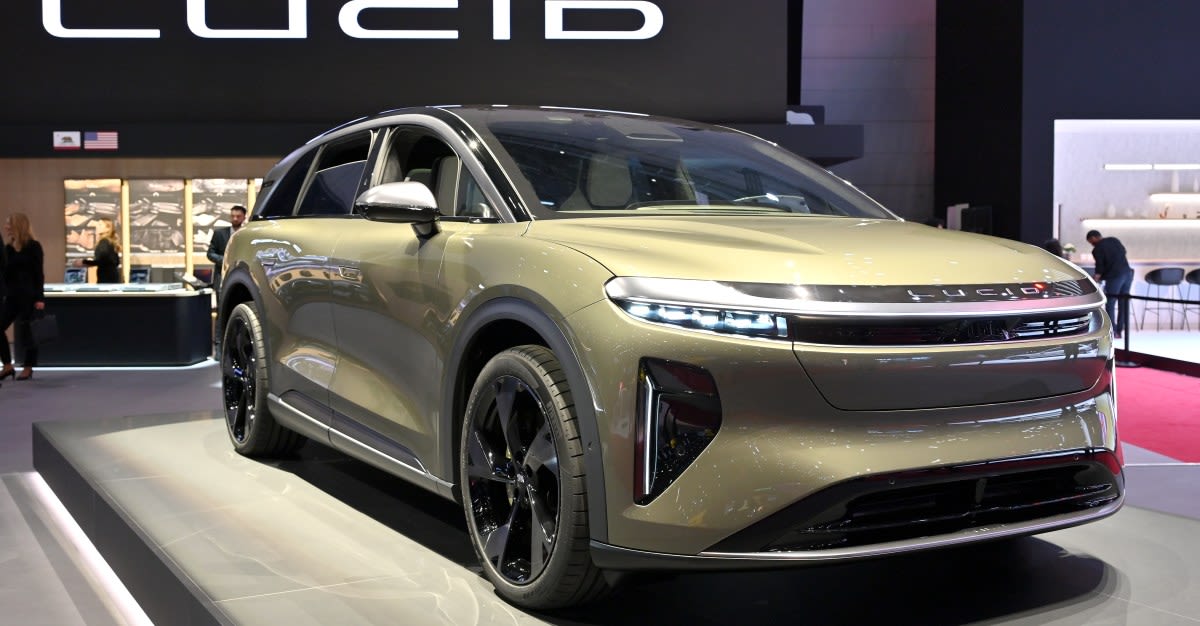
Lucid Motors has officially denied bankruptcy rumors following a sharp decline in its stock price, asserting that its current cash flow provides a sufficient operational runway into next year.
Analysis: The Fragility of the EV Market through the Lens of Lucid Motors
The Immediate Crisis: Rumors and Market Volatility
Lucid Motors recently found itself at the center of a financial storm as unfounded rumors of bankruptcy began to circulate, triggering a sharp plunge in the company's stock price. While the company was quick to issue a denial, labeling the reports as "completely false," the speed with which the market reacted underscores a profound fragility in investor confidence. By pointing to its free cash flow and asserting that it has enough runway to operate well into next year, Lucid attempted to stabilize its valuation. However, the event reveals that for high-growth, capital-intensive companies in the electric vehicle (EV) space, the line between perceived stability and existential crisis is razor-thin.
The Challenge of the 'Cash Runway' in EV Manufacturing
To understand why these rumors gained traction, one must look at the immense capital requirements of EV production. Lucid operates in the luxury segment, where the cost of research, development, and scaling manufacturing is astronomical. The mention of a "runway" is critical here; in the startup and growth-stage corporate world, the runway is the amount of time a company can continue to operate before it runs out of money. For Lucid, maintaining this runway requires a delicate balance of increasing delivery volumes while managing the heavy losses associated with scaling a proprietary platform. The market's nervousness suggests a skepticism about whether luxury EV demand is sufficient to sustain these costs without constant infusions of external capital.
Broader Implications for the EV Sector
As the provided headline suggests, this incident is viewed as a "bad sign for the EV future." This sentiment stems from a broader cooling of the EV market. After years of hyperbolic growth and massive investment, the industry is entering a 'trough of disillusionment.' High interest rates have made vehicle financing more expensive for consumers, and a saturation of the early-adopter luxury market has slowed growth. When a company like Lucid—known for its industry-leading battery efficiency and luxury appeal—becomes the subject of bankruptcy speculation, it signals that investors are no longer giving the benefit of the doubt to EV players who are not yet profitable.
The Struggle for Mass-Market Viability
Lucid's struggle reflects a wider industry trend: the difficulty of transitioning from a low-volume luxury niche to a viable mass-market competitor. Many EV startups entered the market with a "top-down" strategy, launching expensive flagship models to build brand prestige before moving to cheaper versions. However, this strategy is risky if the flagship doesn't generate enough cash to fund the development of the mass-market models. The volatility seen in Lucid's stock suggests that the market is now questioning if the "luxury-first" blueprint is sustainable in an era of aggressive price wars led by dominant players like Tesla.
Future Trends and Survival Strategies
Looking ahead, Lucid's ability to survive and thrive will depend on its capacity to diversify its revenue streams and optimize its production costs. We are likely to see a trend of consolidation within the EV industry, where smaller players are absorbed by legacy automakers or fail entirely. For Lucid, the focus will likely shift toward strategic partnerships and potentially expanding its technology licensing to other manufacturers. The company's insistence on its cash position is a necessary defense, but long-term stability will require a shift from surviving on a "runway" to achieving operational profitability.
Conclusion: A Warning Sign for Innovation
In summary, while Lucid Motors has debunked the immediate bankruptcy rumors, the episode serves as a cautionary tale for the entire automotive industry. It highlights the disconnect between technological achievement—such as Lucid's superior EV range—and financial sustainability. The event serves as a reminder that in the current economic climate, engineering excellence is not a substitute for a sustainable business model. The trajectory of Lucid will be a key indicator of whether the next wave of EV innovation can survive the harsh realities of a tightening global economy.