Lucknow: Road caves in near Ekana as rainwater seeps into sandy soil
Source Entity
Latest News: Todays Latest News Headlines from India & World | Hindustan Times | Hindustan Times
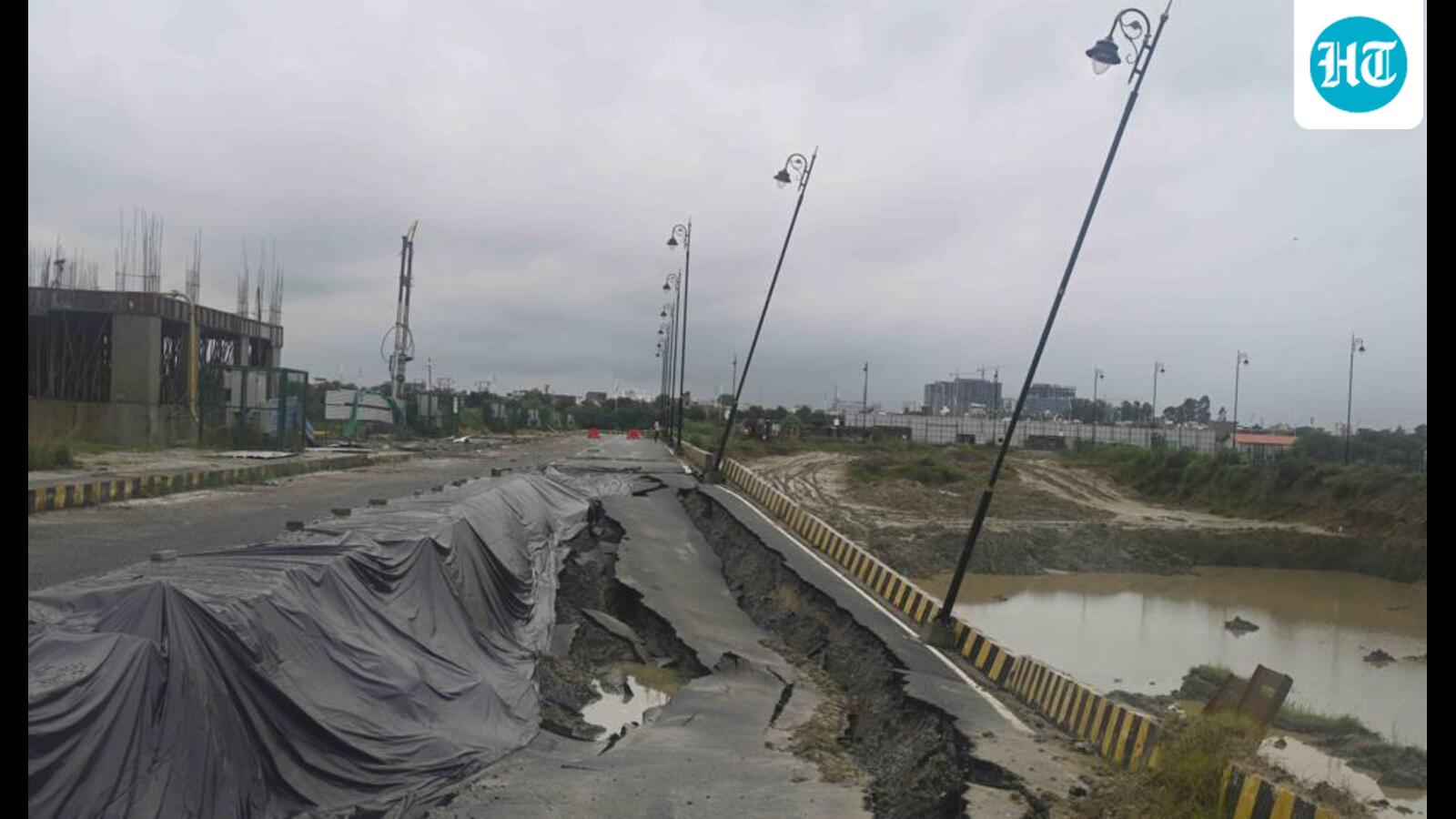
A major road section near Lucknow's Ekana Stadium collapsed following heavy rainfall, which caused saturation in the sandy soil surrounding a deep construction site. The Lucknow Development Authority has closed the area as a precautionary measure while investigating the impact of the ongoing triple-basement parking project.
Infrastructure Collapse Near Ekana Stadium: An Analysis
The Incident
A significant section of a two-lane road in Lucknow, situated near the prominent Ekana Stadium in CG City, experienced a major structural failure on Sunday. The collapse, spanning approximately 15 meters in length and five meters in width, occurred following three days of relentless rainfall in the region. The geological instability caused by the precipitation led to the surface settling and the bending of a nearby streetlight, necessitating an immediate closure of the thoroughfare by the Lucknow Development Authority (LDA).
The Role of Sandy Soil and Excavation
The primary catalyst for this collapse appears to be the interaction between heavy seasonal rainfall and the ongoing excavation work for a multi-level parking facility. According to LDA executive engineer Ajeet Kumar, the construction project involves a triple-basement design with a proposed depth of 30 feet. At the time the work was paused due to the monsoon season, the excavation had already reached a depth of 22 feet. The sandy nature of the soil in this specific area likely became highly unstable when saturated with rainwater, leading to the loss of structural integrity along the adjacent road.
Urban Planning and Safety Implications
This incident highlights the critical challenges inherent in urban development projects that involve deep subterranean excavation. When soil-extraction work is left exposed or partially completed during the rainy season, the risk of soil liquefaction or erosion increases exponentially. The decision to halt work prior to the rain was a necessary step, yet the failure to secure the perimeter sufficiently to prevent road subsidence suggests a potential gap in site management or contingency planning for extreme weather events.
Historical Context and Environmental Vulnerability
Lucknow's rapid expansion into areas like CG City has necessitated massive infrastructure undertakings. However, the geographic profile of the region, characterized by specific soil compositions, requires rigorous engineering standards. The collapse serves as a cautionary tale regarding the necessity of robust shoring and drainage systems in projects involving deep basements. As urban centers continue to densify, the interplay between climate-driven weather patterns and large-scale construction must be managed with greater technical foresight.
Looking Ahead: Remediation and Future Trends
Moving forward, the LDA will likely focus on stabilizing the soil and reinforcing the perimeter of the parking project before any structural work can resume. Future infrastructure trends in the region will likely shift toward more stringent soil testing protocols and mandatory emergency stabilization measures during the monsoon season. Ensuring the safety of public infrastructure surrounding private or government construction sites will remain a priority for municipal authorities to prevent further economic loss and public safety hazards.
Verification Required?