Ludhiana: Teachers told to report to schools over weekend for SIR camps, unions slam move
Source Entity
Latest News: Today's Latest News Headlines from India & World | Hindustan Times | Hindustan Times
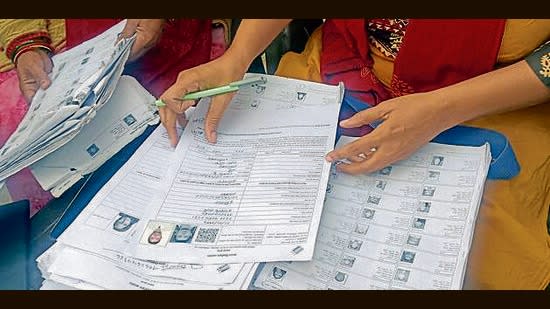
The Punjab government’s decision to keep government and aided schools open this weekend for the Special Intensive Revision (SIR) of electoral rolls has drawn criticism from teachers’ unions, which say repeated election duties are disrupting academics and adding to the burden on an already understaffed teaching workforce
Administrative Mandates vs. Academic Integrity: The Ludhiana SIR Conflict
The Punjab government's recent directive requiring teachers in Ludhiana to report to schools over the weekend for Special Intensive Revision (SIR) camps has ignited a significant conflict between the state's administrative requirements and the educational sector. The Special Intensive Revision of electoral rolls is a critical democratic process intended to ensure that voter lists are accurate, updated, and inclusive. By utilizing school infrastructure and personnel, the government aims to streamline the verification of voters, removal of deceased entries, and registration of new eligible citizens. However, the decision to mandate this work during a weekend has shifted the burden of democratic maintenance onto a workforce already struggling with systemic pressures.
The Strain on Educational Infrastructure
Teachers' unions have voiced strong opposition, primarily focusing on the disruption of the academic calendar. In the current educational climate, where learning recovery and syllabus completion are paramount, the loss of weekends for non-teaching duties is seen as a detriment to student progress. When educators are diverted to manage electoral rolls, the continuity of instruction is broken. This tension highlights a recurring systemic issue in regional governance where schools are treated as multipurpose administrative hubs rather than dedicated spaces for learning, often leading to a degradation of the quality of education provided to students.
The Crisis of Understaffing
Central to the unions' grievances is the mention of an "already understaffed teaching workforce." This detail reveals a deeper structural crisis within the Punjab education system. When a system is operating with a deficit of qualified teachers, the marginal cost of diverting a few staff members for election duties becomes exponentially higher. The remaining staff must often cover additional classes, and the diverted teachers return to their classrooms exhausted, reducing their pedagogical effectiveness. The demand for weekend duty essentially exacerbates an existing labor shortage, pushing teachers toward burnout and decreasing the overall efficiency of the school system.
The Tradition of Teacher-Led Election Duty
Historically, the use of teachers for election-related duties is a common practice across various Indian states. Because teachers are often viewed as literate, neutral, and geographically distributed across every village and town, they are the default choice for electoral administration. While this ensures a level of administrative competence, it creates a perennial conflict of interest. The current backlash in Ludhiana is a symptom of a growing intolerance among professional educators to be used as auxiliary administrative staff, reflecting a broader demand for the professionalization of election management and the separation of civic duties from educational responsibilities.
Future Implications and Potential Resolutions
Looking forward, this clash suggests a need for the Punjab government to reconsider its reliance on the teaching workforce for electoral logistics. If unions continue to mobilize, the government may be forced to provide compensatory leave or financial incentives to mitigate the backlash. More sustainably, there is a pressing need for the creation of a dedicated, permanent cadre of election officials who can handle the SIR process without infringing upon the academic schedule. Failure to address these concerns could lead to prolonged labor disputes, potentially resulting in strikes that would further jeopardize student learning outcomes.
Summary
The dispute in Ludhiana serves as a microcosm of the tension between the logistical needs of a functioning democracy and the operational needs of a public education system. While the accuracy of electoral rolls is non-negotiable for fair elections, the method of achieving this—by leveraging an understaffed and overworked teaching force—is increasingly viewed as unsustainable. The resolution of this conflict will likely depend on whether the government can balance its administrative deadlines with the professional needs of its educators.
Verification Required?