Madhuri Grover doubles down on saying the poor having children increases poverty: ‘Logon ko bechare banne ka shauk hai’
Source Entity
Latest News: Today's Latest News Headlines from India & World | Hindustan Times | Hindustan Times
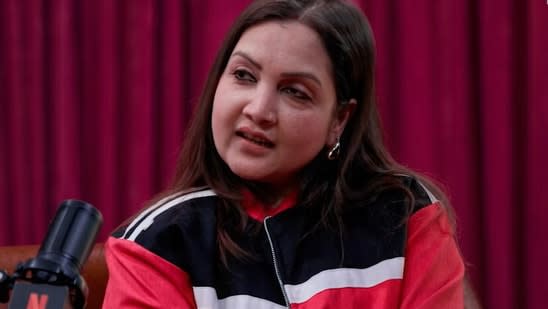
Former Lock Upp contestant Madhuri Grover has sparked controversy by doubling down on her claim that the poor exacerbate their own poverty by having children, suggesting that some individuals enjoy portraying themselves as victims.
Controversy Erupts Over Madhuri Grover's Stance on Poverty and Parenting
Following her elimination from the reality show Lock Upp, contestant Madhuri Grover has found herself at the center of a heated social debate. The controversy stems from a candid conversation she had with fellow participant Tejasswi Prakash, in which Grover argued that the cycle of poverty is perpetuated by the poor continuing to have children. Rather than retracting these statements after facing backlash, Grover has doubled down on her position, adding the provocative claim that "Logon ko bechare banne ka shauk hai" (People have a fondness for playing the victim).
The Core of the Argument: The Poverty Cycle
At the heart of Madhuri Grover's assertion is a perspective often associated with Malthusian theories, which suggest that population growth in lower-income brackets can outpace resource availability, thereby deepening economic hardship. By stating that having children increases poverty, Grover is arguing that familial expansion without financial stability creates a self-sustaining loop of deprivation. This perspective posits that individual choices regarding family planning are the primary drivers of economic status, rather than systemic failures or lack of access to healthcare and education.
Analysis of the 'Victimhood' Narrative
Perhaps more polarizing than her views on population is Grover's remark regarding the "shauk" (fondness) for being a victim. This statement shifts the conversation from an economic argument to a psychological and moral one. By suggesting that there is a perceived benefit or desire in maintaining a status of helplessness, Grover is challenging the societal understanding of systemic poverty. This line of reasoning suggests that a lack of ambition or a psychological reliance on the "victim" identity prevents marginalized communities from seeking upward mobility, a claim that has been met with significant criticism for overlooking the structural barriers that keep people in poverty.
The Role of Reality Television in Polarizing Discourse
It is important to analyze this event within the context of Lock Upp, a show designed to create high-tension environments and provoke strong emotional responses. Reality TV often rewards polarizing opinions and confrontational behavior, as these elements drive viewership and social media engagement. Grover's willingness to double down on her statements suggests a strategic adherence to the "strong personality" archetype often seen in such shows. The interaction with Tejasswi Prakash served as a catalyst, turning a personal opinion into a public spectacle that reflects the broader cultural divide between meritocratic beliefs and systemic social critiques.
Broader Societal Implications
This incident highlights a recurring tension in public discourse regarding the responsibility of the individual versus the responsibility of the state. Grover's comments reflect a rigid meritocratic view—the idea that poverty is a result of poor decision-making. Conversely, critics of her view argue that such rhetoric stigmatizes the poor and ignores the reality that many in poverty lack the education or resources to implement the family planning Grover advocates for. This clash of ideologies demonstrates how celebrity platforms can amplify sensitive socio-economic debates, often stripping them of nuance in favor of "hot takes."
Conclusion and Future Outlook
In summary, Madhuri Grover's comments have transcended the boundaries of a reality show to become a flashpoint for discussions on class, parenting, and social responsibility. While her views are framed as a critique of the "victim mentality," they have largely been perceived as an insensitive dismissal of the complexities of poverty. As the digital discourse continues, it is likely that this event will serve as another example of how reality television stars leverage controversy to maintain visibility in a crowded media landscape, regardless of the social sensitivity of the topic.
Verification Required?