Party-appointed BLAs bypass ECI cap for 10 applications a day through its own portal for deletions
Source Entity
India Latest News: Top National Headlines Today & Breaking News | The Hindu
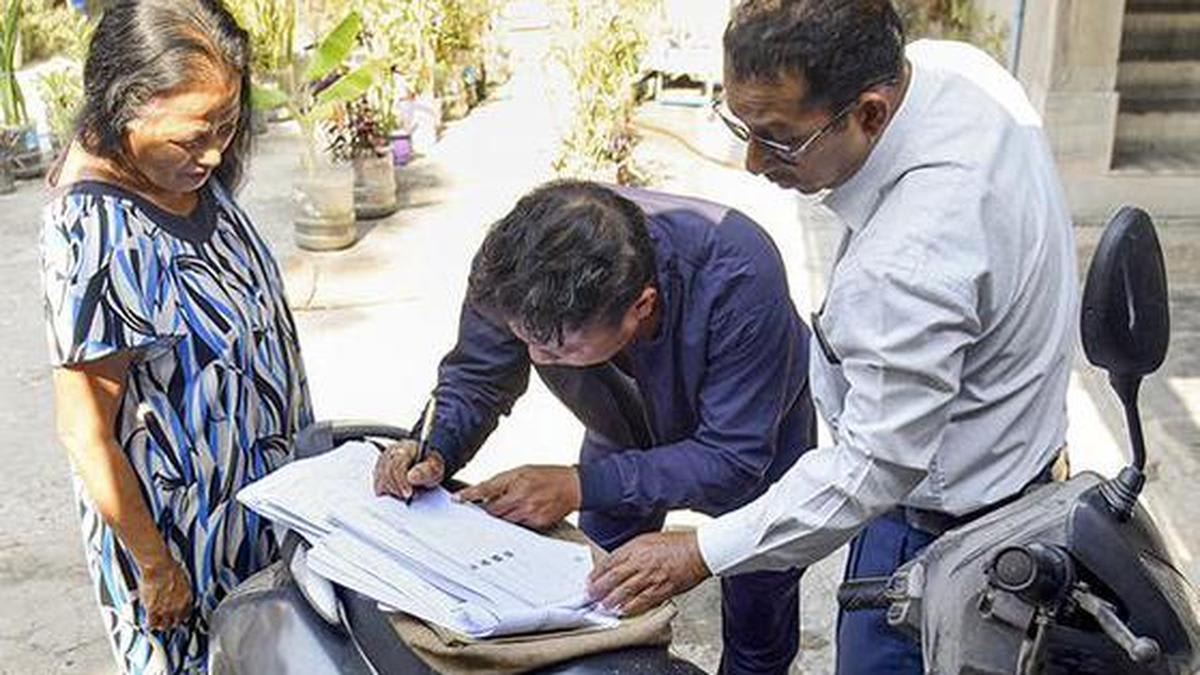
Maharashtra's Chief Electoral Officer has requested software changes to grant EROs more discretion over electoral roll anomalies. Meanwhile, reports indicate that political party agents are bypassing submission caps in Delhi, while concerns grow over the high volume of deletions in the 'absent, shifted, or others' category.
Enhancing Electoral Integrity: The Push for ERO Discretion and Systemic Reform
The Move for Administrative Flexibility
In a significant administrative development, Maharashtra Chief Electoral Officer (CEO) S. Chockalingam has formally requested the Election Commission of India (ECI) to modify the ECINet software. The primary objective is to empower Electoral Registration Officers (EROs) with greater discretion when managing anomalies in electoral rolls. By seeking these changes, the Maharashtra state poll body aims to move away from rigid, fully centralized automated processes, allowing local officials to exercise professional judgment in resolving discrepancies that software might otherwise flag or ignore incorrectly.
Challenges in Digital Oversight and Enforcement
While the ECI strives for digital uniformity, the current infrastructure faces significant hurdles in enforcement. Reports indicate that the ECINet portal currently lacks the necessary mechanisms to impose the Election Commission’s own guidelines, specifically the cap of 10 applications per day for booth-level agents (BLAs) during the claims and objections period. Analysis of statutory reports has revealed that political party agents in Delhi have been able to bypass these limits, filing significantly more objections than permitted. This technical gap highlights a critical vulnerability in the current digital oversight framework.
Disparities in Application Processing
The discrepancy in how different forms are handled further complicates the integrity of the electoral roll. Observations suggest that the disposal of Form 7 objections—often used to challenge a voter's eligibility—is proceeding at a faster pace than the processing of Form 6 inclusion applications, despite the latter representing a higher volume of requests. This imbalance raises questions about the prioritization of electoral roll maintenance and whether the administrative focus is leaning too heavily toward deletion rather than registration.
The Scale of Deletions and the 'ASO' Category
The Special Intensive Revision (SIR) process has underscored the volatility of voter lists. Data from the ECI reveals that out of 13.3 crore deletions nationwide, approximately 9.5 crore—or over 71%—fall into the 'absent, shifted, and others' (ASO) category. This specific classification is inherently transient, as individuals may relocate or return to their registered constituencies. The fact that such a large majority of deletions are categorized as ASO suggests that the electoral roll is in a constant state of flux, necessitating a more nuanced approach to verification.
Broader Implications for Electoral Accuracy
The potential for the 9.5 crore ASO-deleted voters to be re-enrolled post-SIR reflects the complex nature of maintaining an accurate national voter database. If a significant portion of these individuals remains disenfranchised due to rapid or automated deletion processes, it could impact voter turnout and democratic representation. The push by Maharashtra’s CEO to allow ERO discretion is a direct response to these systemic complexities, suggesting a need for a hybrid model that blends technological efficiency with human oversight.
Future Trends and Reform Requirements
Moving forward, the ECI will likely need to reconcile its centralized software approach with the practical requirements of field-level officers. The findings regarding the bypassing of BLA caps and the high volume of ASO deletions suggest that the ECI must prioritize the tightening of digital safeguards while ensuring that the administrative process remains transparent. As India continues to digitize its electoral infrastructure, the ability to balance technological speed with the accuracy of voter lists will remain a cornerstone of maintaining public trust in the democratic process.
Verification Required?