Maharashtra eases another farm loan waiver rider, farmers now eligible for Rs 2 lakh
Source Entity
Alok Deshpande
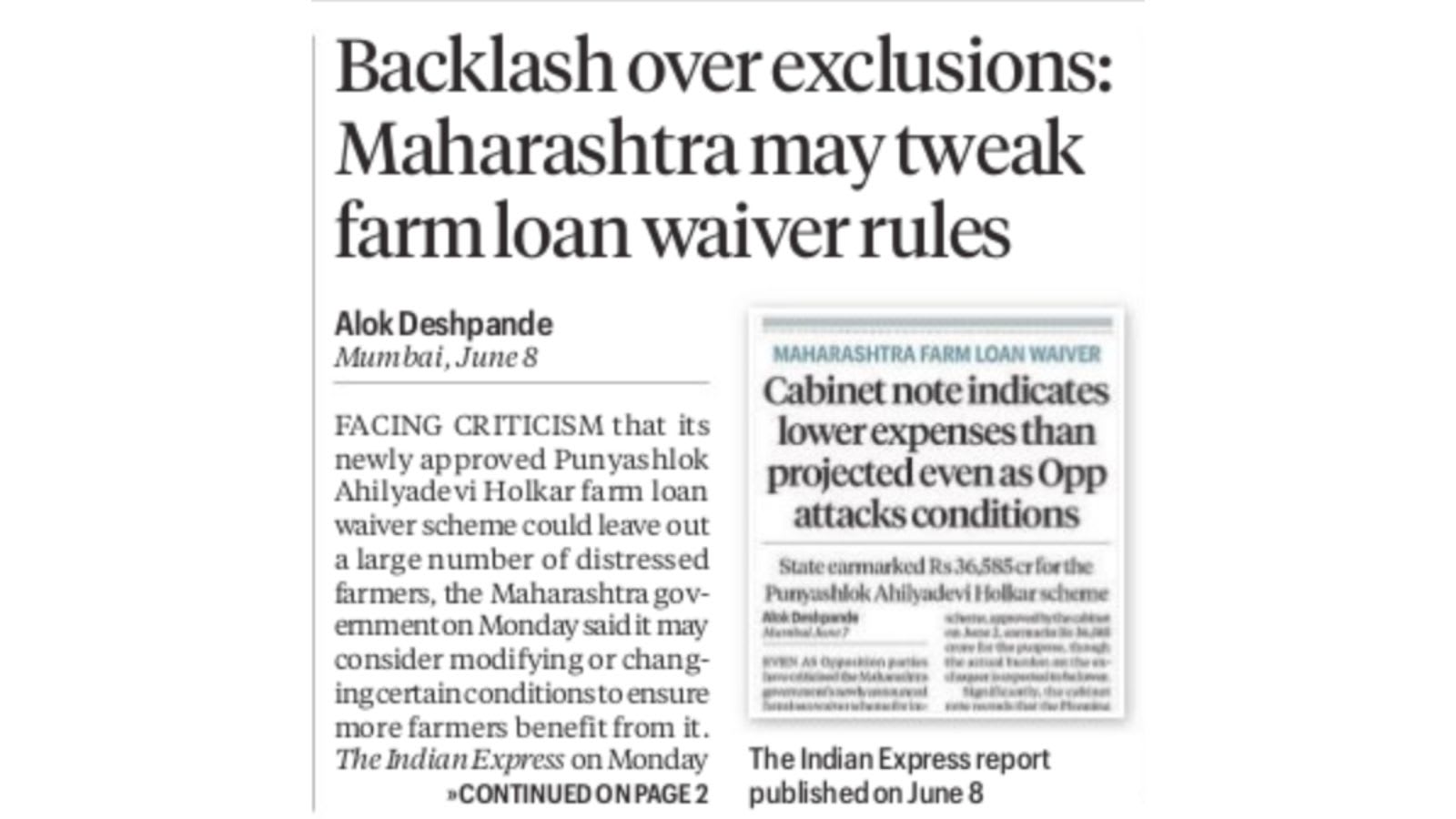
Continuing to relax the eligibility conditions attached to the Punyashlok Ahilyadevi Holkar farm loan waiver scheme after facing sustained criticism over its exclusions, Chief Minister Devendra Fadnav...
Expansion of the Punyashlok Ahilyadevi Holkar Farm Loan Waiver Scheme
In a significant policy shift aimed at alleviating agricultural distress, the Maharashtra government has announced a relaxation of the eligibility riders for the Punyashlok Ahilyadevi Holkar farm loan waiver scheme. By increasing the eligibility threshold to Rs 2 lakh, the administration is attempting to cast a wider net of financial relief for farmers who were previously excluded due to stringent criteria. This move comes as a direct response to sustained criticism from farmer unions and political opponents who argued that the initial limitations of the scheme left a substantial portion of the rural population without necessary support.
Addressing the Gap in Eligibility
The decision to ease the riders is a tactical admission that the previous parameters of the scheme were too restrictive. In the agrarian economy of Maharashtra, where small and marginal farmers often operate on razor-thin margins, a loan limit that is too low fails to cover the actual cost of cultivation and debt accumulation. By raising the limit to Rs 2 lakh, the government is acknowledging the reality of rising input costs—such as seeds, fertilizers, and diesel—which have pushed many farmers' debts beyond previous waiver ceilings. This adjustment is designed to ensure that the scheme is inclusive rather than exclusive, targeting the actual debt burden experienced by the average farmer.
Political Implications and Public Pressure
From a political perspective, this relaxation is a strategic move by Chief Minister Devendra Fadnavis and the state administration to neutralize growing discontent in the rural heartlands. Agriculture remains the backbone of Maharashtra's economy and a pivotal factor in electoral outcomes. The "sustained criticism" mentioned in the reports suggests that the government faced a crisis of perception, where the loan waiver was seen as a selective benefit rather than a universal relief measure. By expanding the scope, the government aims to rebuild trust with the farming community and mitigate the influence of agrarian protests that often gain momentum ahead of key political cycles.
The Cycle of Agricultural Debt in Maharashtra
To understand the necessity of this move, one must look at the broader context of agricultural instability in the region. Maharashtra has frequently grappled with erratic monsoon patterns, severe droughts, and pest infestations, all of which contribute to a cycle of chronic indebtedness. When crops fail, farmers are forced to take high-interest loans from informal moneylenders or formal banks to sustain their families and prepare for the next sowing season. Loan waivers, while often criticized by economists as a temporary fix, provide a critical lifeline that prevents total financial collapse and reduces the tragic incidence of farmer suicides in the state.
Historical Context and Fiscal Concerns
This is not the first time Maharashtra has employed loan waivers as a tool for rural stability; previous administrations have launched similar schemes, such as the Chhatrapati Shivaji Maharaj loan waiver. However, the recurring nature of these waivers raises concerns about "moral hazard," where borrowers may become less inclined to repay loans in anticipation of future waivers. Furthermore, the fiscal burden on the state exchequer is immense. Expanding the eligibility to Rs 2 lakh will inevitably increase the total payout, potentially diverting funds from long-term infrastructure projects like irrigation and cold-storage facilities, which would offer a more sustainable solution to farm distress.
Future Trends and Sustainable Solutions
Looking forward, the expansion of the Punyashlok Ahilyadevi Holkar scheme suggests that the government will continue to prioritize immediate relief over systemic reform in the short term. While the Rs 2 lakh limit provides immediate breathing room, the long-term trend must shift toward crop insurance penetration and diversifying rural income streams. The success of this expanded waiver will be measured not just by the number of farmers who receive relief, but by whether the government can pair this financial aid with structural improvements in market access and climate-resilient farming techniques to break the cycle of debt permanently.
Summary
The relaxation of the farm loan waiver riders in Maharashtra is a necessary, albeit populist, response to rural economic hardship. By increasing the limit to Rs 2 lakh, the government addresses immediate grievances and expands the scheme's reach, though it simultaneously increases the state's fiscal liability and highlights the ongoing struggle to find a permanent cure for agricultural debt.