Show same concern for rain-hit farmers as traffic jams: Onion growers tell Maharashtra government
Source Entity
India Latest News: Top National Headlines Today & Breaking News | The Hindu
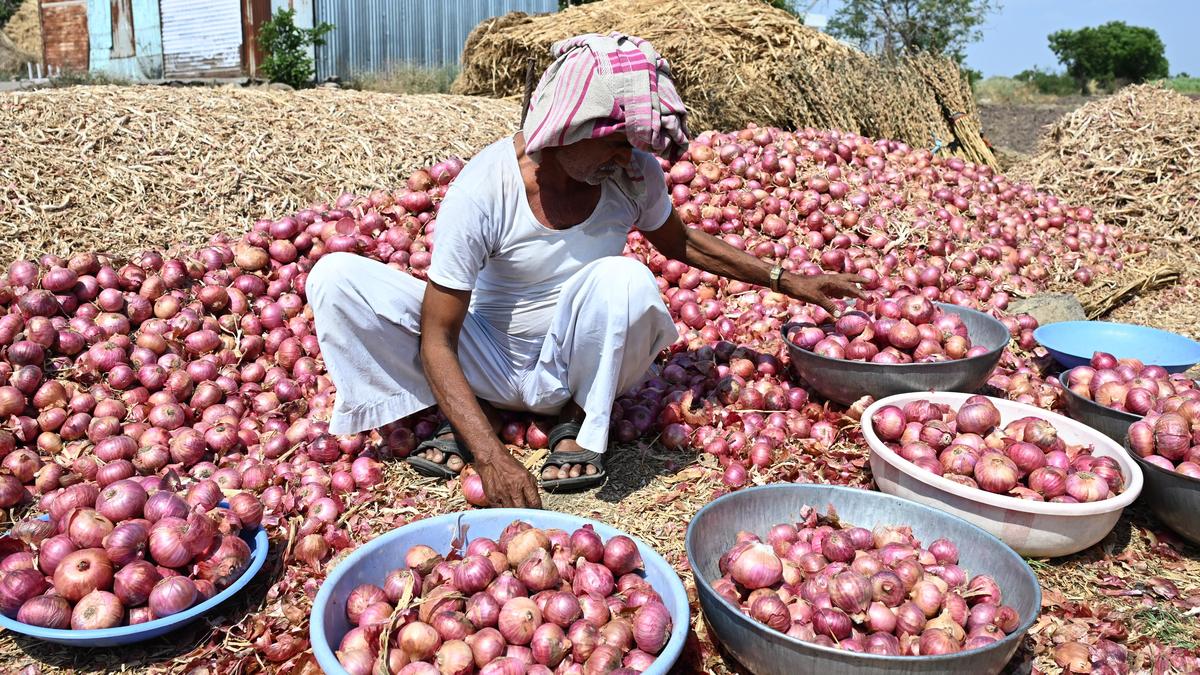
Maharashtra State Onion Growers' Association president Bharat Dighole said the financial losses suffered by farmers due to recurring natural calamities and crashing crop prices are rarely met with equal concern
Rural Distress and Urban Priorities: The Crisis of Maharashtra's Onion Growers
In a poignant critique of state governance, Bharat Dighole, president of the Maharashtra State Onion Growers' Association, has highlighted a stark disparity in how the government prioritizes its citizens. By comparing the urgency the state shows toward resolving urban traffic jams with the relative indifference shown toward rain-hit farmers, Dighole has touched upon a deep-seated systemic issue. The core of the grievance lies in the financial devastation caused by a combination of recurring natural calamities and the volatile nature of crop pricing, which leaves farmers in a state of perpetual economic instability.
The Socio-Economic Weight of Onion Cultivation
Maharashtra is one of India's primary hubs for onion production, with regions like Nashik serving as critical supply centers for the entire country. Because onions are a staple in nearly every Indian household, any disruption in their production or pricing has immediate macroeconomic effects, often leading to inflation. However, the producers themselves—the farmers—rarely benefit from this criticality. Instead, they are subject to extreme price volatility. When a bumper crop occurs or when market demand shifts, prices crash, often falling below the cost of production, leaving growers with massive debts and no safety net.
Analyzing the Urban-Rural Governance Divide
The analogy of the "traffic jam" is a powerful rhetorical tool used by Dighole to illustrate the perceived bias in administrative attention. Urban centers, where the middle class and political elites reside, often see rapid responses to infrastructure failures or congestion. In contrast, the agricultural sector, despite being the backbone of the economy, often faces bureaucratic delays in receiving disaster relief or price supports. This perceived neglect fosters a sense of alienation among the farming community, who feel that their survival is viewed as less urgent than the convenience of urban commuters.
The Impact of Climate Volatility
The mention of "rain-hit farmers" points to the increasing unpredictability of monsoon patterns and unseasonal rainfall, which have become more frequent due to global climate shifts. For onion growers, untimely rain is catastrophic; it can lead to root rot and destroy stored harvests, causing an immediate collapse in the farmer's income. When these natural disasters coincide with a crash in market prices, the financial blow is twofold. The lack of adequate, timely compensation from the government exacerbates this crisis, pushing many farmers toward extreme financial distress.
Systemic Failures in Price Stabilization
Beyond immediate weather events, the crashing prices mentioned by the Association suggest a failure in market stabilization mechanisms. The lack of widespread, accessible cold-storage infrastructure means farmers are often forced to sell their produce immediately after harvest, regardless of the prevailing market price. Without the ability to store crops and wait for price recovery, they are at the mercy of middlemen and market fluctuations. The demand for "equal concern" is therefore not just a request for subsidies, but a call for a structural overhaul of the agricultural supply chain.
Future Trends and Policy Implications
Looking forward, it is likely that agricultural unrest will continue to be a potent political force in Maharashtra. If the government fails to implement more robust crop insurance schemes and invest in decentralized cold-storage facilities, the divide between urban priorities and rural needs will widen. There is an urgent need for a policy shift toward "climate-smart agriculture" and guaranteed minimum support prices that are indexed to the actual cost of production and inflation, ensuring that farmers are not penalized for the very volatility that makes the crop essential.
Conclusion
The outcry from the Maharashtra State Onion Growers' Association is a symptom of a larger struggle for equity in governance. By juxtaposing the frustration of a commuter in a traffic jam with the desperation of a farmer losing their livelihood, Bharat Dighole has challenged the state to redefine its priorities. For the agricultural sector to remain sustainable, the government must move beyond reactionary relief and toward a proactive, empathetic framework that treats rural financial stability as a primary state priority.
Verification Required?