Mexico highway crash kills 9, injures 10 after truck slams into emergency response vehicles
Source Entity
TOI WORLD DESK
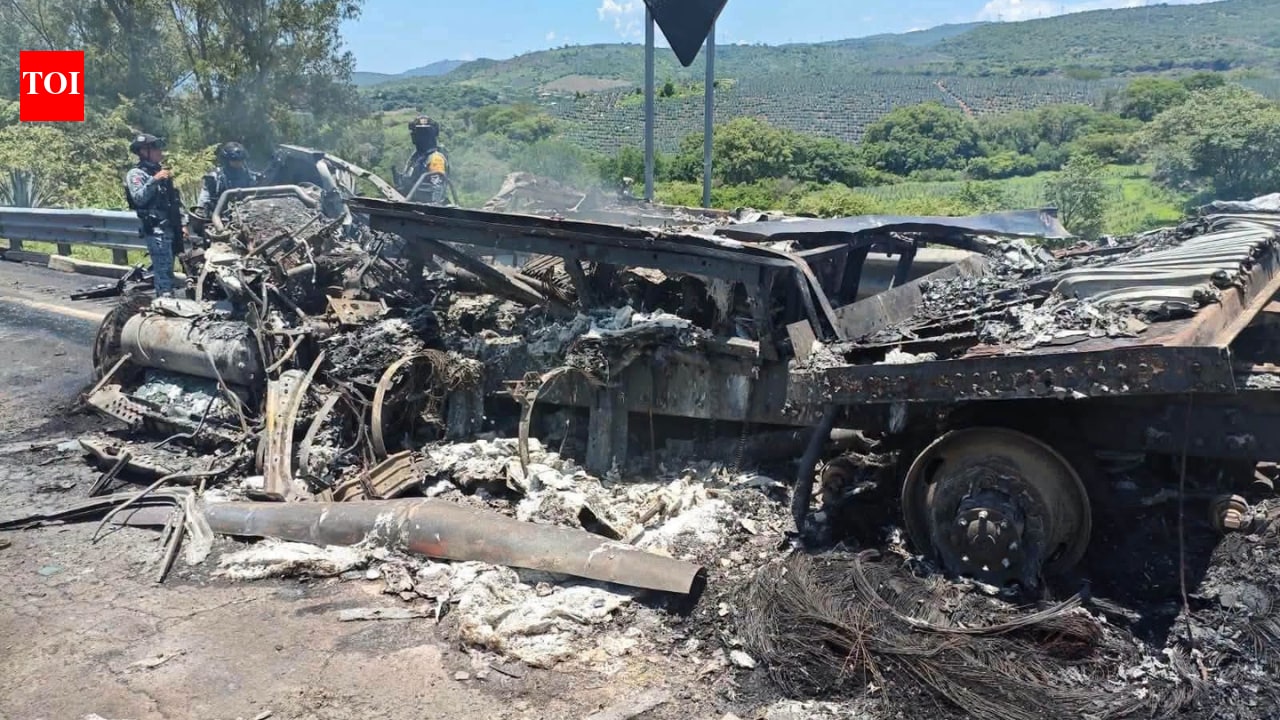
Nine people, including two children, died after a truck crashed into earlier accident responders. Ten others sustained injuries, with two National Guard officers seriously hurt. Four United States citizens suffered minor injuries in the devastating highway collision. Emergency crews were attending a prior accident involving two trucks when this occurred. Investigations are currently underway to determine the cause of the second crash.
Tragedy on the Mexican Highway: A Fatal Chain of Events
In a harrowing sequence of events, a routine emergency response on a Mexican highway transformed into a mass-casualty disaster. The incident underscores the extreme volatility of highway accident scenes, where the arrival of first responders is intended to secure safety but can inadvertently create a high-risk zone for secondary collisions. The sheer scale of the loss—nine lives extinguished and ten others injured—highlights a systemic vulnerability in how traffic is managed during active emergency interventions.
The Anatomy of a Secondary Collision
The disaster unfolded in two distinct phases. Initially, emergency crews were deployed to manage a prior accident involving two trucks. While these responders were focused on the victims and the wreckage of the first crash, a third truck slammed into the emergency response vehicles. This type of 'secondary accident' is particularly lethal because responders often have their backs to oncoming traffic, and the visual distraction of a crash scene can lead following drivers to decelerate too late or fail to notice warning signals. The impact was devastating, instantly turning a rescue operation into a second, more violent crime scene.
The Human Cost and International Implications
The demographics of the casualties add a layer of profound tragedy to the event. The death of two children among the nine fatalities emphasizes the indiscriminate nature of such collisions. Furthermore, the involvement of the National Guard, with two officers sustaining serious injuries, illustrates the direct physical risk faced by security forces tasked with traffic control in Mexico. The presence of four United States citizens among the injured also introduces an international dimension, potentially necessitating coordination between Mexican authorities and US consular services to manage the welfare and repatriation of the affected foreigners.
The Peril of High-Speed Transit Zones
This event brings into sharp focus the dangers inherent in high-speed transit corridors. On major Mexican highways, the transition from high-speed cruising to a dead stop at an accident site creates a dangerous kinetic differential. When heavy machinery, such as the truck involved in the second crash, fails to stop, the resulting energy transfer is catastrophic. The fact that emergency vehicles—designed to be highly visible—were unable to prevent this collision suggests a failure in either the driver's attentiveness or the adequacy of the perimeter warnings established by the first responders.
Investigating the Catalyst
As investigations proceed, authorities are likely focusing on several critical variables: driver fatigue, mechanical failure (such as brake malfunction), or the influence of intoxicants. Given the nature of long-haul trucking, driver exhaustion is a frequent contributor to such 'run-off-the-road' or 'rear-end' collisions. Investigators will also analyze the placement of flares, cones, and warning lights to determine if the emergency zone was sufficiently marked to alert oncoming traffic from a distance that would allow a heavy truck to decelerate safely.
Conclusion: A Call for Enhanced Protocols
In summary, this devastating collision is a grim reminder of the precarious environment in which first responders operate. The loss of nine lives, including children and security personnel, serves as a catalyst for re-evaluating highway safety protocols in Mexico. To prevent future tragedies of this magnitude, there must be a rigorous emphasis on early warning systems and the implementation of more robust physical barriers to shield responders from oncoming traffic. Until such systemic changes are realized, the highways remain a perilous landscape for both the traveling public and those who risk their lives to save others.