How Microsoft built its MacBook Pro competitor
Source Entity
Tom Warren
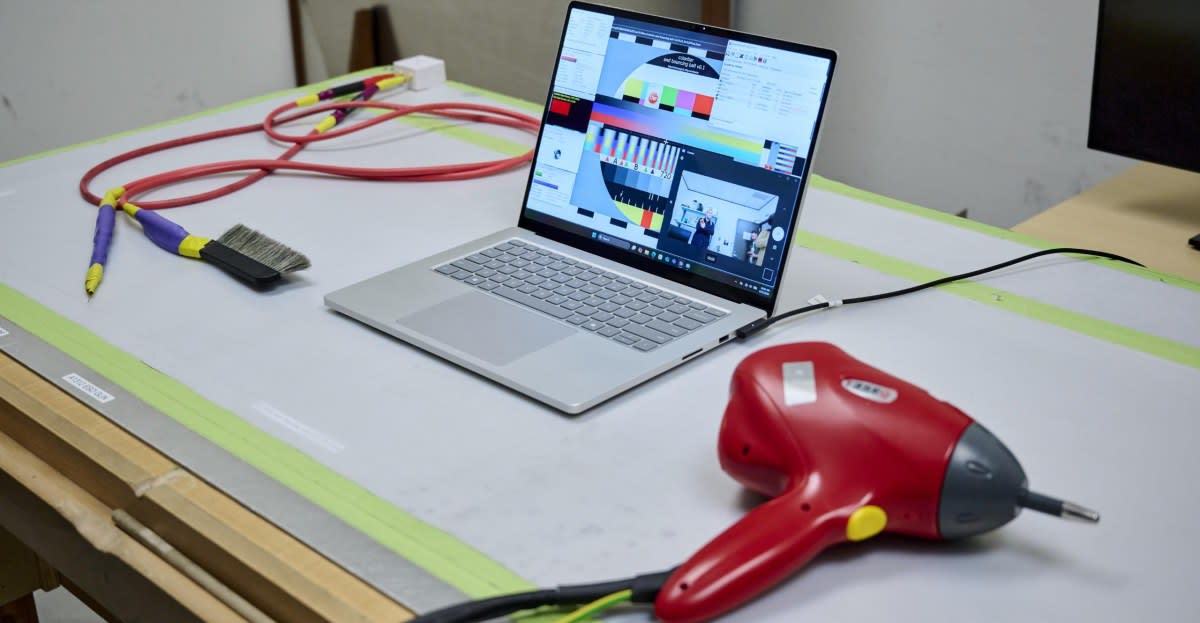
Microsoft is utilizing a specialized, rigorous testing facility in Redmond to ensure the durability and reliability of its new Surface Laptop Ultra. The device marks a significant milestone as the first platform to feature Nvidia's new RTX Spark technology.
The Rigorous Engineering Behind Microsoft’s Surface Evolution
Microsoft’s commitment to hardware quality is exemplified by its secretive, windowless testing laboratory located at the company’s Redmond, Washington, campus. This facility serves as the crucible for the Surface line, where engineers subject prototypes to extreme conditions to simulate years of real-world wear and tear. By utilizing sophisticated robotics to perform thousands of repetitive button presses and employing massive antennas to flood devices with radio waves, Microsoft aims to guarantee that its hardware can withstand the rigors of professional and personal use.
Stress Testing for Durability
Beyond electromagnetic interference testing, the lab focuses on physical resilience. Engineers construct mechanical apparatuses designed to drop devices from varying, increasingly daring heights. These drop tests are critical for identifying structural weak points in the chassis and internal components, ensuring that the final consumer product can survive the accidental mishaps common in mobile computing. This obsession with physical durability is a cornerstone of Microsoft’s strategy to compete with industry benchmarks like the MacBook Pro.
The Strategic Pivot to Surface Laptop Ultra
The focus of these latest testing efforts is the Surface Laptop Ultra, a device positioned to challenge the high-end laptop market. Unlike standard iterative updates, the Ultra represents a significant shift in Microsoft’s product architecture. It is designed not just for aesthetics or portability, but as a robust performance machine capable of handling demanding workflows that were previously the exclusive domain of workstation-class devices.
Nvidia RTX Spark: A New Frontier
Perhaps the most notable aspect of the Surface Laptop Ultra is its role as the launch vehicle for Nvidia’s RTX Spark. This integration marks Nvidia’s strategic entry into a new segment of AI-accelerated mobile computing. By debuting this technology within the Surface ecosystem, Microsoft and Nvidia are signaling a collaborative effort to integrate advanced AI processing directly into the laptop form factor, potentially redefining the capabilities of ultra-portable hardware.
Future Trends and Market Implications
The introduction of the Surface Laptop Ultra suggests a future where high-end laptops are judged as much by their internal AI-processing capabilities as by their raw CPU speed. As Microsoft continues to refine its testing protocols to accommodate these complex new chips, the industry can expect a move toward more integrated, specialized hardware platforms. This trend toward 'AI-first' laptops will likely force competitors to accelerate their own research and development cycles, placing a higher premium on the kind of rigorous, lab-based validation currently practiced in Redmond.