The case of the missing distinguished jurists
Source Entity
Latest News: Todays Latest News Headlines from India & World | Hindustan Times | Hindustan Times
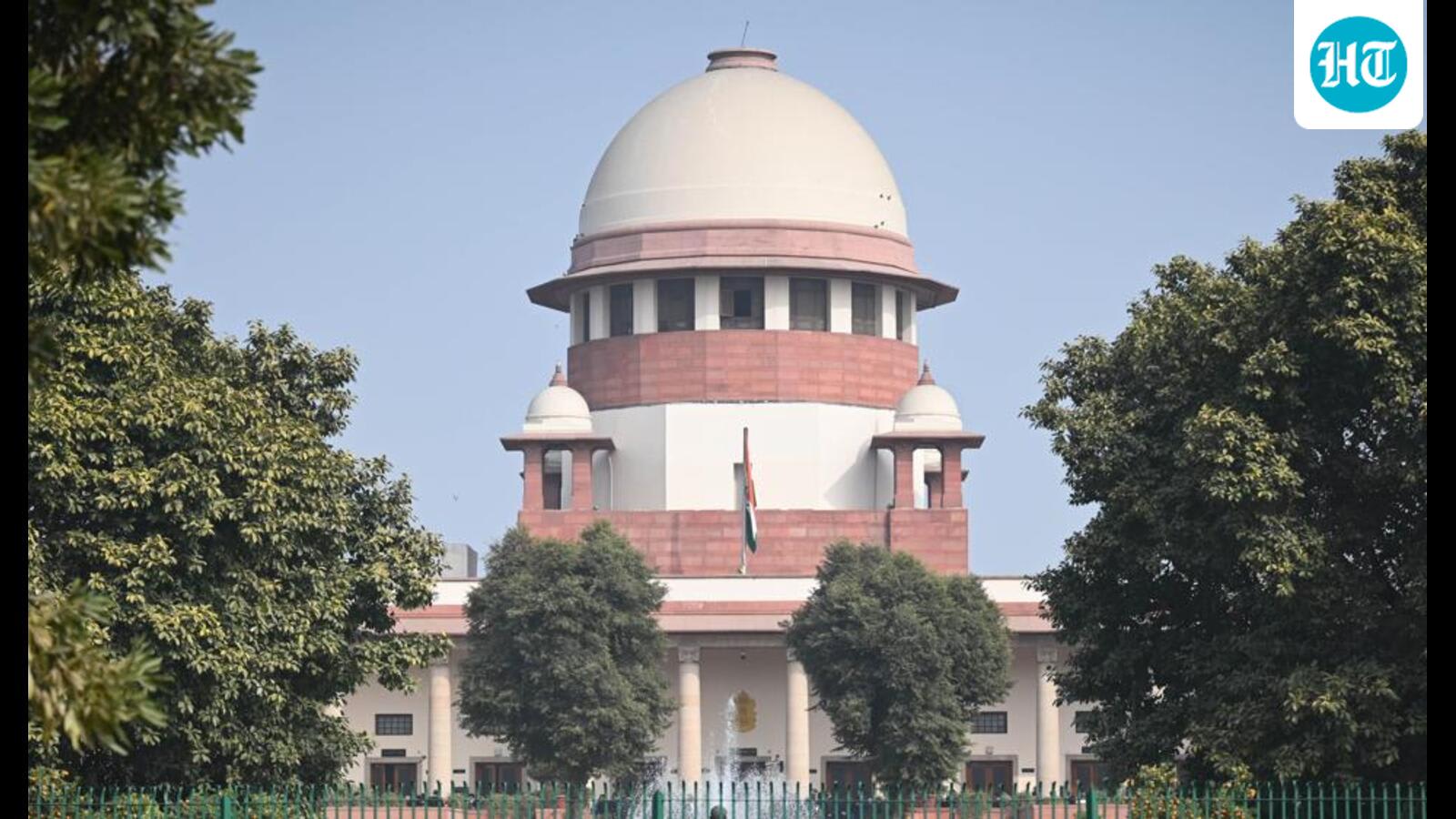
Supreme Court Justice Ujjal Bhuyan has highlighted the absence of 'distinguished jurists' in judicial appointments despite constitutional provisions. This critique underscores a systemic neglect of legal academia in India's highest court, contrasting with international practices.
The Constitutional Oversight: Missing Jurists in India’s Judiciary
Justice Ujjal Bhuyan’s recent remarks regarding the absence of 'distinguished jurists' on the Supreme Court bench have reignited a long-standing debate concerning the composition of India’s highest judiciary. While Article 124 (3) of the Indian Constitution explicitly provides a pathway for the appointment of a 'distinguished jurist' as a Supreme Court judge, this provision has remained a dormant constitutional promise since the inception of the Republic. This gap represents a significant departure from the vision of the framers of the Constitution, who sought to create a bench enriched by both judicial experience and scholarly legal theory.
The Constitutional Framework and Its Ambiguities
The Indian Constitution identifies three distinct categories for Supreme Court appointments: judges with five years of High Court experience, advocates with ten years of practice, and the elusive 'distinguished jurist.' Unlike the first two categories, which rely on quantifiable professional milestones, the term 'distinguished jurist' lacks a formal legal definition. This lack of clarity has historically been used as a procedural shield to prioritize career judges and advocates, effectively sidelining legal academics from the highest levels of judicial decision-making.
Historical Context and Global Inspiration
The inclusion of this clause during the Constituent Assembly debates was heavily influenced by international precedents, most notably the appointment of Felix Frankfurter to the United States Supreme Court. Frankfurter, a preeminent Harvard law professor, brought a unique theoretical depth to the American bench, demonstrating how academic rigor can inform complex constitutional adjudication. Indian visionaries like H.V. Kamath and M.A. Ayyengar championed this provision, hoping that Indian law schools would eventually produce candidates capable of bridging the gap between abstract legal philosophy and practical judicial application.
The Cultural Malady: Respect for Academia
Beyond the procedural hurdles lies a cultural issue within the legal fraternity: the systematic undervaluation of law academics. In India, the distinction between a practitioner and a scholar is sharp, often resulting in a hierarchy that favors litigation experience over research and pedagogical contributions. Justice Bhuyan’s critique touches upon this 'malady,' suggesting that the judiciary loses out on the intellectual diversity and critical perspective that a career academic could bring to the Supreme Court’s deliberations.
Broader Implications for Judicial Reform
The failure to utilize the 'distinguished jurist' clause has led to a monolithic judicial culture where the bench is populated almost exclusively by those who have spent their careers in courtrooms. While trial and appellate experience are vital, a judiciary that excludes the academic lens may struggle to address emerging legal challenges in technology, international law, and socio-economic theory. Integrating academics would not only fulfill a constitutional mandate but also modernize the Supreme Court’s approach to complex, multi-disciplinary jurisprudence.
Future Trends and Conclusion
If the judiciary is to evolve, it must move toward a more inclusive definition of judicial excellence. Future appointments could benefit from a structured framework that defines 'distinguished jurist' through published research, significant contributions to constitutional law, and international legal recognition. By finally appointing a jurist to the Supreme Court, India would honor the original intent of its Constitution and ensure that the bench remains a repository of both judicial wisdom and transformative legal theory.
Verification Required?