Mortgage rates jump for the sixth straight week, hitting both refinance and homebuyer demand hard
Source Entity
US Top News and Analysis
Mortgage rates have climbed for six consecutive weeks, surpassing 7% and suppressing demand for both new home purchases and refinances. This trend, marking the highest rates since late 2023, continues to create significant headwinds for the US housing market.
The Resurgent Mortgage Rate Crisis
The housing market is facing renewed pressure as mortgage rates have surged for the sixth consecutive week, reaching levels not seen since November 2023. This upward trend in borrowing costs, which saw the average 30-year fixed-rate mortgage climb to 7.30% from 7.12%, has created a formidable barrier for prospective homeowners and current property owners alike. As the cost of financing a home increases, the barrier to entry for the residential real estate market continues to shift, signaling a cooling period for market activity.
Impact on Market Demand
According to data from the Mortgage Bankers Association, the direct result of this rate hike has been a 6% decline in overall weekly mortgage demand. This marks the seventh straight week of declining activity, illustrating a sustained reluctance among consumers to engage with the housing market under current fiscal conditions. With points rising to 0.75, the financial burden of securing a loan has effectively priced many buyers out of the market, leading to a noticeable stagnation in transaction volume.
The Refinance Sector's Decline
While homebuyer demand is struggling, the refinance sector has been hit particularly hard, experiencing a 9% drop in applications. Historically, refinancing serves as a critical release valve for homeowners looking to lower monthly payments or tap into equity. However, with rates now firmly above 7%, the overwhelming majority of existing mortgage holders—who likely secured lower rates in previous years—find no incentive to refinance. This effectively freezes a large portion of the housing stock, as homeowners are disincentivized from moving or adjusting their financial positions.
Economic Implications and Constraints
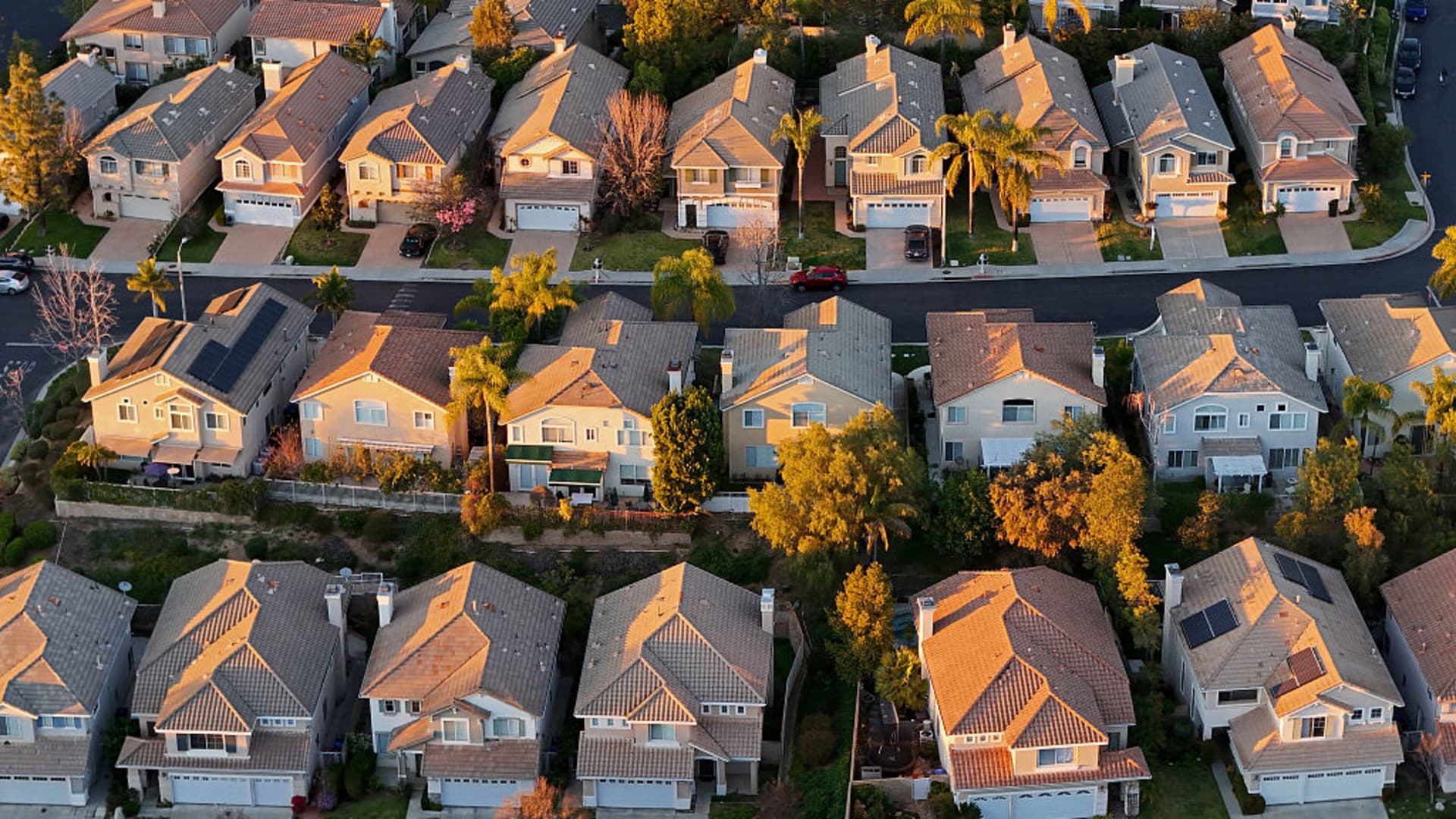
These developments are occurring in a high-interest rate environment that complicates the broader economic outlook. The rise to 7.30% for conforming loan balances, defined as $832,750 or less, highlights the increased cost of capital for the average American household. As interest rates remain elevated, the velocity of home sales in regions like Thousand Oaks, California, serves as a microcosm for the national trend, where the visual landscape of single-family homes remains static as potential buyers remain sidelined.
Future Trends and Outlook
Looking ahead, the trajectory of the housing market will remain tethered to the movement of these mortgage rates. If rates continue to climb or stabilize at these high levels, we can expect a prolonged period of reduced inventory turnover and decreased application activity. Market participants are now forced to recalibrate their expectations, moving away from the competitive environment of previous years toward a more cautious and selective purchasing strategy. The persistence of these rates suggests that the housing market will remain in a state of adjustment for the foreseeable future, as both buyers and sellers grapple with the reality of a higher-cost borrowing environment.