MRAM Basics: How Magnetic Memory Is Replacing Embedded Flash
Source Entity
Hacker News
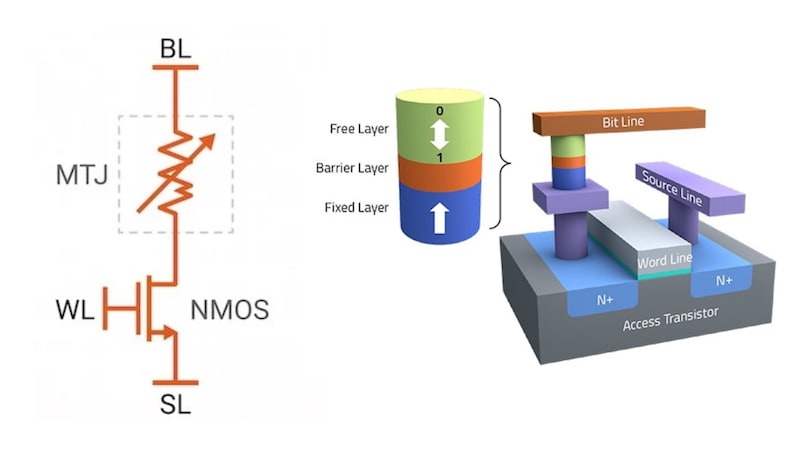
Magnetoresistive random-access memory (MRAM) is emerging as a superior alternative to traditional flash memory for embedded systems. By storing data magnetically rather than via electrical charge, MRAM overcomes critical limitations in write speed, endurance, and process scaling.
The Shift Toward Magnetic Memory in Embedded Systems
For decades, flash memory has served as the backbone of embedded computing, but the industry is reaching a critical inflection point. As microcontrollers shrink to advanced process nodes, the physical limitations of floating-gate flash memory have become increasingly apparent. The transition toward Magnetoresistive Random-Access Memory (MRAM) represents a fundamental shift in how embedded devices manage data, moving away from trapped electrical charges toward magnetic states.
The Technological Limitations of Flash
Flash memory relies on trapping electrons on a floating gate to represent data. This process is inherently cumbersome; because the gate must be cleared before new data can be written, every write operation requires a preceding erase cycle. This architecture imposes significant latency penalties, making flash relatively slow for high-frequency operations. Furthermore, the physical stress of repeated electron tunneling eventually degrades the oxide layer, limiting a cell's lifespan to between 10,000 and 100,000 write/erase cycles. This endurance limit forces engineers to implement complex wear-leveling algorithms that add overhead and complexity to firmware design.
Scaling Challenges at Advanced Nodes
Beyond endurance, flash memory faces a severe scaling wall. As silicon manufacturing moves toward 22 nm and 16 nm process nodes, traditional flash memory becomes impractical to integrate on-chip. The physical properties required to maintain a reliable floating gate do not shrink linearly with the rest of the logic, leading to increased power consumption and design area inefficiencies. This is where MRAM has stepped in as a viable successor, offering a more scalable path for modern, power-efficient microcontrollers.
How MRAM Changes the Paradigm
Unlike flash, MRAM stores information using magnetic states. This fundamental difference eliminates the need for the slow, destructive erase cycles that plague flash memory. Because magnetic state changes do not involve the same physical wear on the storage medium, MRAM provides significantly higher endurance, effectively removing the wear-leveling bottleneck. For embedded engineers, this means that data logging can be performed much more frequently without the risk of wearing out the memory, and firmware updates can be executed with greater reliability and speed.
Implications for Firmware and Future Design
Adopting MRAM requires a shift in how firmware is architected. Engineers must now account for the unique characteristics of magnetic memory, which operates more like a high-speed, non-volatile RAM than traditional flash. As we look toward the future of the Internet of Things (IoT) and edge computing, where rapid data processing and high reliability are paramount, the integration of MRAM into 22 nm and 16 nm microcontrollers will likely become the industry standard. This transition not only solves the immediate scaling issues but also opens the door to more sophisticated, data-intensive applications at the edge.