Tesla’s FSD v15 turns driving visuals into Grand Theft Auto
Source Entity
Andrew J. Hawkins
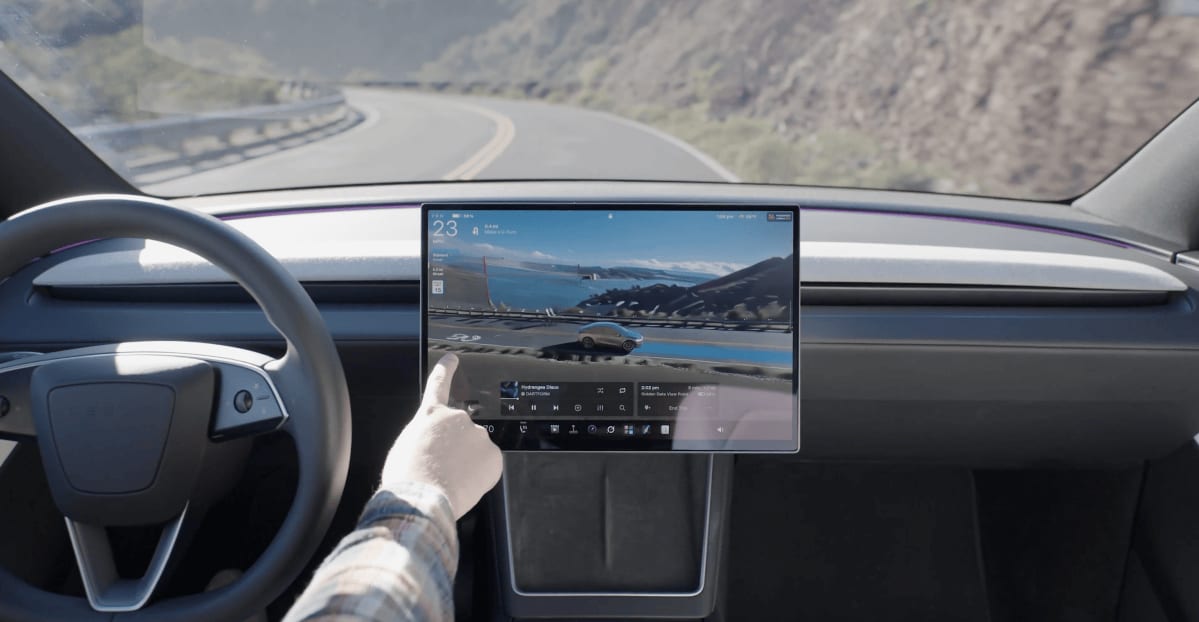
Tesla has launched its Full Self-Driving (Supervised) v15 update, featuring a 'Reality View' that replaces wireframe graphics with photorealistic, generative visuals. This overhaul allows drivers to interact directly with the vehicle's planned path via a third-person perspective.
The Evolution of Tesla's Autonomous Interface: FSD v15
Tesla has officially initiated the rollout of its Full Self-Driving (Supervised) v15, a significant milestone in the company’s ongoing effort to refine its autonomous driving stack. This update represents a comprehensive, ground-up overhaul of the end-to-end driver assist architecture, signaling a shift toward more immersive and intuitive human-machine interaction. By moving away from legacy systems, Tesla is prioritizing not just the underlying logic of the vehicle's navigation, but how that logic is communicated to the driver.
The Advent of Reality View
The most striking feature of the v15 release is the introduction of 'Reality View.' Departing from the traditional, utilitarian wireframe graphics that have defined Tesla’s dashboard displays for years, Reality View utilizes real-time generative technology to render the vehicle's surroundings in high fidelity. This transformation provides a live, overhead camera perspective that mirrors the aesthetic quality of modern high-end gaming, drawing immediate and widespread comparisons to the visual fidelity of titles like Grand Theft Auto VI.
Interactive Autonomy
Beyond mere aesthetics, Reality View serves a functional purpose in the vehicle's operational feedback loop. The system renders complex urban elements—including buildings, crosswalks, pedestrians, and surrounding traffic—with unprecedented photorealism. This visual clarity is designed to bridge the trust gap between the driver and the AI. By allowing users to see exactly what the car perceives, Tesla is enabling a new level of interaction where drivers can tap the screen to influence the vehicle's planned path, effectively turning the display into a command interface.
Technical Implications and Human-Machine Trust
This shift to end-to-end generative displays suggests that Tesla is moving toward a future where the car’s 'thought process' is transparently mapped onto the driver's screen. By visualizing the environment in a photorealistic third-person view, Tesla aims to reduce the anxiety often associated with supervised driving. When a driver understands how the system interprets a crosswalk or a pedestrian, the transition between automated maneuvering and human intervention becomes more seamless and predictable.
Future Trends in Autonomous Visualization
The adoption of gaming-engine-style visuals in automotive UI is likely to set a new industry standard. As vehicles become increasingly autonomous, the dashboard must evolve from a cluster of gauges into a sophisticated situational awareness center. Tesla’s move to make FSD v15 a generative, interactive experience indicates that the company believes the future of driving is as much about digital perception as it is about physical movement. As this technology matures, it will be critical to observe how this interface impacts driver engagement and safety metrics over long-term use.