Changing City: Tunneling ends on Kharghar-Turbhe Link Road, Navi Mumbai now set for quicker travel
Source Entity
Sabah Virani
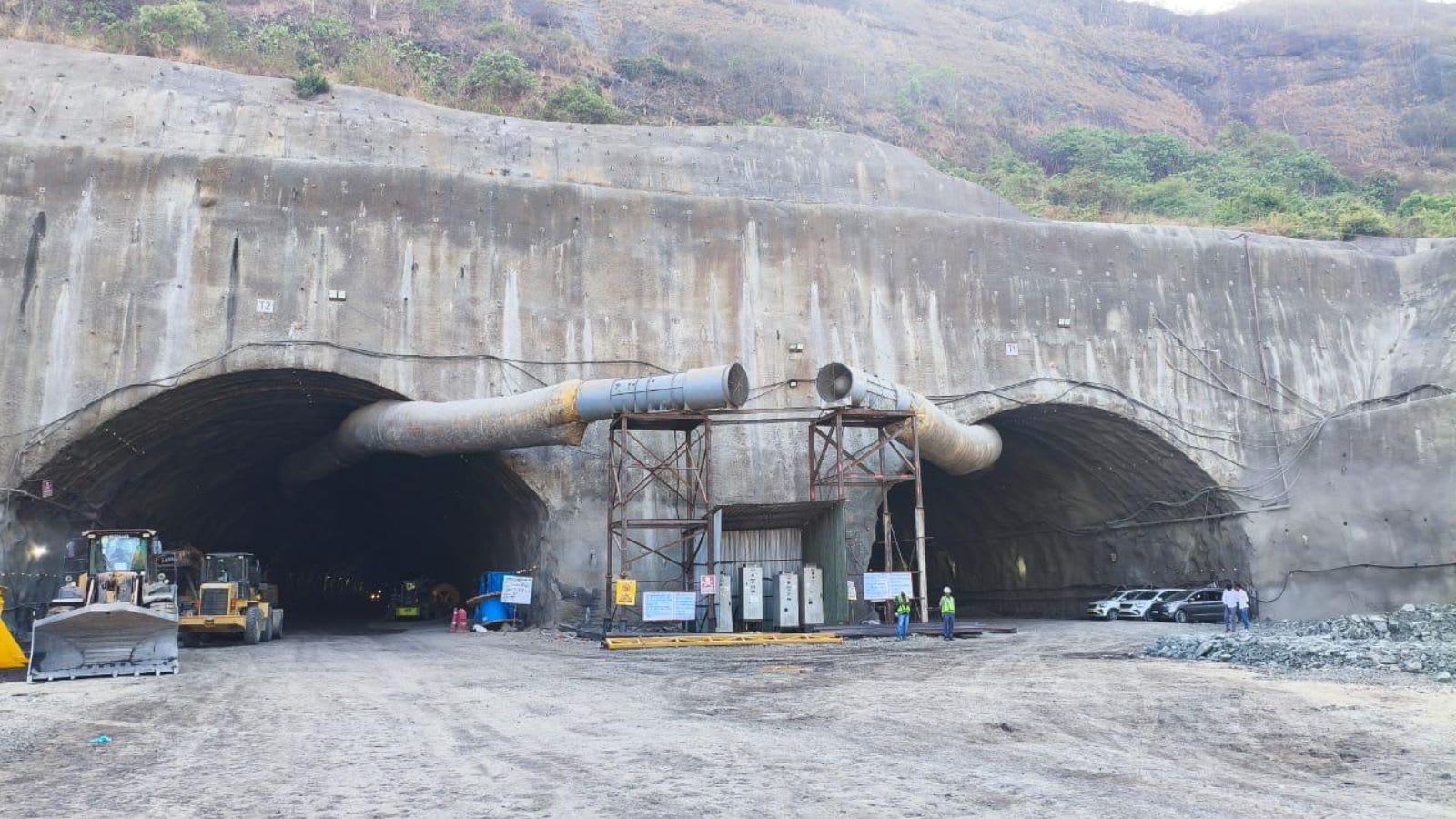
Navi Mumbai marks a major infrastructure milestone with the completion of tunneling for the Kharghar-Turbhe Link Road. Meanwhile, prominent architects have formally opposed the Bandra-Kurla Complex pod taxi project, citing concerns over economic inefficiency and low passenger capacity.
Infrastructure Evolution in Mumbai: Progress and Pushback
The Mumbai Metropolitan Region is currently navigating a pivotal phase in its urban development, characterized by ambitious infrastructure projects designed to alleviate chronic traffic congestion. Two distinct initiatives—the Kharghar-Turbhe Link Road (KTLR) in Navi Mumbai and the Personal Rapid Transit (PRT) system, or 'pod taxi,' in the Bandra Kurla Complex (BKC)—represent the duality of modern urban planning: the pursuit of connectivity versus the scrutiny of economic and functional sustainability.
The KTLR Breakthrough: Engineering Connectivity
The completion of the tunneling phase for the 5.9 km Kharghar-Turbhe Link Road serves as a landmark achievement for Navi Mumbai’s infrastructure. By utilizing the New Austrian Tunnelling Method (NATM), engineers successfully navigated the challenges of creating massive 18-meter-wide tunnels through rocky terrain. The breakthrough, achieved through synchronized blasting and excavation from both ends of the twin tunnels, signals a significant reduction in travel time between these two vital nodes of the city. As the project transitions toward the construction of elevated viaducts and road sections, it promises to reshape the transit landscape of the region.
The Pod Taxi Controversy: A Question of Efficiency
Contrasting the success of the KTLR is the growing opposition to the BKC pod taxi project. A group of distinguished architects, including notable figures such as Brinda Somaya and Rahul Kadri, have formally petitioned Metropolitan Commissioner Sanjay Mukherjee to halt or reconsider the Rs 1,016 crore endeavor. Their primary contention lies in the project's design: a 3.36 km route split into disconnected arms that they argue lacks the capacity to serve as a genuine mass transit solution. The experts suggest that the proposed model prioritizes exclusivity over the inclusive, high-volume transport requirements of a bustling business district like BKC.
Economic and Social Implications
The architects' critique highlights a fundamental tension in urban planning: the cost-to-benefit ratio of high-tech transit solutions. With a projected fare of approximately Rs 21 per kilometer, the pod taxi system is being scrutinized as an expensive, low-capacity alternative to more traditional, scalable transit options. Critics argue that public funds could be more effectively utilized to address the broader structural needs of the city's workforce, rather than subsidizing a niche transit mode that may offer limited relief to the average commuter.
Looking Ahead: The Future of Urban Mobility
As Mumbai continues to expand, the success of projects like the KTLR will depend on their integration into the wider transport network. However, the pushback against the pod taxi project serves as a critical reminder that large-scale urban interventions require rigorous public and professional debate. Whether these projects succeed depends not just on engineering prowess, but on their ability to provide tangible, cost-effective benefits to the populace. The coming months will likely see further evaluation of whether the BKC project can be pivoted to better align with the city's real-world transit demands.