Why long jumpers were slipping at Asian Games: Take-off board material, lack of incline & rain
Source Entity
Nihal Koshie
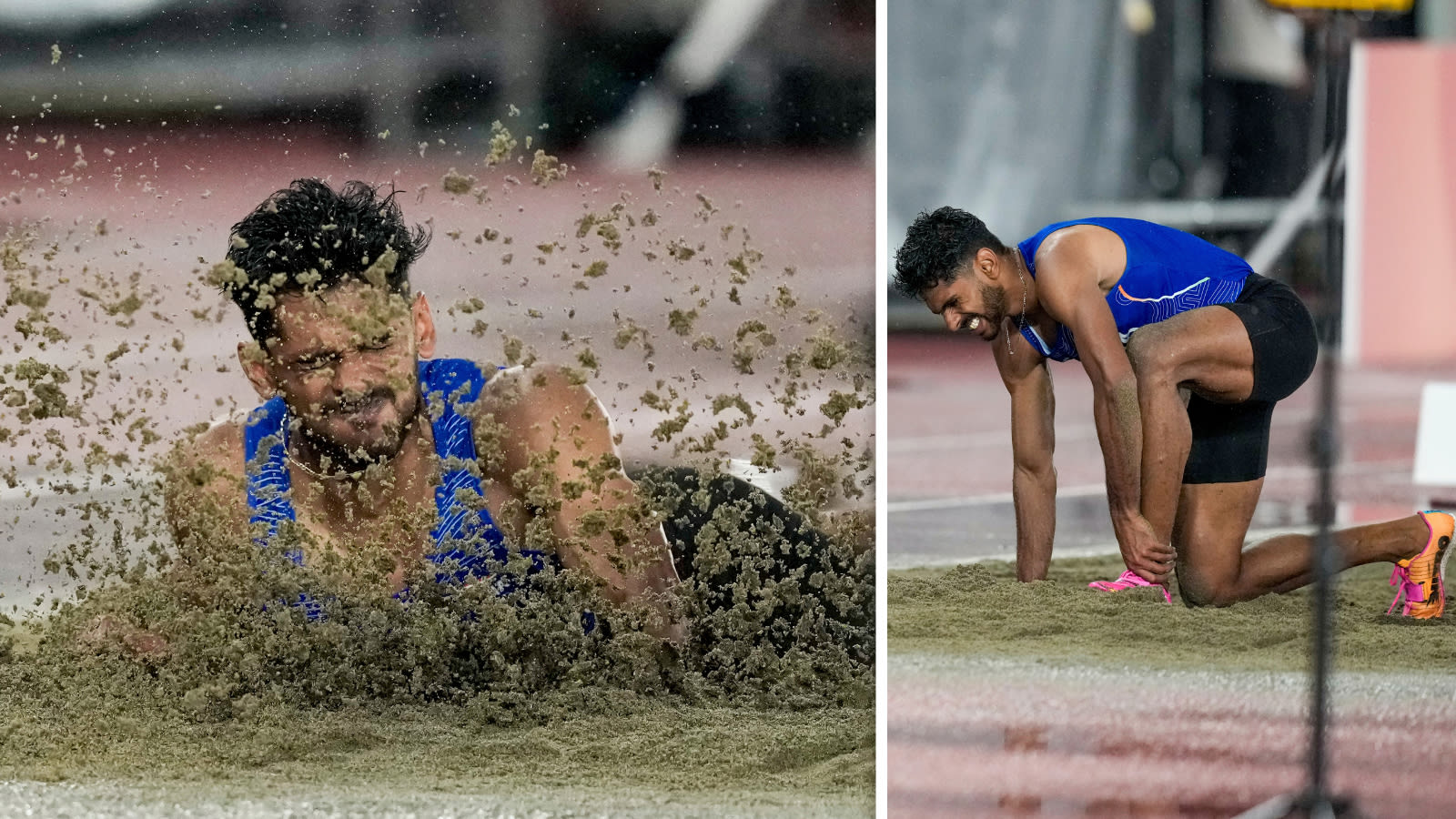
Indian long jumper Murali Sreeshankar suffered an ankle injury at the Asian Games due to hazardous conditions on the take-off board. Experts attribute the dangerous surface to a combination of new composite materials, lack of incline, and adverse rainy weather.
The Hazards of Modern Track Surfaces: A Safety Analysis
The recent incident involving Indian long jumper Murali Sreeshankar at the Asian Games has brought to light critical safety concerns regarding modern athletic infrastructure. During the men's long jump final, Sreeshankar suffered an ankle injury after stepping onto the take-off board, highlighting a precarious intersection between technological innovation in sports equipment and athlete welfare.
The Impact of Composite Materials
Central to this issue is the introduction of new composite materials used in the construction of take-off boards. Unlike traditional materials, these synthetic surfaces are being scrutinized for their friction coefficients, especially when subjected to moisture. Sreeshankar’s experience suggests that these materials may not provide the necessary grip required for the high-impact nature of the long jump, particularly when athletes are generating maximum force during their approach.
Environmental Factors and Technical Design
Beyond the material composition, the technical design of the facility played a significant role. The lack of an adequate incline on the approach and the take-off area exacerbated the risks posed by the rainy conditions. In high-stakes athletics, even a minor discrepancy in surface geometry or drainage can turn a standard competitive environment into a hazardous one, forcing athletes to compromise their technique to avoid injury.
The Psychological Toll on Athletes
Sreeshankar’s immediate reaction—fearing a career-altering injury following his previous knee surgery in 2024—speaks to the immense psychological pressure athletes face. The uncertainty of whether a surface will hold under the stress of a jump introduces a cognitive distraction that hinders performance. For elite jumpers, the confidence to plant their foot firmly is paramount; when that trust is eroded by unstable equipment, the risk of injury rises exponentially.
Broader Implications for Event Hosting
This incident serves as a wake-up call for international sporting federations to re-evaluate the standards for track and field infrastructure. If new composite materials are to be used, they must undergo rigorous testing under various weather conditions to ensure they remain safe for competition. The Asian Games experience underscores that safety protocols must be as advanced as the materials being implemented.
Conclusion and Future Trends
While Sreeshankar’s injury was fortunately not season-ending, requiring only six to eight weeks of rest, the event marks a pivot point for athletic safety discourse. Future trends will likely see a move toward mandatory "all-weather" certification for all surface components, including take-off boards, to prevent similar occurrences. Ensuring the physical integrity of the competition field is the foundational requirement for the future of professional long jumping.