Musk’s tip to tech CEOs: Best AI models safety test is to put them on Delta flight
Source Entity
TOI TECH DESK
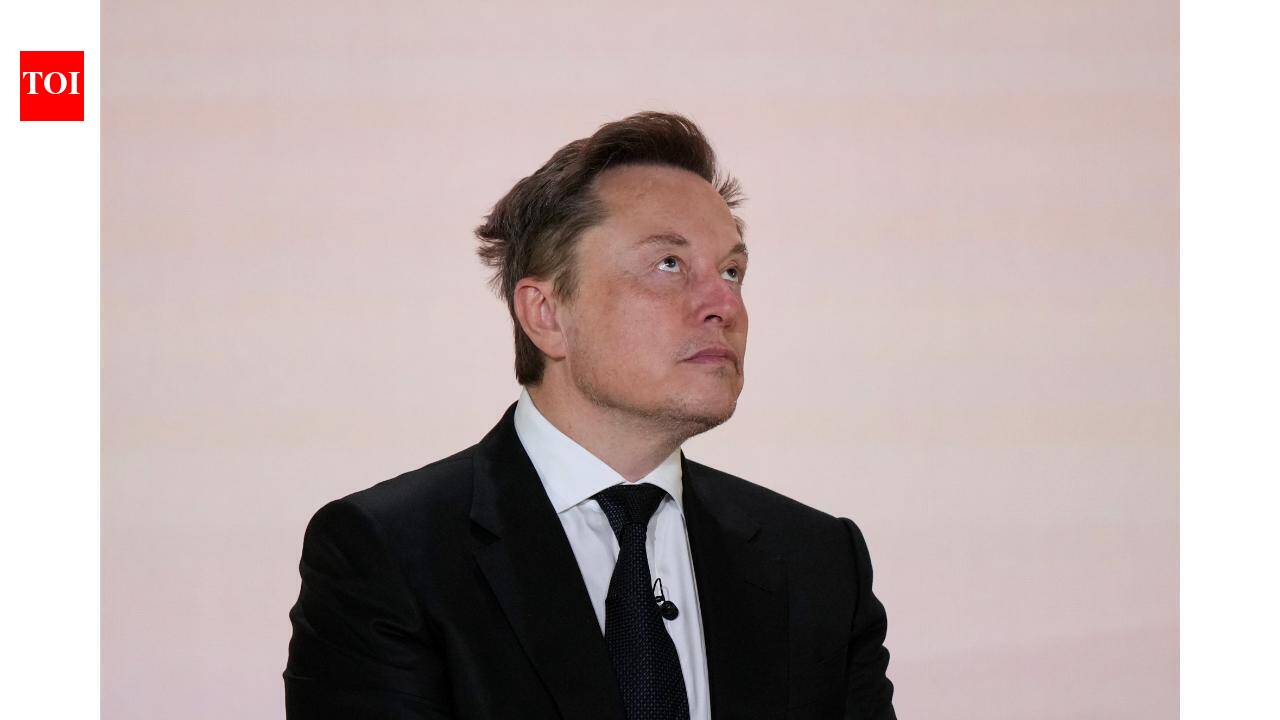
Elon Musk has criticized Delta Air Lines for choosing Amazon's connectivity technology over Starlink, while major telecom CEOs remain skeptical of Musk's ambitions for satellite-based mobile services. These developments highlight the growing competitive friction between traditional telecommunications giants and Musk's satellite-driven infrastructure goals.
The Expanding Friction Between Musk’s Satellite Ambitions and Legacy Telecom
Elon Musk’s recent remarks regarding Delta Air Lines and the broader telecommunications industry reflect a deepening rivalry between his satellite-based infrastructure and established market players. Musk’s humorous suggestion that the best way to test AI safety is to place it on a Delta flight serves as a thinly veiled critique of the airline's decision to bypass Starlink in favor of Amazon’s connectivity solutions. By suggesting that Delta’s current in-flight technology effectively cuts off internet access, Musk is leveraging his platform to question the competitive viability of airlines that do not integrate his high-speed satellite network.
The Delta-Amazon Partnership vs. Starlink
Delta Air Lines’ commitment to implementing Amazon’s 'Leo' technology by 2028 represents a significant strategic pivot that explicitly excludes Starlink. Musk’s public assertion that this decision will alienate customers stems from his belief that Starlink’s performance metrics are currently unmatched in the aviation sector. This clash underscores a broader battle for the future of in-flight connectivity, where airlines are forced to choose between proven terrestrial-based or alternative satellite systems and the rapidly scaling, yet disruptive, Starlink constellation.
Skepticism from Telecom Titans
Beyond the aviation sector, Musk’s broader vision for the mobile industry is facing unified opposition from major telecommunications leaders. AT&T CEO John Stankey and T-Mobile executive Peter Osvaldik have both openly questioned the feasibility of Starlink’s expansion into the mobile space. Their skepticism is rooted in the substantial investments already poured into traditional fiber optics, which they argue provide a level of reliability and speed that satellite technology currently struggles to replicate in high-density urban environments.
The Technical and Competitive Divide
At the core of this disagreement is a fundamental difference in philosophy regarding infrastructure. Stankey and Osvaldik maintain that the technical groundwork for satellite-based cellular services is insufficient to disrupt the established mobile market. They contend that the latency and bandwidth constraints inherent in satellite communication make it a poor substitute for the robust, fiber-backed networks that currently support modern urban data consumption. This skepticism suggests that legacy providers view Musk’s efforts as more of a niche solution for rural connectivity rather than a direct threat to their core urban infrastructure.
Future Trends and Market Implications
Looking ahead, the tension between Starlink and traditional providers is likely to intensify. As Musk continues to push for satellite-to-cellular integration, he is essentially challenging the monopoly that fiber-optic providers have held over data delivery. If Starlink can prove its efficacy in high-traffic areas, it could force a radical shift in how airlines and mobile carriers invest in their future networks. However, until such proof is provided, the industry establishment remains firm in its belief that traditional infrastructure remains the superior standard for the global mobile economy.