Drones deliver food and remove bodies after Nepal’s flood disaster
Source Entity
Jeremy Hsu
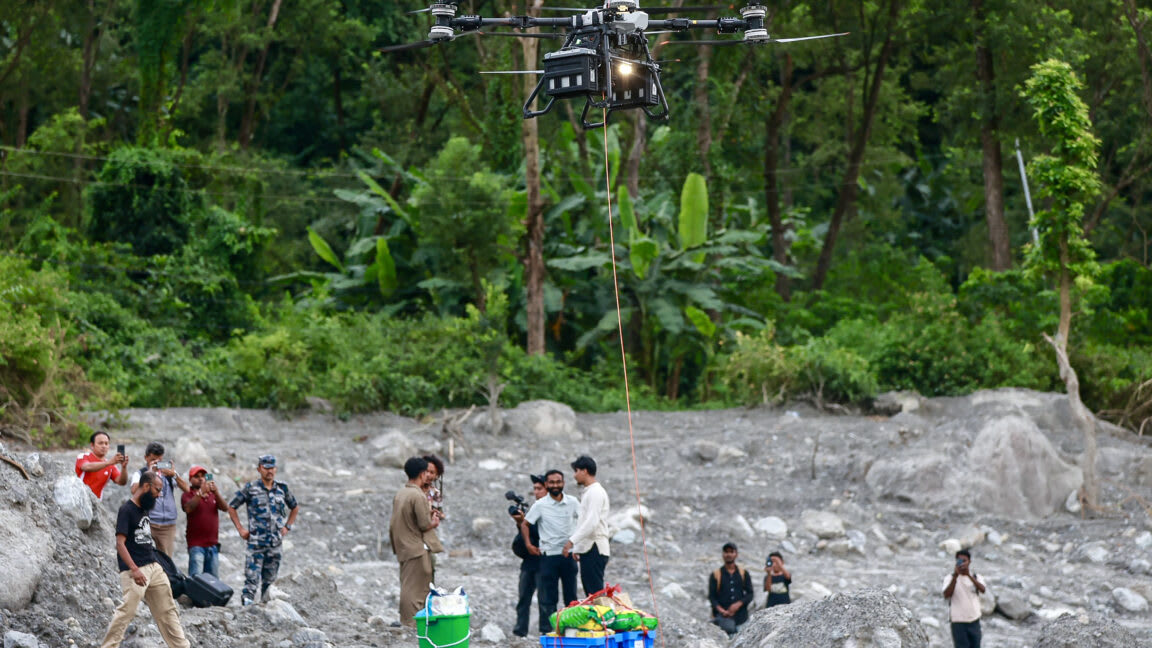
Chinese-made DJI FlyCart 100 drones are providing critical relief in Nepal following a devastating glacier collapse. These drones are currently airlifting supplies and recovering bodies in areas made inaccessible by flood debris.
The Role of Autonomous Aviation in Himalayan Disaster Relief
The recent deployment of DJI FlyCart 100 drones to the Nepal-China border marks a significant milestone in disaster management within the rugged Himalayan terrain. Following a catastrophic glacier collapse on August 26, which triggered massive floods of mud and debris, traditional rescue methods were rendered largely ineffective by the destruction of valley infrastructure and border crossings. The use of advanced heavy-lift drones has provided a lifeline to isolated communities, demonstrating how high-altitude technological integration can mitigate the logistical nightmares inherent in mountain rescue operations.
Technical Capabilities and Tactical Deployment
The DJI FlyCart 100, originally designed for high-altitude supply runs to Mount Everest base camps, has proven uniquely suited for this crisis. Equipped with a specialized 30-meter rope and winch system, these drones can transport between 187 and 220 pounds of payload. This capacity is critical not only for delivering food and medical supplies to survivors but also for the sensitive task of recovering bodies from terrain that is either too unstable for human rescuers or physically blocked by the aftermath of the flash flood.
The Logistics of a Remote Crisis
Nepal’s army is currently managing a fleet of four donated drones, performing between 10 and 16 sorties per day. This operational rhythm highlights the efficiency of aerial logistics in disaster zones where ground transportation has been severed by hydropower project damage and debris flows. By bypassing the need for road clearance, these unmanned aerial vehicles allow for a rapid response that can be the difference between life and death in the immediate aftermath of a climate-induced disaster.
Environmental Context and Climate Risks
The disaster, triggered by a partial glacier collapse, underscores the increasing volatility of the Himalayan region due to global environmental changes. As glaciers retreat and become unstable, the frequency of sudden surges of water and sediment—known as Glacial Lake Outburst Floods (GLOFs)—is rising. This event serves as a stark reminder that infrastructure projects, including hydropower plants, must now account for these high-velocity geohazards, necessitating a more robust reliance on rapid-response technologies like drone fleets.
Future Trends in Disaster Mitigation
Looking ahead, the successful integration of heavy-lift drones in Nepal will likely serve as a blueprint for other mountainous nations prone to natural disasters. As drone battery technology improves and payload capacity increases, the reliance on human-crewed helicopters for supply drops in dangerous, high-altitude zones may decrease. This shift promises not only to reduce the risk to rescue personnel but also to lower the cost and increase the speed of humanitarian aid deployment in the world's most inaccessible regions.
Conclusion
The utilization of Chinese-made drone technology in the Nepal flood disaster highlights a transformative shift in emergency response. By combining heavy-lift capabilities with high-altitude endurance, these drones have become indispensable tools for both humanitarian aid and recovery efforts. As the region continues to face environmental instability, the continued deployment and potential scaling of such drone programs will remain a vital component of Nepal's disaster resilience strategy.