AI disqualification yields new Nikon Small World in Motion winner
Source Entity
Jennifer Ouellette
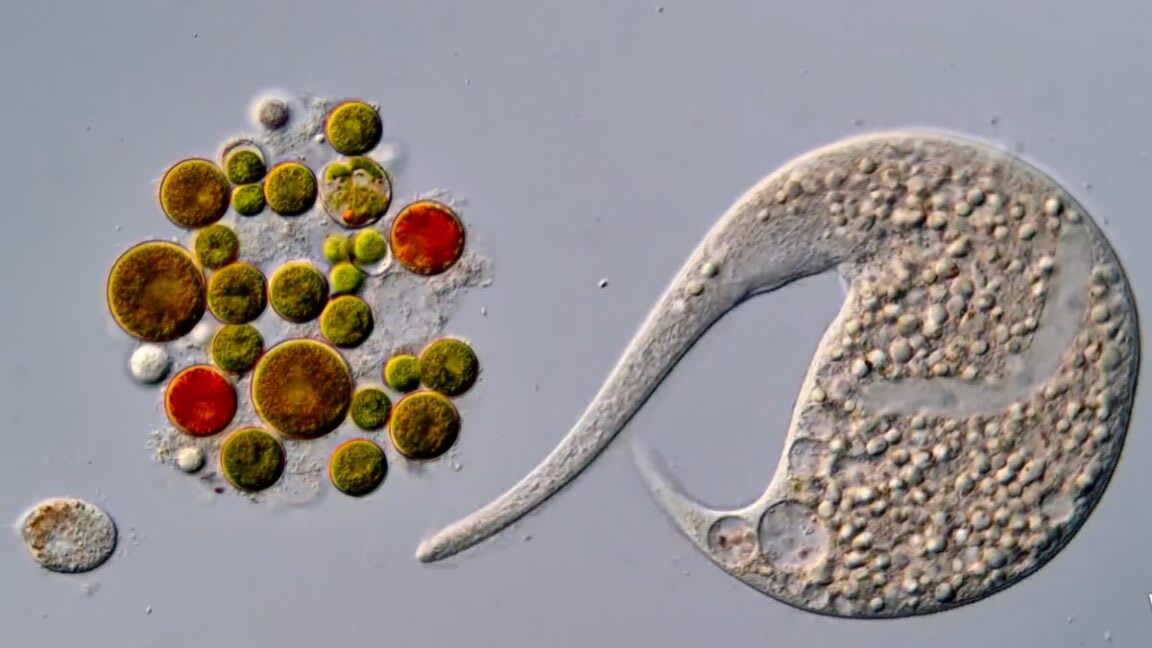
Nikon has disqualified a winning entry in its Small World in Motion contest after finding the video was created using generative AI. The prize has been re-awarded to Nguyen Nam Nhat of Vietnam, prompting Nikon to review its competition rules.
The Intersection of Microscopy and Generative AI
The integrity of scientific documentation recently faced a significant challenge when Nikon disqualified the winner of its prestigious 'Small World in Motion' competition. The winning video, initially credited to Dr. Ning Xu of Tsinghua University, purported to show cilia beating within the airways of a child suffering from a rare respiratory condition. However, following public scrutiny from the scientific community, Nikon launched an investigation and determined that the entry violated the competition's strict guidelines regarding the use of generative AI.
The Anatomy of the Controversy
The skepticism surrounding Dr. Xu’s entry was driven by experts who identified structural anomalies inconsistent with biological reality. According to reports, observers noted that cellular features in the video appeared and disappeared in ways that defied the laws of cellular biology. Furthermore, some researchers alleged the presence of artifacts resembling AI watermarks. These technical inconsistencies raised alarm bells, suggesting that the video was not a pure representation of microscopic observation, but rather a digital synthesis.
The Admission and Disqualification
The controversy intensified when Dr. Xu reportedly acknowledged on LinkedIn that an 'unsupervised neural-network method' was utilized in the production of the video. Nikon’s subsequent investigation confirmed that the entry did not comply with their rules, which mandate that submissions must be captured using powerful microscopes. While Nikon emphasized that the disqualification was not a judgment on Dr. Xu’s broader professional reputation, it serves as a stark reminder of the challenges posed by generative AI in scientific imaging.
A New Winner and Procedural Reform
In the wake of the disqualification, Nikon has officially named a new winner: Nguyen Nam Nhat of Vietnam. His video, which captures the interactions between a roundworm and a single-celled Dileptus, now holds the top honor. This transition highlights the necessity of maintaining rigorous standards in competitions that bridge the gap between artistic expression and scientific documentation.
Implications for Scientific Competitions
Nikon’s 15-year history of hosting this contest has now reached a turning point. The company has announced that it is currently re-evaluating its rules and procedures to better address the rise of generative technology. As AI tools become more sophisticated, the line between authentic microscopy and algorithmic generation becomes increasingly blurred, forcing organizations to implement stricter verification processes to protect the credibility of scientific research.
Future Trends in Digital Evidence
This incident underscores a growing trend where institutions must act as gatekeepers against synthetic misinformation. As generative AI becomes more accessible, competitions that celebrate 'real-world' capture will likely require more robust provenance tracking, such as raw data logs or verified imaging metadata. The Nikon case serves as a cautionary tale for the scientific community, emphasizing that in an era of AI, transparency and authenticity are more critical than ever.