NMC adds 13,186 medical seats, total now at 1.4 lakh; which state added most?
Source Entity
The Indian Express
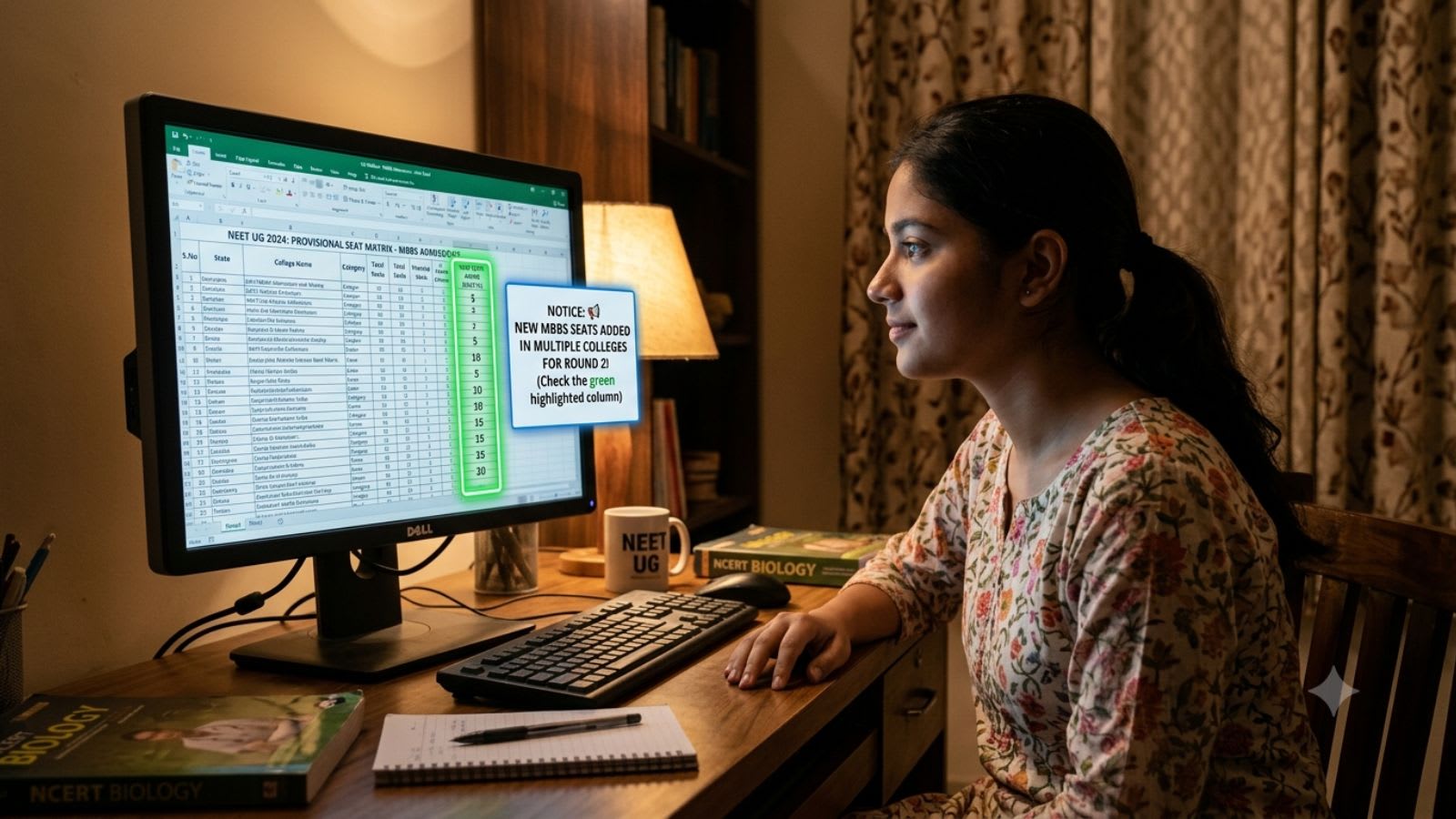
The National Medical Commission has added 13,186 MBBS seats, bringing the national total to 140,214. Despite this expansion, Karnataka reports 384 vacant management quota seats following the second round of NEET UG counselling.
Expansion of India's Medical Education Infrastructure
The National Medical Commission (NMC) has officially updated the national seat matrix, announcing a significant addition of 13,186 MBBS seats across India. This brings the total capacity to 1,40,214, marking a concerted effort to address the growing demand for medical professionals. This expansion, while nationwide, is notably uneven, with 27 states and Union Territories contributing to the growth, while others remain stagnant in their capacity.
Karnataka's Leading Role in Expansion
Among the states contributing to this growth, Karnataka has emerged as the frontrunner, adding 1,650 new MBBS seats to its medical education ecosystem. This influx of seats is critical for a state that remains a primary hub for medical aspirants. However, the sheer volume of new seats creates complexities in the counselling process, as evidenced by the concurrent data coming out of the Karnataka Examinations Authority (KEA).
The Reality of Seat Vacancies
Despite the overall increase in capacity, the latest data from the Karnataka Examinations Authority reveals a nuanced reality regarding seat occupancy. Following the second round of NEET UG counselling, out of 12,010 medical seats available in the state, 11,626 have been successfully allotted. This leaves 384 seats vacant, all of which are categorized under the management quota. Conversely, the dental sector has seen 100% occupancy, with all 2,689 Bachelor of Dental Surgery (BDS) seats filled.
Counselling Logistics and Student Mobility
As the Medical Counselling Committee (MCC) releases provisional Round 2 allotment results for the All India Quota, the movement of students between state and national counselling processes remains high. KEA Executive Director H. Prasanna has clarified that candidates holding seats in both processes have until September 14 to exercise 'Choice-4'. This mechanism allows students to opt for the All India Quota, effectively freeing up state-level seats that will be recycled back into the subsequent rounds of the counselling process.
Future Trends and Systemic Implications
Looking ahead, the mismatch between the rapid increase in seat capacity and the persistence of management quota vacancies highlights a critical trend in medical education economics. While the government's push for more seats aims to bridge the doctor-to-patient ratio gap, the affordability and distribution of these seats—particularly in management quotas—remain a challenge. Future counselling rounds will be vital in determining whether these 384 vacant seats are absorbed or if they signify a saturation point in high-cost medical education segments.