40 years ago November 27, 1986: Rajiv and Gorbachev push science ties, terrorists kill 2 in Punjab
Source Entity
The Indian Express
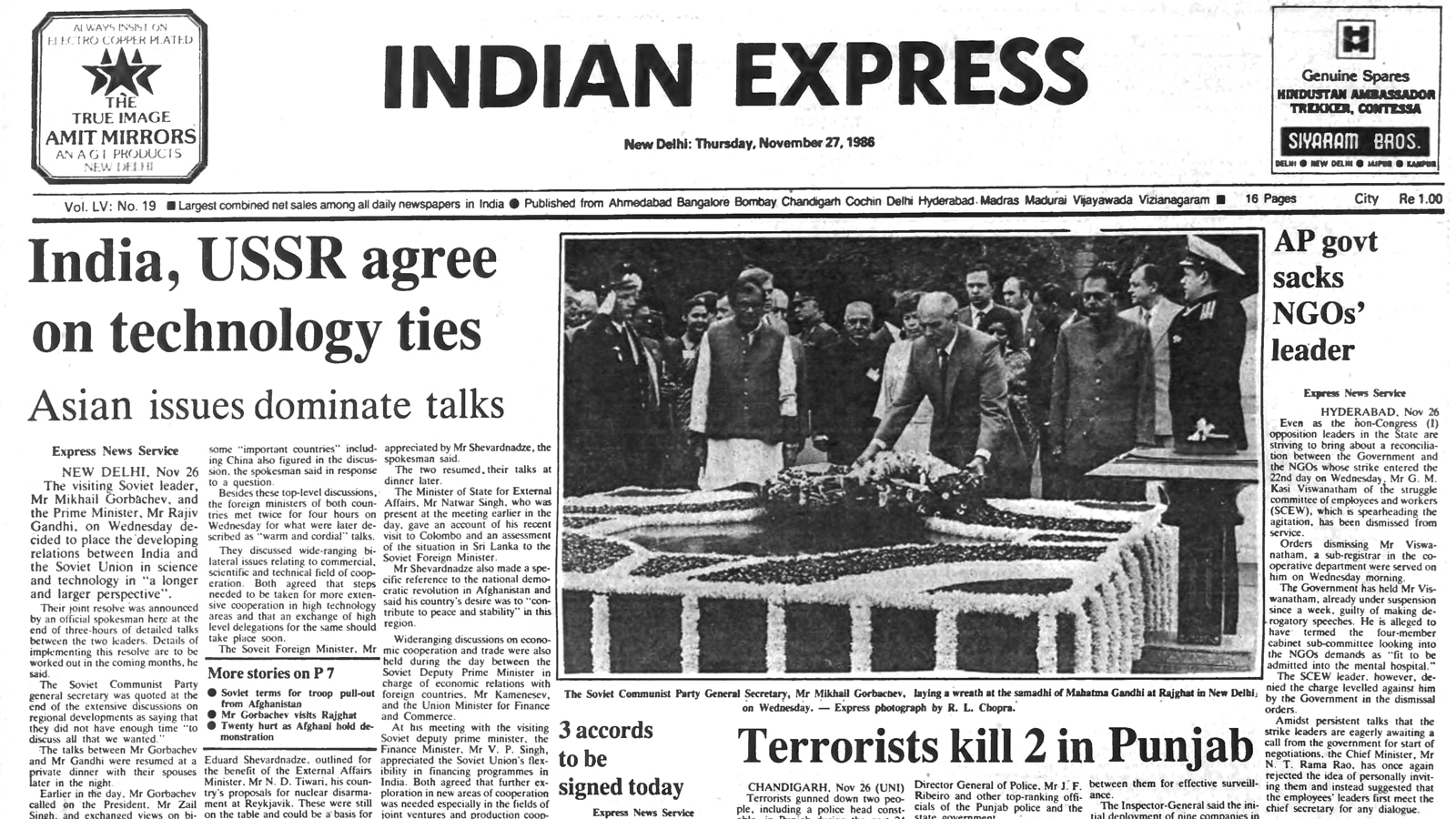
On November 27, 1986, India saw a pivotal day defined by international scientific cooperation, major legal battles over the Bhopal disaster, and ongoing domestic security challenges. These events underscored the complex pressures facing the Rajiv Gandhi administration during the mid-1980s.
A Defining Day in 1986: Geopolitics and Domestic Crisis
On November 27, 1986, India stood at a complex intersection of international diplomacy, legal accountability, and severe internal security challenges. The events of this single day encapsulate the multifaceted pressures faced by the government of Prime Minister Rajiv Gandhi, highlighting both the aspirations for technological modernization and the persistent crises that plagued the nation during that decade.
Scientific Diplomacy and Soviet Ties
The meeting between Prime Minister Rajiv Gandhi and Soviet leader Mikhail Gorbachev marked a significant moment in Cold War-era diplomacy. By pledging a long-term push for science and technology cooperation, the two leaders aimed to leverage Soviet expertise to bolster India’s domestic capabilities. This partnership was reflective of a long-standing tradition of Indo-Soviet collaboration, which sought to provide India with the necessary infrastructure to modernize its industrial and research sectors, effectively positioning science as a cornerstone of bilateral relations.
The Bhopal Gas Tragedy and Legal Accountability
Simultaneously, the legal landscape was dominated by the aftermath of the Bhopal gas tragedy. Attorney General K. Parasaran’s efforts to press Union Carbide for damages represented a critical juncture in global corporate accountability. This legal battle was not merely a procedural matter; it was a defining moment for environmental justice in India, highlighting the state's struggle to secure restitution for the victims of the world's worst industrial disaster against a powerful multinational corporation.
The Crisis of the Judiciary
Adding to the administrative burden, Chief Justice P.N. Bhagwati issued a stark warning regarding the potential collapse of the Indian judicial system due to the massive accumulation of case arrears. This concern highlighted the systemic fragility of the Indian legal framework, which was struggling to keep pace with the growing litigation needs of a post-colonial democracy, a challenge that would continue to resonate in national discourse for decades to come.
Security Challenges in Punjab
While diplomacy and legal battles unfolded in the capital, the state of Punjab continued to face the devastating impact of militancy. The reported killings on November 27, 1986, served as a grim reminder of the internal strife that characterized the 1980s in India. These acts of violence were symptomatic of the broader security crisis that necessitated constant government intervention and shaped the political climate of the era.
Conclusion: A Legacy of Complexity
The events of November 27, 1986, illustrate a nation attempting to balance progress with instability. From the pursuit of technological advancement alongside the Soviet Union to the heavy burdens of the Bhopal litigation and the strain on the judiciary, India was navigating an era of profound transition. The convergence of these issues underscores the historical weight of the Rajiv Gandhi administration and the enduring challenges that shaped the trajectory of modern India.