Jensen Huang says he’ll be a ‘better CEO’ as staff applauds his return
Source Entity
Jay Peters
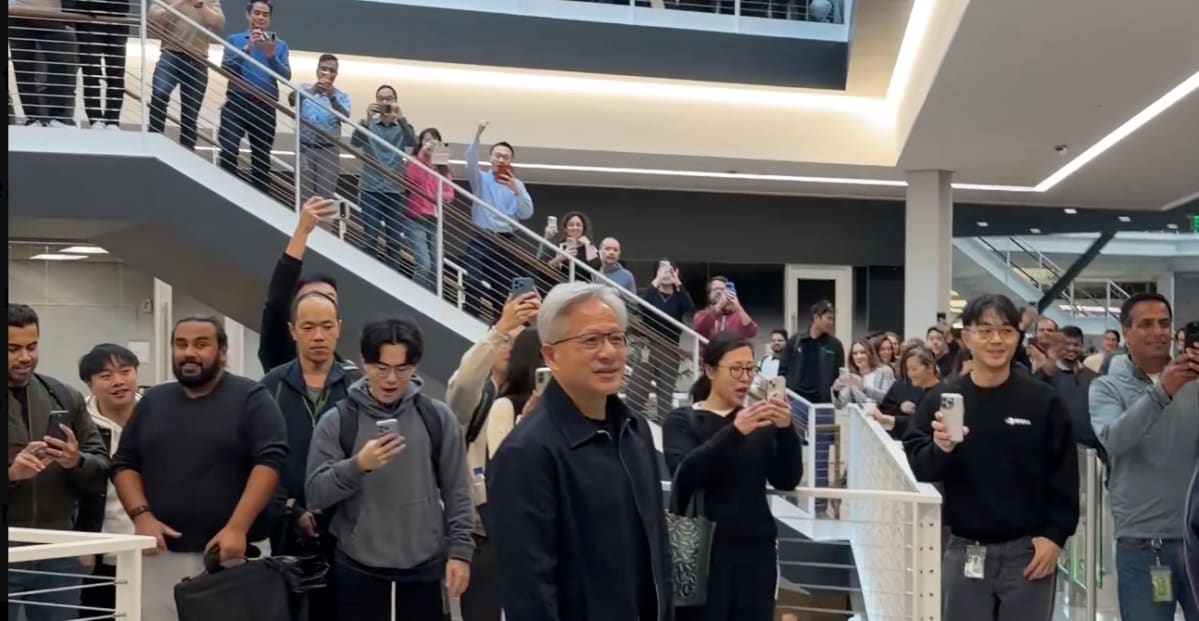
Jensen Huang has returned as Nvidia's CEO following a brief resignation, triggering significant market volatility and raising national security concerns. President Trump's direct intervention in the leadership change has sparked intense debate over the intersection of corporate governance and U.S. geopolitical strategy.
The Nvidia Leadership Crisis: A Convergence of Geopolitics and Corporate Governance
The recent, highly publicized return of Jensen Huang to the helm of Nvidia represents a rare intersection where corporate internal affairs collide directly with the highest levels of U.S. national security policy. After a brief period of resignation, Huang’s reinstatement—facilitated by the direct intervention of President Donald Trump—has created a ripple effect that extends far beyond the company’s Silicon Valley headquarters. This event has forced a re-evaluation of how much influence the executive branch should exercise over private-sector leadership decisions, particularly when those companies are pillars of critical technological infrastructure.
The Market Response and Investor Sentiment
The financial markets reacted to these developments with extreme sensitivity. Initially, the news of Huang’s return sparked a massive rally, with Nvidia’s stock value surging by over $900 billion, an unprecedented single-day gain that underscored his perceived necessity to the firm’s trajectory. However, this euphoria was short-lived. By Tuesday, the market corrected, with shares losing nearly 9% mid-session. This volatility reflects a broader investor anxiety regarding the stability of the AI sector, which currently serves as a primary engine for global economic growth. Investors are now forced to weigh the benefits of Huang’s proven leadership against the risks of political instability surrounding the firm.
National Security and Adversarial Perception
President Trump’s involvement in the boardroom has sparked significant controversy regarding the precedents being set for U.S. national security. By explicitly forcing the hand of Nvidia’s board, the administration has signaled that the federal government views specific corporate leaders as national assets. While the President framed this as a necessary step to protect domestic interests, critics argue that such intervention could inadvertently invite interference from adversaries like Beijing, Tehran, and Moscow. The concern is that by making corporate leadership a matter of public policy, the U.S. may be suggesting that its economic decisions are susceptible to a form of 'veto' from external pressures.
Accountability and Cultural Reform
Internally, the transition has been marked by a shift toward transparency and accountability. In his first all-hands meeting since returning, Huang addressed the workforce with a candid admission of 'very serious personal mistakes' that had affected his family and professional conduct. By publicly acknowledging his participation in daily therapy and committing to regular performance reviews, Huang is attempting to align his personal leadership style with the company's code of conduct. This pivot is crucial for maintaining morale within Nvidia, especially as he works to reassure employees, including specific outreach to women within the organization, that leadership is not exempt from the standards applied to the rank-and-file.
Broader Implications for Tech Governance
The saga of Jensen Huang’s departure and return serves as a case study in the vulnerability of modern 'key-man' corporations. When a company becomes so central to the global supply chain—specifically in the context of AI and hardware—the distinction between private corporate governance and public national interest begins to blur. The promise of regular performance reviews and a renewed focus on the code of conduct suggests that Nvidia is attempting to transition from a founder-centric culture to a more institutionalized model. However, the shadow of presidential intervention remains, leaving observers to wonder if this model of 'politicized corporate management' will become the new norm in a competitive global landscape.
Conclusion: A Fragile Future
As Nvidia moves forward, the company faces the dual challenge of stabilizing its market valuation while navigating the complex geopolitical landscape that its own success has created. The volatility seen in recent trading sessions is a testament to the uncertainty that lingers when corporate leadership is tied to the whims of political actors. Whether Huang can successfully reform the internal culture of Nvidia while managing the external pressures of a global chip race remains the defining question for the company’s future and, by extension, the broader technology sector.
Multiple Citing Sources