'Operation Lotus' in J&K? CM Omar Abdullah claims BJP offered MLAs Rs 20-30 crore
Source Entity
TIMESOFINDIA.COM
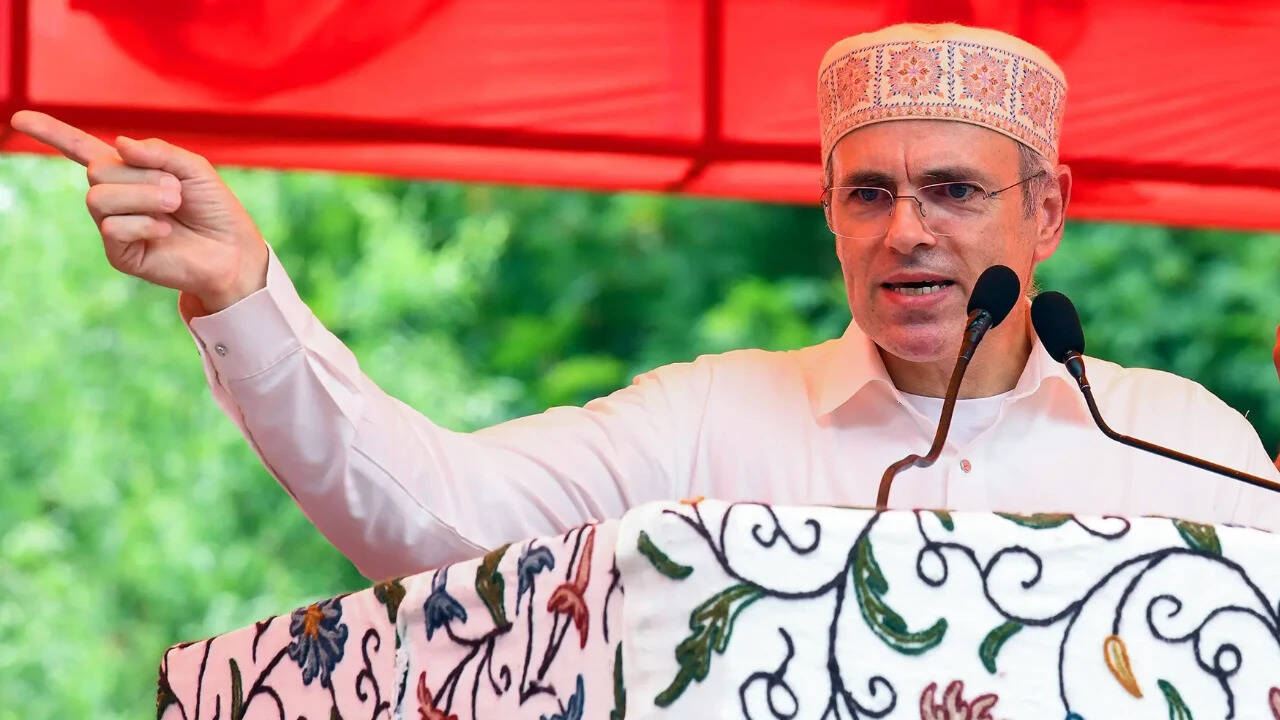
Jammu and Kashmir's Chief Minister Omar Abdullah condemned the Bharatiya Janata Party for what he called attempts to destabilize his administration. He revealed that BJP legislators were allegedly offered lucrative financial rewards and government positions to switch loyalties. Abdullah claimed the BJP's promises of statehood to National Conference MLAs were a tactic to sway them.
Allegations of Political Destabilization: 'Operation Lotus' in Jammu and Kashmir
Chief Minister Omar Abdullah has ignited a political firestorm by alleging that the Bharatiya Janata Party (BJP) is actively attempting to undermine his administration in Jammu and Kashmir. In a series of pointed accusations, Abdullah claims that the BJP has engaged in what is colloquially known in Indian politics as 'Operation Lotus'—a strategy aimed at inducing legislators from opposition parties to defect and join the ruling party to flip the government. The gravity of these claims is underscored by the alleged scale of the inducements, which reportedly include financial rewards ranging from ₹20 to ₹30 crore per MLA, alongside promises of lucrative government positions.
The Mechanics of the Alleged Inducements
According to the Chief Minister, the BJP's strategy was not limited to monetary bribes but extended to political leverage. Abdullah specifically highlighted that the promise of restoring statehood to Jammu and Kashmir was used as a strategic tool to sway National Conference (NC) MLAs. By linking the return of statehood—a primary demand of the local populace and political class since the 2019 reorganization—to individual loyalty, the BJP is accused of attempting to weaponize a constitutional aspiration for partisan gain. This approach suggests a calculated effort to break the cohesion of the NC-led administration from within, targeting the personal ambitions and political anxieties of individual legislators.
Historical Context of Political Volatility in J&K
To understand the significance of these allegations, one must look at the historical volatility of Jammu and Kashmir's political landscape. The region has a long history of shifting alliances and fragile coalitions, often exacerbated by the overarching influence of the central government in New Delhi. The transition of J&K from a state to a Union Territory in 2019 fundamentally altered the power dynamics, leaving regional parties to navigate a new administrative reality where the Lieutenant Governor holds significant authority. In this environment, any attempt to destabilize a democratically elected government through horse-trading is viewed not just as a political maneuver, but as an affront to the fragile democratic restoration occurring in the region.
Broader Implications for Governance and Legitimacy
If these allegations are proven true, the implications for governance in J&K are profound. Such attempts at destabilization create an atmosphere of mistrust and instability, making it nearly impossible for a government to focus on long-term policy implementation and public service delivery. Furthermore, it raises critical questions about the legitimacy of the mandate provided by the voters. When financial inducements override the will of the electorate, the democratic process is hollowed out, potentially leading to public disillusionment and increased civil unrest in a region that is already sensitive to perceived external interference in its internal political affairs.
Future Trends and Political Outlook
Looking ahead, this confrontation is likely to deepen the polarization between the NC-led government and the BJP. We can expect an increase in rhetorical warfare, with the NC using these allegations to paint the BJP as an anti-democratic force to consolidate its base. Conversely, the BJP may dismiss these claims as baseless attempts to deflect from governance failures. The central point of contention will remain the restoration of statehood; as long as this remains a pending promise, it will continue to be a powerful lever for political manipulation. The stability of the current administration will depend on the internal discipline of the NC and its ability to withstand the pressures of political poaching.
Summary
The allegations made by CM Omar Abdullah point to a high-stakes battle for control in Jammu and Kashmir. By claiming that the BJP offered massive bribes and the promise of statehood to trigger defections, Abdullah has framed the current political struggle as a fight for the survival of the democratic mandate against tactical political destabilization. The outcome of this tension will significantly influence the region's trajectory toward stability and its eventual return to full statehood.