Omar’s MLA poaching claim met with BJP’s Rs 100 crore defamation suit threat
Source Entity
Naveed Iqbal
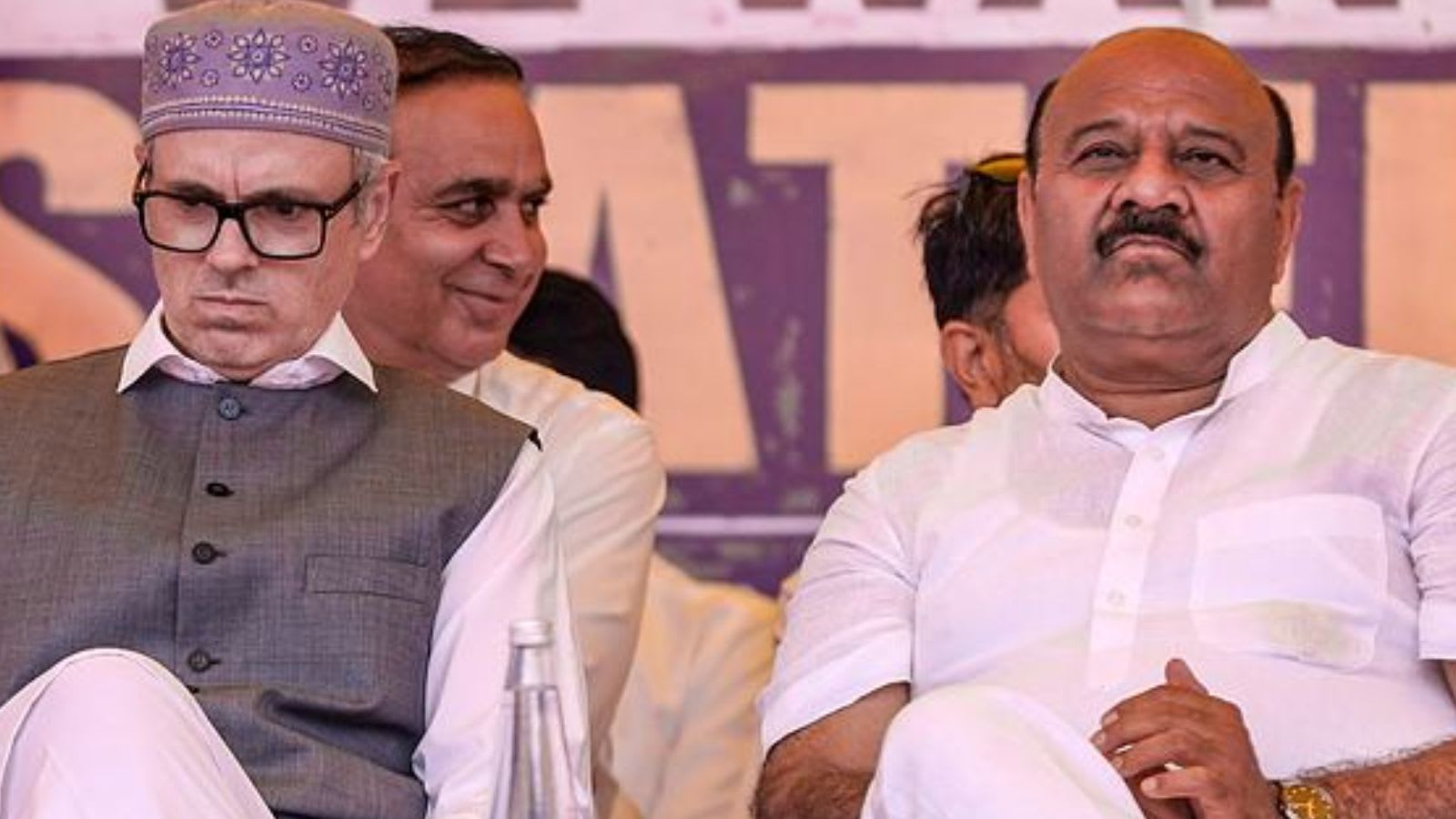
Jammu and Kashmir Chief Minister Omar Abdullah and Deputy CM Surinder Kumar Choudhary during a public rally titled "Delhi Chalo! We Want Our Statehood", at Maharaja Hari Singh Park, in Jammu. (PTI Pho...
Political Friction in Jammu and Kashmir: Allegations and Legal Threats
The political landscape of Jammu and Kashmir has once again become a battlefield of rhetoric and legal threats following a high-profile rally at Maharaja Hari Singh Park in Jammu. Chief Minister Omar Abdullah and Deputy CM Surinder Kumar Choudhary led a public movement titled "Delhi Chalo! We Want Our Statehood," aiming to pressure the central government to restore the region's full statehood. However, the event was overshadowed by a contentious exchange between the state administration and the Bharatiya Janata Party (BJP), centering on allegations of political instability and unethical recruitment of legislators.
The Poaching Allegation and the BJP's Reaction
During the rally, Chief Minister Omar Abdullah claimed that the BJP was actively engaged in "poaching" MLAs—a term referring to the practice of inducing legislators to defect from their own party to join another, often through financial incentives or promises of power. This claim struck a nerve with the BJP, which views such accusations as an attempt to malign its institutional integrity. In a swift and aggressive response, the BJP has threatened to file a defamation suit seeking damages of Rs 100 crore. This move signals that the BJP intends to use legal mechanisms to deter the J&K government from making unsubstantiated claims regarding the party's conduct in the legislative assembly.
The Broader Context of Statehood
To understand the intensity of this clash, one must look at the broader objective of the "Delhi Chalo" campaign. Since the reorganization of Jammu and Kashmir into a Union Territory in 2019, the demand for the restoration of statehood has been the primary political driver for local parties. The rally at Maharaja Hari Singh Park was not merely a gathering but a strategic demonstration of strength, intended to show the central government that the desire for self-governance remains a potent force among the electorate. By framing the narrative around statehood, Omar Abdullah is attempting to consolidate public support and create a moral mandate for his administration's demands in New Delhi.
Legal Warfare as a Political Tool
The threat of a Rs 100 crore defamation suit highlights a growing trend in Indian politics where the judiciary is increasingly used as a tool for political combat. Rather than engaging in a purely ideological or policy-driven debate, parties are now opting for high-stakes litigation to silence opponents or create a narrative of "legal accountability." For the BJP, the massive sum mentioned in the suit serves as a deterrent; for Omar Abdullah, the accusation reflects a deep-seated mistrust of the central government's intentions toward the stability of the newly formed state government.
Implications for Governance and Future Stability
This escalating tension between the Chief Minister and the ruling party at the center could potentially hinder the administrative efficiency of Jammu and Kashmir. When the relationship between the state and central governments is characterized by legal threats and accusations of poaching, the focus often shifts from governance and development to political survival. Future trends suggest that this friction will persist until a concrete timeline for the restoration of statehood is established. Until then, the legislative assembly may remain a site of volatility, with both sides utilizing every available legal and political lever to gain the upper hand.
Summary
In essence, the clash over the "poaching" claims is a symptom of the larger struggle for power and identity in Jammu and Kashmir. While the "Delhi Chalo" rally emphasized the democratic aspiration for statehood, the BJP's threat of a defamation suit underscores the adversarial nature of the current center-state relationship. This cycle of accusation and legal retaliation suggests a period of prolonged political instability as J&K navigates its complex transition back toward a state structure.