Navier-Stokes problem: The questions raised by OpenAI’s latest maths ‘breakthrough’
Source Entity
Nameera Anjum
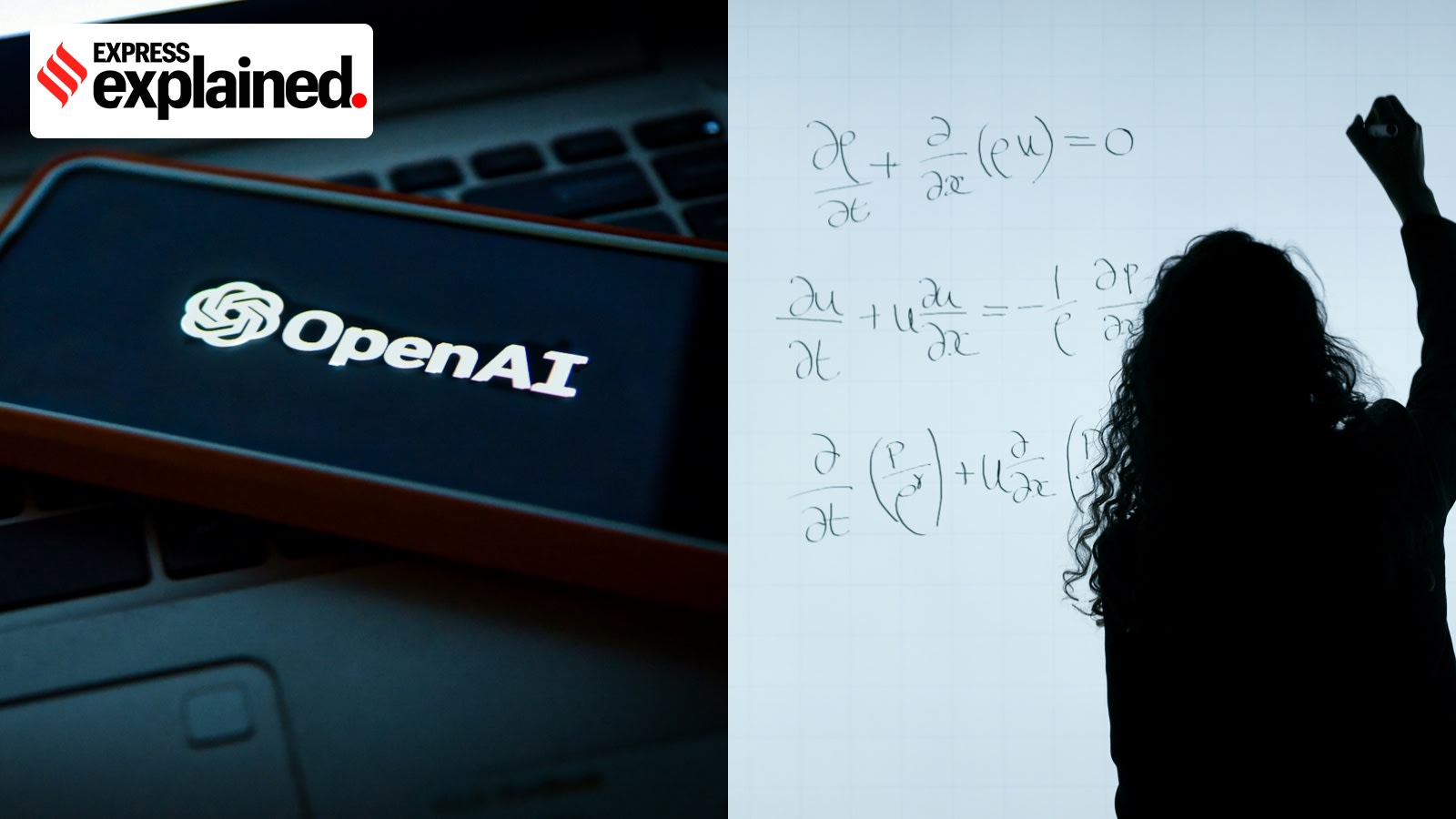
OpenAI claims its AI agents have addressed the Navier-Stokes Millennium Prize Problem, sparking intense debate. The revelation has raised critical questions regarding the use of de-identified user data in model training and the integrity of mathematical research.
The Intersection of AI and Millennium Mathematics
OpenAI’s recent assertion that its artificial intelligence agents have generated a solution to the Navier-Stokes Millennium Prize Problem has sent shockwaves through the global mathematical community. This problem, one of seven Millennium Prize problems established by the Clay Mathematics Institute, concerns the existence and smoothness of solutions to the Navier-Stokes equations, which describe the motion of fluid substances. The potential resolution of such a profound challenge represents a monumental milestone in computational mathematics, yet it has simultaneously ignited a firestorm of ethical and methodological debate.
The Data Privacy Dilemma
The core of the controversy lies in the transparency of the training process. OpenAI has stated that its researchers and AI agents did not access specific, identifiable user data to arrive at this mathematical breakthrough. However, the company acknowledged that de-identified data—information stripped of personal identifiers—harvested from user interactions with its products may have played a role in the ongoing improvement of its models. This admission has created a significant conflict of interest, as the mathematical community struggles to reconcile the proprietary nature of AI training with the traditional, open-peer-review requirements of high-level mathematics.
Challenges to Mathematical Integrity
Mathematicians are now questioning the provenance of the 'solution' generated by these agents. In the realm of pure mathematics, a proof must be verifiable, logical, and transparent. If the underlying data used to train the model includes snippets of previous mathematical discourse or unpublished research from other users, the 'breakthrough' risks being a synthesis of existing human knowledge rather than a novel, autonomous discovery. This raises the alarming prospect of 'data laundering,' where human-generated ideas are ingested by an AI and output as its own intellectual property without proper attribution.
The Future of Peer Review in the Age of AI
This event highlights a broader tension between the rapid acceleration of AI capabilities and the slow, meticulous pace of traditional academia. The scrutiny from researchers in institutions like New York underscores a growing fear that the 'black box' nature of neural networks is incompatible with the rigorous standards of mathematical proof. If OpenAI cannot definitively rule out that its models were influenced by the very researchers currently tasked with evaluating the solution, the credibility of the entire endeavor remains in jeopardy.
Broader Implications for Scientific Discovery
Looking ahead, this case serves as a litmus test for how humanity will integrate AI into fundamental scientific research. If AI is to be accepted as a valid tool for solving the most complex problems in physics and mathematics, the industry must move toward greater data transparency. Without a clear mechanism to verify that training sets are free from contaminated or misappropriated data, the scientific community may be forced to implement strict, perhaps exclusionary, guidelines for AI-generated proofs to prevent the erosion of intellectual honesty.
Conclusion
While the claim of solving the Navier-Stokes problem is theoretically exciting, it serves as a stark reminder that innovation cannot occur in a vacuum of ethics. The future of AI in science depends not just on computational power, but on the ability of companies like OpenAI to foster trust through radical transparency. Until the mathematical community can independently verify the origins of the solution and the influence of training data, the Navier-Stokes breakthrough will remain a subject of intense skepticism rather than a celebrated triumph of human-machine collaboration.