World's Largest Brands Infected With Malware Via Optimizely
Source Entity
Hacker News
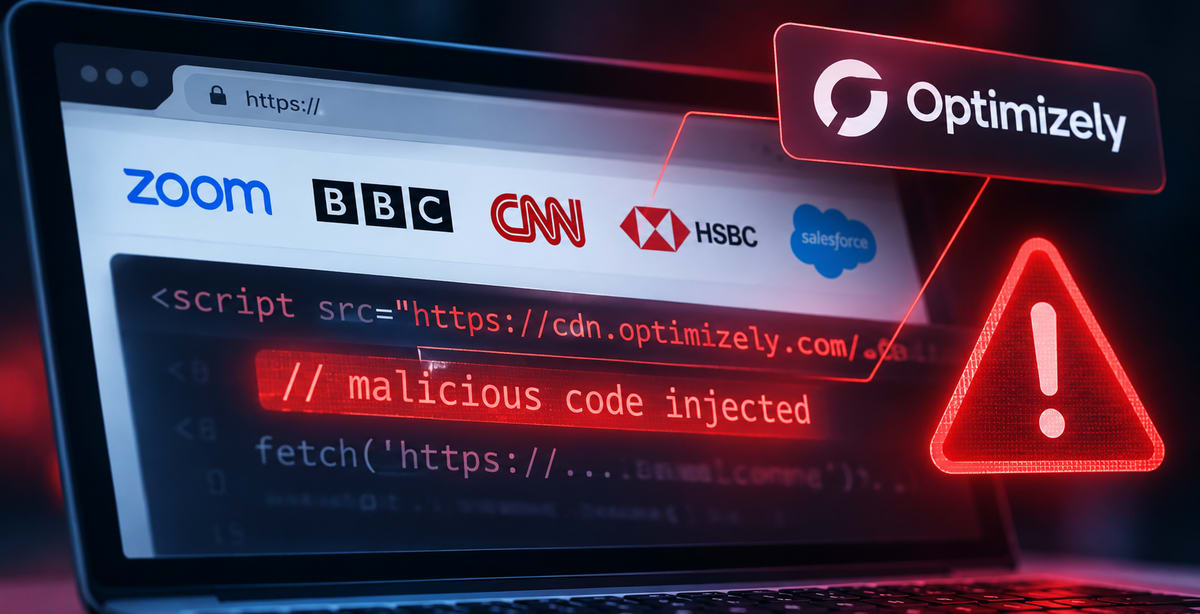
A major supply chain attack on the Optimizely platform compromised 178 global brands, including the BBC and Zoom. Attackers injected malicious JavaScript to steal crypto, credit card data, and deploy iOS exploits.
The Optimizely Supply Chain Compromise: An Analysis
On November 16, 2026, a significant cybersecurity incident unfolded, revealing a critical vulnerability in the digital supply chain. Malicious JavaScript was injected into the Optimizely Web experimentation platform, a widely used tool for A/B testing and website optimization. This breach allowed attackers to serve malicious code to visitors of 178 major global organizations, including high-profile entities like Zoom, the BBC, CNN, Salesforce, and financial institutions such as HSBC and Equifax.
Mechanics of the 'Optimjack' Campaign
Dubbed "Optimjack" by researcher Amirul Iman, the campaign utilized the trust established between users and these major brands to distribute a multi-purpose malware kit. Once a user visited an affected site, the malicious script executed silently in the background. The malware was highly sophisticated, capable of swapping legitimate cryptocurrency wallet addresses with attacker-controlled ones, capturing credit card information entered into web forms, and harvesting sensitive user data such as browser cookies and screenshots.
Targeted Exploitation and iOS Threats
Beyond simple financial theft, the attack demonstrated a broader range of malicious capabilities. On mobile devices, particularly iPhones and iPads, the script delivered the Coruna and DarkSword iOS exploit kits. This indicates a high level of technical competency by the threat actors, as they moved beyond standard web-based credential harvesting to target the underlying security of mobile operating systems. The inclusion of verified cryptocurrency transactions linked to the attackers confirms that the campaign successfully achieved financial objectives.
The Vulnerability of Third-Party Dependencies
This incident highlights the inherent risks of modern web development, which relies heavily on third-party scripts and platforms like Optimizely. By compromising a single centralized service, the attackers gained immediate, high-trust access to the front-end of 178 major websites. This is a classic supply chain attack, where the security of a user's experience is only as strong as the weakest link in the chain of service providers running on a webpage.
Implications for Cybersecurity Monitoring
Security firms such as Report URI and StepSecurity were instrumental in identifying the breach. Their findings emphasize the necessity for advanced monitoring tools that can detect unexpected changes to trusted JavaScript or identify the unauthorized loading of new scripts. As websites continue to integrate AI-powered tools for experimentation and data analysis, the surface area for such attacks grows exponentially, necessitating a shift toward more robust, content-security-policy-based defenses.
Future Trends and Conclusion
Moving forward, organizations must scrutinize their third-party vendor relationships with greater rigor. The "Optimjack" campaign serves as a stark reminder that even the most reputable optimization platforms can be weaponized. Future trends will likely involve mandatory sub-resource integrity checks and more granular control over external script execution to prevent similar large-scale compromises from occurring in the future.
Multiple Citing Sources