Ostium pauses trading as security firms report multimillion-dollar oracle exploit
Source Entity
Cointelegraph by Nate Kostar
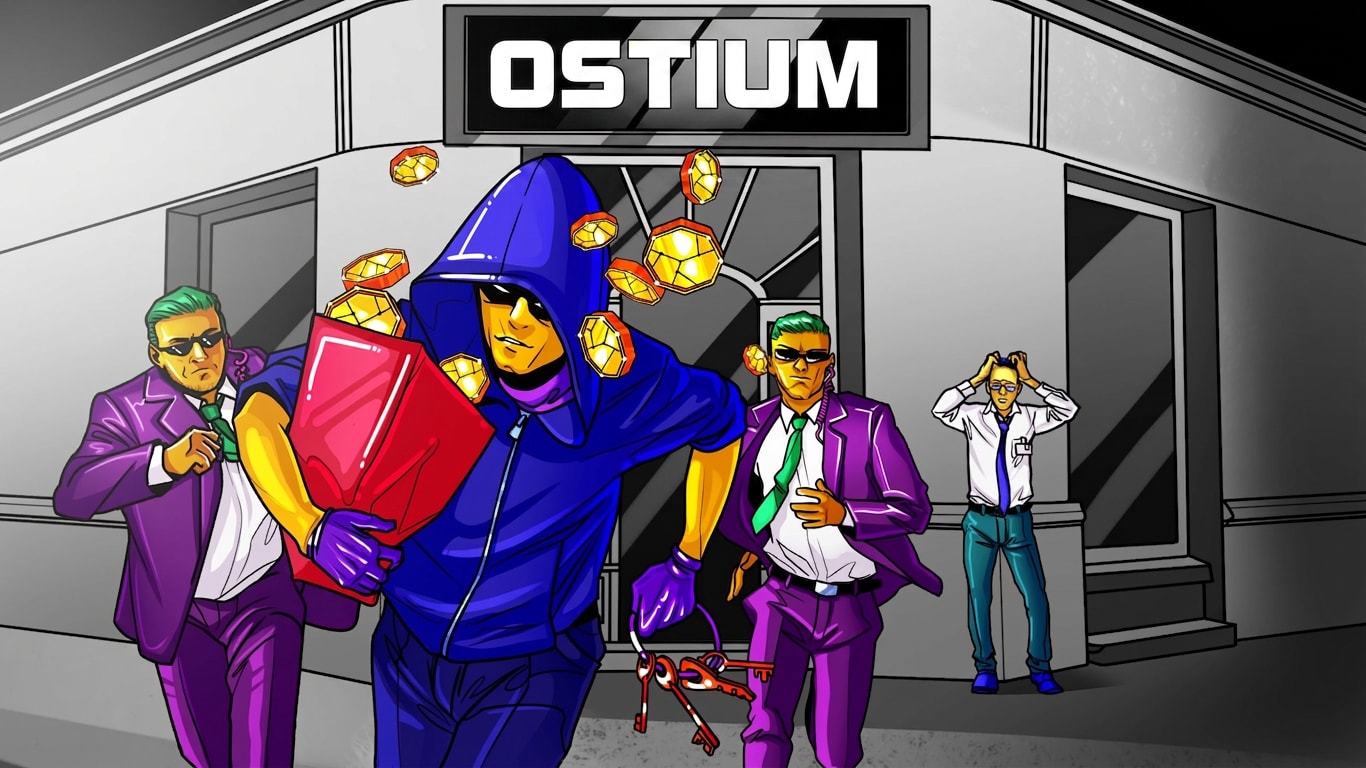
Ostium has suspended all trading activities and advised users to revoke contract approvals following a significant oracle-related exploit of its OLP liquidity vault, with losses estimated between $18 million and $22 million.
Analysis of the Ostium Oracle Exploit and Liquidity Vault Breach
Overview of the Incident
Ostium, a decentralized finance (DeFi) platform, has been forced to implement an emergency halt on all trading activities following the discovery of a critical security breach. According to reports from various blockchain security firms, the platform's OLP (Ostium Liquidity Pool) liquidity vault was targeted in an oracle-related exploit. The financial impact of this attack is substantial, with estimated losses ranging from $18 million to $22 million. In an immediate attempt to mitigate further damage, Ostium has not only paused trading but has also issued a critical warning to its user base to revoke all contract approvals to protect their remaining assets from potential unauthorized access.
Understanding the Mechanics of Oracle Exploits
To understand the gravity of this event, it is essential to analyze the role of 'oracles' in DeFi. Oracles are third-party services that provide external data—such as the current market price of an asset—to smart contracts on the blockchain. An oracle exploit typically occurs when an attacker manages to manipulate the price feed provided to the contract. By artificially inflating or deflating the perceived value of an asset, the attacker can trick the liquidity vault into allowing trades or withdrawals at skewed rates, effectively draining the vault's reserves. In the case of Ostium's OLP vault, the discrepancy between the oracle's reported price and the actual market value likely created a window of opportunity for the exploit.
Financial Implications and User Risk
The loss of $18 million to $22 million represents a significant blow to the platform's total value locked (TVL) and undermines investor confidence. For the liquidity providers within the OLP vault, this exploit means a direct loss of capital, as the assets they deposited to facilitate trading were the ones drained by the attacker. The urgency in Ostium's request for users to revoke contract approvals highlights a secondary risk: if the exploit involved a compromise of the contract's permissions, the attacker might have the ability to move funds from any wallet that has previously granted 'infinite approval' to the Ostium smart contracts.
Immediate Response and Mitigation Strategies
Ostium's decision to pause trading is a standard 'circuit breaker' response designed to prevent further outflows of capital. By halting the system, the team can conduct a post-mortem analysis to identify the exact vulnerability and develop a patch. The directive to revoke contract approvals is a critical safety measure; in DeFi, approvals are permissions granted by a user to a smart contract to spend a specific token on their behalf. If a contract is compromised, these approvals can become vectors for further theft. This reactive phase is crucial for stabilizing the ecosystem and preventing the exploit from cascading into other connected protocols.
Broader Context within the DeFi Ecosystem
This incident is not an isolated event but part of a broader trend of oracle manipulation attacks that have plagued the DeFi sector. The "oracle problem"—the challenge of getting reliable, tamper-proof data onto a blockchain—remains one of the most significant hurdles for decentralized finance. When platforms rely on a single price feed or a poorly secured oracle, they create a single point of failure. The Ostium breach serves as a stark reminder that even established liquidity vaults are susceptible to sophisticated attacks if their data dependencies are not sufficiently decentralized or hardened against manipulation.
Future Outlook and Security Requirements
Moving forward, Ostium will likely need to implement more robust oracle solutions, such as utilizing decentralized oracle networks (e.g., Chainlink) or implementing time-weighted average prices (TWAP) to smooth out sudden price spikes used in exploits. Furthermore, the industry at large must shift toward more frequent and rigorous third-party audits specifically focused on oracle integration. For users, this event reinforces the necessity of using toolsets for managing contract approvals and practicing strict risk management when providing liquidity to DeFi vaults. The recovery of the lost funds will depend on whether the assets can be tracked and frozen on centralized exchanges, though such outcomes are historically rare in decentralized exploits.