'October 7 attack equal to sixteen 9/11s': Israeli PM Netanyahu in UN speech
Source Entity
VIVEK DUBEY
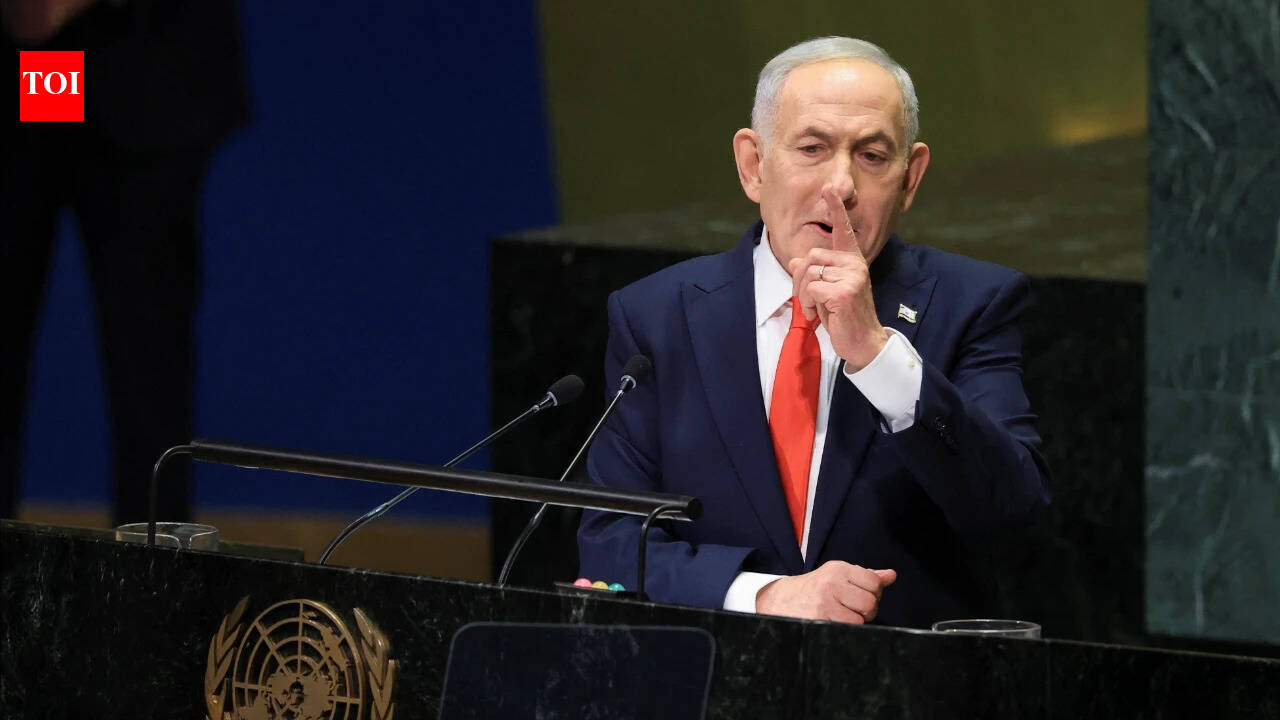
Pakistan's PM Shehbaz Sharif credited Donald Trump for de-escalating the May 2025 India-Pakistan conflict triggered by Operation Sindoor. Meanwhile, Sharif warned that any interference with Indus River waters would be viewed as an act of war.
The Geopolitical Shift: De-escalation and Water Security
The May 2025 Crisis and Diplomatic Intervention
In a significant address at the 81st United Nations General Assembly, Pakistan Prime Minister Shehbaz Sharif publicly acknowledged the role of US President Donald Trump in de-escalating a critical military confrontation between India and Pakistan in May 2025. This confrontation, described as a four-day standoff, followed the launch of India’s 'Operation Sindoor.' According to Sharif, the intervention by President Trump occurred at a decisive juncture, effectively pulling both nuclear-armed nations back from the brink of a full-scale regional war.
The Indus Waters Treaty: A New Flashpoint
Beyond the immediate military tensions, Sharif utilized the global platform of the UNGA to issue a stark warning regarding the Indus Waters Treaty. The Prime Minister explicitly stated that any effort by India to impede, stop, or divert Pakistan’s share of the Indus River waters would be classified as an 'act of war.' This rhetoric underscores the increasing volatility of resource security in South Asia, where water rights are inextricably linked to national survival and sovereignty.
Historical Context of Indus Tensions
The Indus Waters Treaty, brokered by the World Bank in 1960, has historically served as a rare diplomatic success between the two nations. However, as climate change impacts glacial melt and water scarcity intensifies, the treaty has come under unprecedented strain. By labeling potential interference as an 'act of war,' Sharif is shifting the narrative from a technical dispute over water management to a primary national security threat, raising the stakes for future bilateral negotiations.
The Role of Third-Party Mediation
Sharif’s public thanks to Donald Trump highlights the evolving nature of international mediation in South Asian geopolitics. The reliance on external intervention to manage regional crises suggests that direct bilateral communication channels remain fragile. The 'timely intervention' mentioned by the Prime Minister serves as a reminder that the stability of the subcontinent remains a priority for global powers, particularly during periods of heightened military activity.
Future Implications and Regional Stability
Looking ahead, the intersection of military posturing and resource disputes presents a complex challenge for regional stability. The combination of the May 2025 conflict aftermath and the hardening stance on water rights suggests that both India and Pakistan are entering a period where traditional diplomatic norms are being tested. If resource disputes continue to escalate, the international community may find itself playing a more permanent role in monitoring regional compliance to prevent further military escalation.
Conclusion
In summary, Prime Minister Sharif’s address reflects a dual-pronged strategy: acknowledging the necessity of external mediation to prevent catastrophe while drawing a firm red line on vital resources. As the region navigates these tensions, the adherence to established treaties like the Indus Waters Treaty will be the primary barometer for peace, serving as a critical buffer against the existential threats posed by both water scarcity and nuclear brinkmanship.
Multiple Citing Sources