Why distance from ‘crime scene’ matters in criminal law
Source Entity
India Latest News: Top National Headlines Today & Breaking News | The Hindu
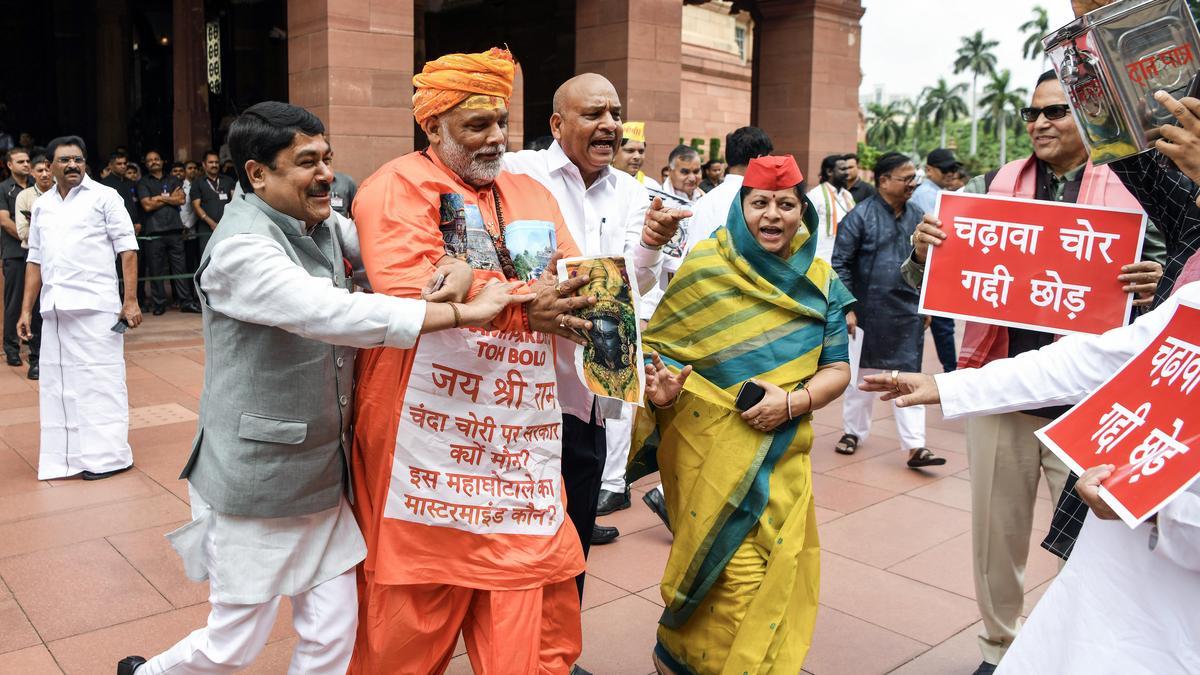
A Prayagraj court has summoned MP Pappu Yadav over a skit performed at the Parliament complex regarding Ram Temple donations. The case highlights critical legal debates concerning territorial jurisdiction and the prevention of forum-shopping.
The Jurisdictional Quandary: Analyzing the Prayagraj Court Summons
The Legal Context of Territorial Competence
The recent summons issued by a Prayagraj court to Independent Member of Parliament Rajesh Ranjan, popularly known as Pappu Yadav, has ignited a significant legal discourse regarding the limits of territorial jurisdiction. The summons pertains to a skit performed by the MP at the Parliament complex, which allegedly touched upon the sensitive issue of donation management at the Ram Temple. At the heart of this legal development is the question of whether a local magistrate in Prayagraj possesses the requisite territorial competence to adjudicate on an incident that purportedly took place within the confines of the national capital's legislative complex.
Interpreting the Bharatiya Nyaya Suraksha Sanhita (BNSS)
Legal experts are scrutinizing the application of Section 223 of the Bharatiya Nyaya Suraksha Sanhita (BNSS). The statute explicitly begins with the phrase 'A Magistrate having jurisdiction,' a clear legislative intent to ensure that judicial authority is not exercised arbitrarily. This requirement serves as a foundational pillar of criminal procedure, mandating that the court must have a direct nexus to the location where the alleged offense occurred. By invoking this section, the judiciary is reminded that territorial competence is not merely a formality but a safeguard against the misuse of judicial processes.
The Menace of Forum-Shopping
A primary concern raised by this case is the potential for 'forum-shopping,' a practice where litigants intentionally choose a specific court—often one perceived as sympathetic or geographically inconvenient for the respondent—to initiate legal action. When complainants bypass courts with natural jurisdiction in favor of others, it can transform the legal system into a tool for harassment. The Prayagraj court's involvement in an event occurring in Delhi underscores the necessity for the judiciary to strictly enforce jurisdictional boundaries to maintain the integrity of the legal system.
Implications for Parliamentary Conduct and Free Speech
The nature of the complaint, centered on a political skit performed within the Parliament complex, adds a layer of complexity regarding parliamentary privilege and the scope of political expression. While the court is tasked with reviewing the complaint, the broader implications involve how the judiciary navigates political performance art and dissent. The summons highlights the tension between the freedom to engage in political critique and the legal accountability of public figures when their actions become the subject of criminal complaints.
Future Trends and Judicial Oversight
Looking forward, this case serves as a precedent for how lower courts will handle complaints that transcend district and state boundaries. We can expect higher judicial forums to emphasize the importance of 'territorial competence' to prevent the dilution of procedural law. As the legal system continues to adapt to the BNSS, the enforcement of these jurisdictional rules will likely become more stringent, ensuring that litigants cannot use geography as a strategic weapon to intimidate political opponents or public figures.
Conclusive Summary
In summary, the summons issued to Pappu Yadav is far more than a routine legal notice; it is a litmus test for the application of the BNSS and the protection of judicial integrity. By strictly adhering to the requirements of territorial jurisdiction, the judiciary protects itself from becoming an instrument of political maneuvering. The final outcome of this case will likely reinforce the principle that the place of occurrence is the primary determinant of where justice must be sought, thereby discouraging the practice of forum-shopping across the Indian legal landscape.
Verification Required?