ED director Rahul Navin's tenure extended by a year
Source Entity
TNN
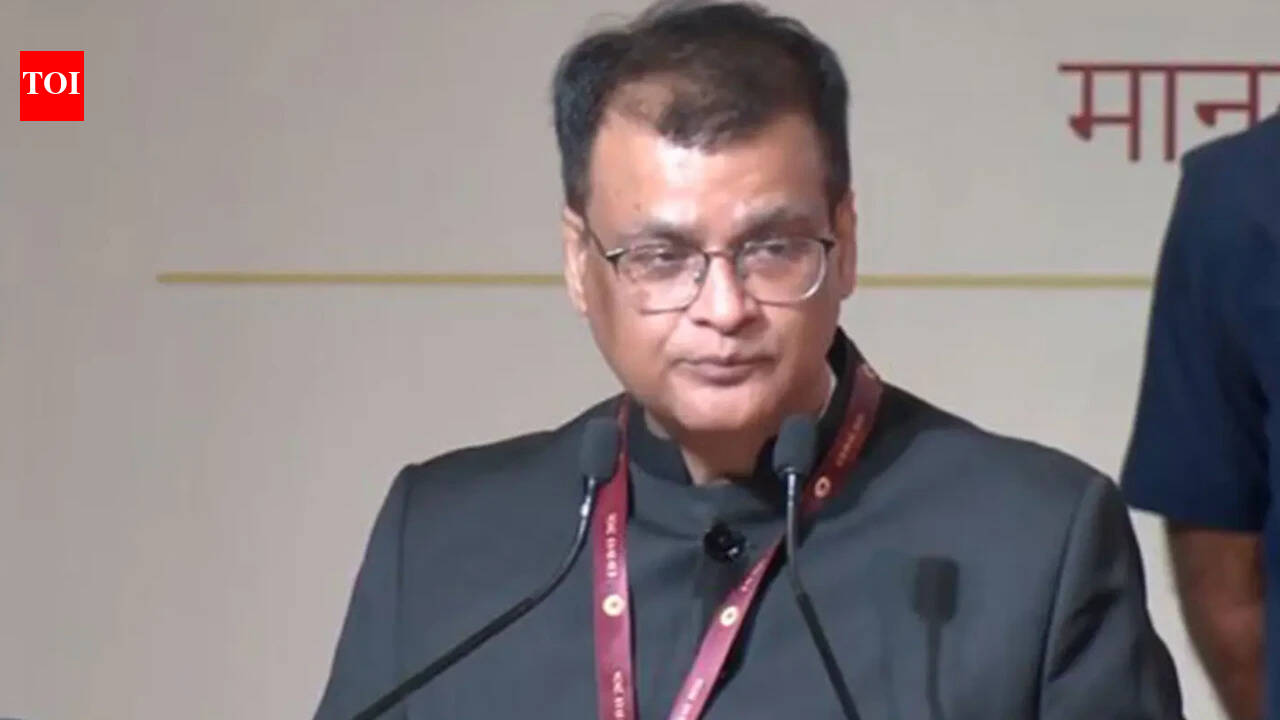
The Indian government has extended the tenure of Enforcement Directorate (ED) Director Rahul Navin by one year, keeping him in office until August 2027. This extension, approved by the Appointments Committee of the Cabinet, allows Navin to serve beyond his scheduled superannuation date.
Strategic Continuity at the Enforcement Directorate
The recent decision by the Appointments Committee of the Cabinet to grant a one-year extension to Enforcement Directorate (ED) Director Rahul Navin marks a significant move toward administrative continuity within India's premier anti-money laundering agency. Navin, a 1993-batch Indian Revenue Service (IRS) officer of the Income Tax cadre, has been at the helm of the agency as a full-time chief since August 14, 2024, following a period as director-in-charge starting in September 2023. This extension, which pushes his tenure until August 13, 2027, is particularly noteworthy as it explicitly includes service beyond his scheduled superannuation date of July 31, 2027.
Institutional Stability and Regulatory Framework
The legal framework governing the ED director's position allows for an initial two-year term, followed by up to three one-year extensions. By utilizing this provision, the government ensures that the agency maintains a consistent leadership trajectory. This approach mirrors other high-level administrative decisions, such as the extension granted to CBI Director Praveen Sood in May 2026. Such moves are often interpreted by political analysts as a deliberate strategy to finalize complex, long-running investigations under the supervision of officers who have been deeply involved in the foundational stages of those probes.
Operational Roadmap and Asset Recovery
A core component of Rahul Navin’s current mandate involves a structured roadmap focused on two critical areas: the completion of pending investigations and the systematic auctioning of attached properties. The ED has faced pressure to not only secure convictions but also to ensure that the proceeds of crime are recovered and returned to rightful claimants and victims of financial fraud. By extending his tenure, the government provides the necessary time for Navin to oversee the transition of these investigations into the litigation and recovery phases, potentially setting a precedent for how the agency handles seized assets.
Navigating Future Political Cycles
Looking toward the future, the structural flexibility of these tenure extensions allows for the possibility of Navin remaining in his post until August 2029. Given that general elections in India are anticipated in April-May 2029, this timeline aligns the agency’s leadership with the broader tenure of the current administration. This synchronization is often a point of debate in governance circles, as it raises questions regarding the balance between institutional independence and executive oversight in high-stakes financial investigations.
Implications for Anti-Money Laundering Efforts
The extension of an officer with Navin's background—having served as a Special Director since 2019 before assuming the top role—suggests a focus on institutional memory. As the ED continues to expand its digital forensics and cross-border cooperation capabilities, keeping a seasoned IRS officer in charge provides a level of technical continuity that is difficult to replace. The upcoming years will likely serve as a litmus test for the effectiveness of the roadmap Navin has established, particularly regarding the efficiency of property auctions and the speed of case resolution.
Conclusion
In summary, the extension of Rahul Navin's tenure is a calculated administrative decision aimed at consolidating the Enforcement Directorate's operational goals. By securing his leadership through August 2027, and potentially beyond, the government is signaling a commitment to the current investigative priorities. The success of this tenure will ultimately be measured by the agency’s ability to deliver tangible results in asset recovery and the successful prosecution of high-profile financial crimes.
Multiple Citing Sources