Census 2027: Ladakh to lead Independent India’s first caste enumeration
Source Entity
India Latest News: Top National Headlines Today & Breaking News | The Hindu
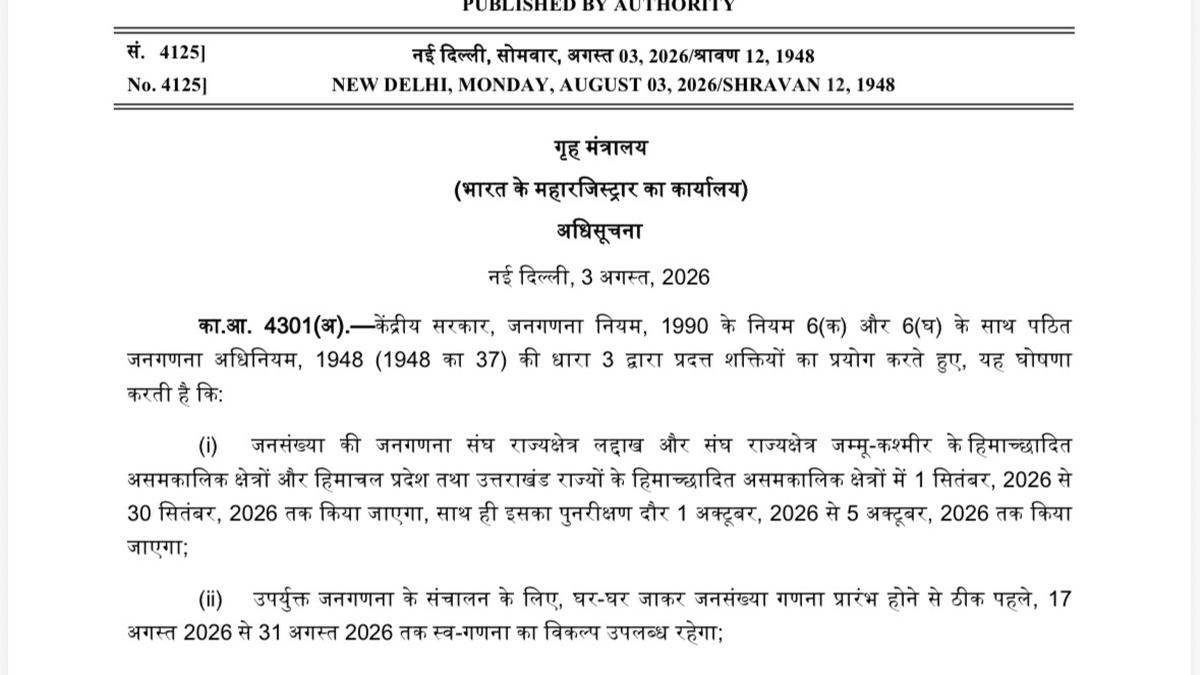
Ladakh will pioneer India's first caste enumeration during the 2027 Census process, utilizing an open-column methodology. The upcoming Population Enumeration phase will include 40 distinct parameters to capture comprehensive demographic data.
The Landmark Shift in India’s Census Methodology
For the first time since Independence, the Indian Census is poised to undergo a significant structural evolution by incorporating caste-based enumeration. Ladakh, as one of the nation’s youngest Union Territories, has been designated to lead this pilot phase. This decision marks a departure from traditional census methodologies and signals a broader governmental intent to integrate complex social identity data into the national record.
The Open-Column Approach
The methodology adopted for this process is known as the "open-column" approach. During the pre-test phase conducted between July 1 and July 20, respondents—specifically those outside the existing Scheduled Caste (SC) and Scheduled Tribe (ST) categories—were invited to self-declare their caste identity. By allowing residents to dictate their caste in an open-ended format, the government aims to capture a more nuanced and self-identified demographic landscape, moving away from rigid, pre-defined lists that have historically governed data collection.
Operational Parameters and Scope
The upcoming Population Enumeration (PE), scheduled to commence on August 17 in Ladakh and other snow-bound regions, is expected to be remarkably comprehensive. With a questionnaire comprising approximately 40 parameters, the census will move beyond basic demographic counts. This expansion is designed to provide a granular view of the population, including the recording of specific defence structures on paper, which indicates a dual focus on demographic data and strategic geographical documentation.
Historical Context and Strategic Implications
Historically, the Indian Census has been a tool for administrative planning and resource allocation. The inclusion of caste data represents a significant intersection of sociology and governance. By formalizing the recording of caste, the government is creating a massive dataset that could influence future policy-making, reservation frameworks, and social welfare programs. The choice of Ladakh for the initial phase highlights the logistical challenges inherent in surveying such terrains, yet underscores the commitment to inclusive data gathering.
Future Trends in Demographic Analysis
As the 2027 Census progresses, the success of the open-column methodology in Ladakh will likely serve as a blueprint for the rest of the country. The integration of 40 distinct parameters indicates a shift toward "Big Data" governance, where the government seeks to synthesize social, economic, and physical infrastructure data. This trend suggests that future policy interventions will be increasingly data-driven, potentially reshaping how state resources are distributed across diverse communities.
Conclusion
The initiative to record caste in the 2027 Census through an open-ended methodology represents a pivotal moment in Indian administrative history. By starting in Ladakh, the government is testing the viability of a self-reporting mechanism on a national scale. As the process unfolds, the synthesis of this data will likely play a critical role in defining the social and political discourse of the coming decade.
Verification Required?