Jaswant Khalra’s wife seeks people’s commission on Punjab disappearances
Source Entity
The Indian Express
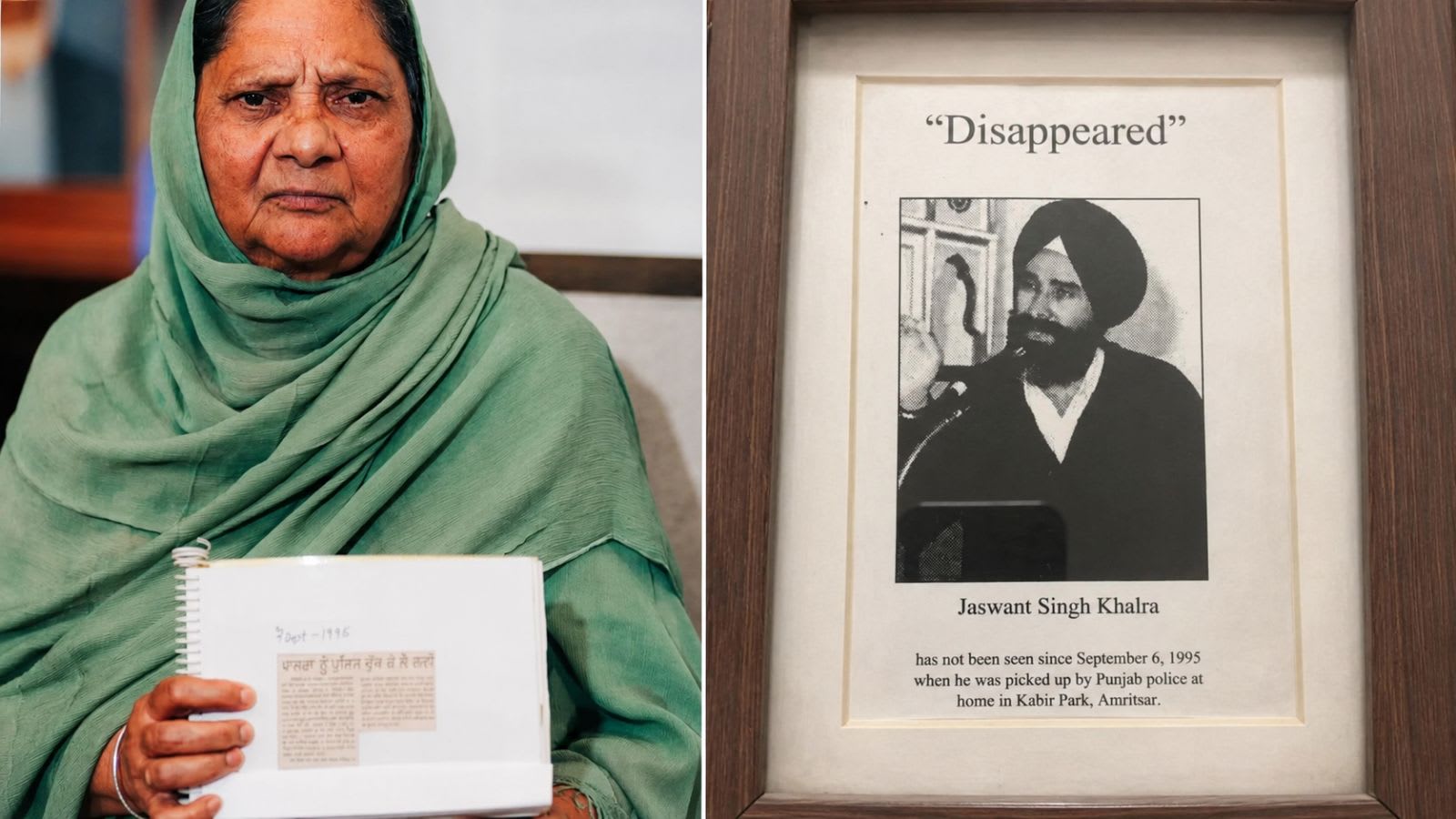
Ahead of an Ardas at Harike Pattan on Tuesday called by the Jathedar of Sri Akal Takht Sahib, Paramjit Kaur Khalra, widow of the late human rights activist Jaswant Singh Khalra, on Monday appealed for...
Justice for the Vanished: Paramjit Kaur Khalra’s Call for Accountability
In a poignant appeal for justice and truth, Paramjit Kaur Khalra, the widow of the late human rights activist Jaswant Singh Khalra, has called for the creation of a 'people's commission' to investigate the systemic disappearances that plagued Punjab. This demand comes at a critical juncture, coinciding with an Ardas (prayer meeting) at Harike Pattan, convened by the Jathedar of Sri Akal Takht Sahib. The appeal is not merely a request for legal inquiry but a call for a collective, community-led effort to uncover the fate of thousands of individuals who vanished during the period of insurgency and subsequent state crackdowns in the region.
The Legacy of Jaswant Singh Khalra
To understand the weight of Paramjit Kaur's demand, one must recognize the historical significance of Jaswant Singh Khalra. Khalra was a pivotal figure in human rights advocacy who risked his life to uncover the horrifying reality of 'secret cremations' carried out by security forces in Punjab during the late 1980s and early 1990s. His meticulous documentation and courage brought to light the state's role in the extrajudicial killing and disposal of thousands of youths. His own abduction and subsequent murder in 1995 served as a brutal reminder of the risks associated with challenging state power in the pursuit of truth. Paramjit Kaur's current advocacy is a direct extension of her husband's lifelong mission to provide closure to grieving families.
The Crisis of Disappearances in Punjab
The issue of 'disappearances' in Punjab refers to a dark chapter where thousands of young men were picked up by security agencies, only to never be seen again. For decades, families have lived in a state of perpetual limbo, neither knowing if their loved ones were alive in undisclosed prisons or deceased in unmarked graves. The lack of official transparency and the failure of state-led inquiries to provide comprehensive answers have left a deep psychological scar on the Punjabi psyche. By calling for a 'people's commission,' Paramjit Kaur is highlighting the inadequacy of government-led investigations, which are often viewed as biased or designed to protect high-ranking officials from prosecution.
The Significance of a 'People's Commission'
Unlike a statutory commission appointed by the government, a 'people's commission' emphasizes grassroots participation, victim testimony, and community-led verification. The goal is to create a transparent record of disappearances that is not subject to political interference or state censorship. Such a mechanism would allow families to share their stories in a safe environment, effectively creating a 'Truth and Reconciliation' style archive. This approach is crucial because the evidence in these cases—often consisting of oral histories and fragmented records—requires a sensitive, human-centric approach that official bureaucratic processes typically lack.
Spiritual and Institutional Support
The timing of this appeal, linked to an Ardas at Harike Pattan and the involvement of the Jathedar of Sri Akal Takht Sahib, underscores the intersection of spiritual leadership and social justice. In Punjab, the Sri Akal Takht Sahib is the highest temporal seat of the Sikhs, and the Jathedar's support provides immense moral and social legitimacy to the cause. By framing the search for the missing as a spiritual and communal duty, the movement transcends political affiliations, transforming a legal struggle into a broader moral imperative for the entire community to seek the truth.
Broader Implications and Future Outlook
If a people's commission is successfully established and recognized, it could set a precedent for how other regions dealing with legacies of conflict handle state accountability. The long-term implication is the potential for a systemic healing process in Punjab, where the acknowledgement of past wrongs paves the way for genuine social cohesion. However, the road ahead remains challenging, as any attempt to formally document state excesses often meets with institutional resistance. The persistence of Paramjit Kaur Khalra ensures that the memory of the disappeared remains a living issue, forcing the state to confront its history and the families to continue their quest for dignity and closure.