PDP expresses concern over ‘atmosphere of fear’, ‘July 13 Martyrs’ Day curbs’ in J&K
Source Entity
India Latest News: Top National Headlines Today & Breaking News | The Hindu
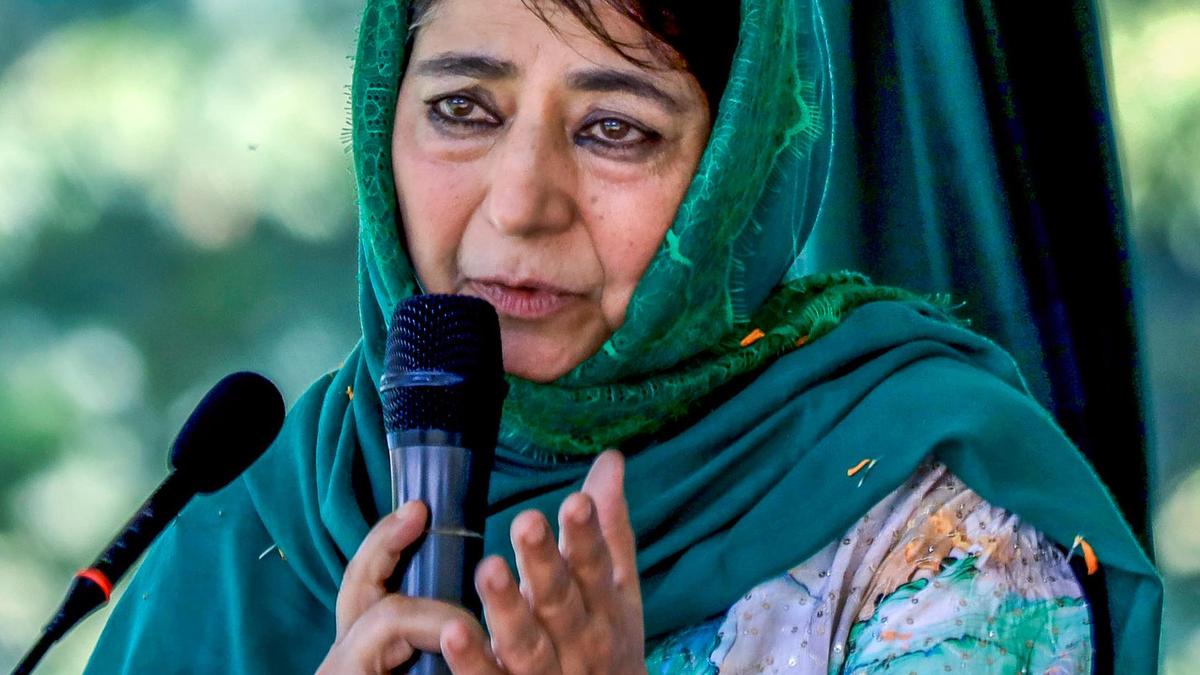
Says democratic society cannot flourish where people continue to live under an environment of constant apprehension
Analysis of PDP's Concerns Over Security Curbs in Jammu and Kashmir
The People's Democratic Party (PDP) has recently voiced strong opposition to the restrictive measures implemented by the administration in Jammu and Kashmir, particularly focusing on the curbs surrounding the observance of "Martyrs' Day" on July 13. The party asserts that the region is currently gripped by an "atmosphere of fear," which they argue is fundamentally incompatible with the functioning of a healthy democratic society. This statement highlights the ongoing tension between local political entities and the security apparatus in the Union Territory, signaling a deep-seated disagreement over the balance between public order and civil liberties.
The Historical Significance of July 13
To understand the gravity of the PDP's concerns, one must look at the historical significance of July 13. In Jammu and Kashmir, this date commemorates the 1931 events where several people were killed during protests against the Dogra rule. For decades, this day has served as a symbol of resistance and a pivotal moment in the region's political consciousness. When the administration imposes strict curbs on such commemorations, it is often perceived by local political parties not just as a security measure, but as an attempt to suppress historical memory and stifle the political expression of the local population.
Democratic Implications and the "Atmosphere of Fear"
The PDP's argument centers on the premise that a democratic society cannot flourish under constant apprehension. By describing the environment as one of "constant apprehension," the party is pointing toward a systemic issue where the fear of detention or harassment may deter citizens from exercising their basic rights of assembly and speech. From a political perspective, the sustainability of peace in a conflict-prone region depends heavily on the perceived legitimacy of the administration; when security measures are seen as overly punitive, it can alienate the populace and deepen the trust deficit between the state and its citizens.
The Tension Between Security and Civil Liberties
The administration's imposition of curbs is typically justified through the lens of maintaining law and order and preventing the escalation of violence. In a region as volatile as J&K, the state often argues that public gatherings on sensitive dates can be exploited by anti-social elements to incite unrest. However, the PDP's critique suggests that the "blanket" nature of these curbs ignores the distinction between peaceful political commemoration and violent agitation. This creates a paradox where the pursuit of stability via restriction may actually undermine long-term stability by removing legitimate political outlets for grievance.
Broader Context of Governance in J&K
This friction is part of a broader trend in Jammu and Kashmir following the reorganization of the state into a Union Territory. The shift in governance has led to increased security oversight, which political parties like the PDP argue has come at the cost of civil liberties. The insistence on "normalcy" by the government often clashes with the "ground reality" described by political leaders who claim that the fear of the state remains a primary driver of public behavior. The PDP's statement is a strategic reminder that true normalcy cannot be measured solely by the absence of street violence, but by the presence of free and open political discourse.
Future Trends and Political Outlook
Looking forward, the continued imposition of such curbs is likely to keep the political temperature high in the region. As J&K navigates its current administrative phase and moves toward potential electoral processes, the debate over the "atmosphere of fear" will likely intensify. If the administration continues to prioritize security restrictions over political expressions of memory, it may find it increasingly difficult to engage the local population in a meaningful democratic dialogue. The resolution of this tension will require a calibrated approach that balances the genuine needs of security with the fundamental right to peaceful assembly.
Conclusion
In summary, the PDP's expression of concern over the July 13 Martyrs' Day curbs serves as a critical commentary on the current state of civil liberties in Jammu and Kashmir. By framing the issue as a struggle between "fear" and "democracy," the party is challenging the administration to reconsider its approach to public order. Ultimately, the ability of a society to remember its past and express its grievances without fear is a hallmark of a functioning democracy, and the current impasse in J&K underscores the complex challenge of reconciling security with liberty.
Verification Required?