Physicist does the math on Star Trek’s “Picard maneuver”
Source Entity
Matt von Hippel
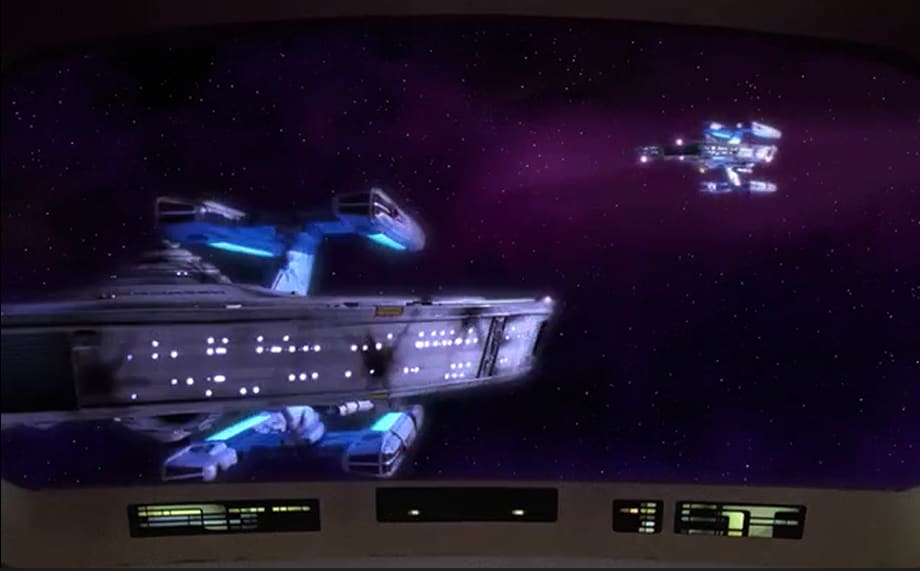
Physicist Níckolas de Aguiar Alves analyzed the 'Picard maneuver' from Star Trek: The Next Generation using Einstein's theory of relativity. His findings suggest the tactic is scientifically more potent than the show's writers originally intended.
Scientific Validation of Science Fiction
Science fiction has long served as a sandbox for theoretical physics, but rarely does the intersection of pop culture and academic rigor produce such compelling insights. Níckolas de Aguiar Alves, a physicist at the Federal University of ABC in Brazil, has revisited the iconic "Picard maneuver" from the first season of Star Trek: The Next Generation. By applying the principles of special relativity to the tactical move depicted in the episode "The Battle," Alves has bridged the gap between narrative convenience and astrophysical reality.
The Mechanics of the Maneuver
In the episode, Jean-Luc Picard executes a tactical deception that involves a sudden burst of warp speed to confuse an opponent's sensors. While the show utilized this as a plot device to resolve a conflict with a Ferengi vessel, Alves observed that the maneuver aligns closely with the relativistic effects that occur when an object approaches the speed of light. The "subtlety" he identified suggests that the maneuver is not merely a clever trick of navigation, but a demonstration of how light and perception are manipulated at extreme velocities.
Rethinking Relativity in Media
Alves’s research highlights a fascinating phenomenon: the writers of Star Trek often stumbled into scientific accuracy without intending to. By analyzing the maneuver through the lens of a master’s student in physics, Alves discovered that the maneuver is actually more effective than the show’s original writers realized. This suggests that the internal logic of the Star Trek universe may occasionally hold up to rigorous examination, providing a unique pedagogical tool for explaining the theory of relativity to students.
Theoretical Implications and Pedagogical Value
Beyond the screen, this analysis serves as an excellent case study for understanding the lesser-known features of Einstein’s theory of relativity. When objects move at significant fractions of the speed of light, the way information—specifically light—reaches an observer is distorted. Alves’s work demonstrates that the "Picard maneuver" effectively exploits these distortions, creating a tactical advantage that is grounded in the fundamental laws of our universe.
Conclusion: The Intersection of Art and Physics
Ultimately, the re-evaluation of the Picard maneuver by Níckolas de Aguiar Alves proves that science fiction can act as a catalyst for genuine scientific inquiry. What was once considered a simple plot device in a television series has been transformed into a legitimate subject of study. This analysis not only honors the legacy of Star Trek but also reinforces the idea that the universe, even in fiction, is governed by immutable physical laws that continue to surprise us.