Plan mode is dead
Source Entity
Hacker News
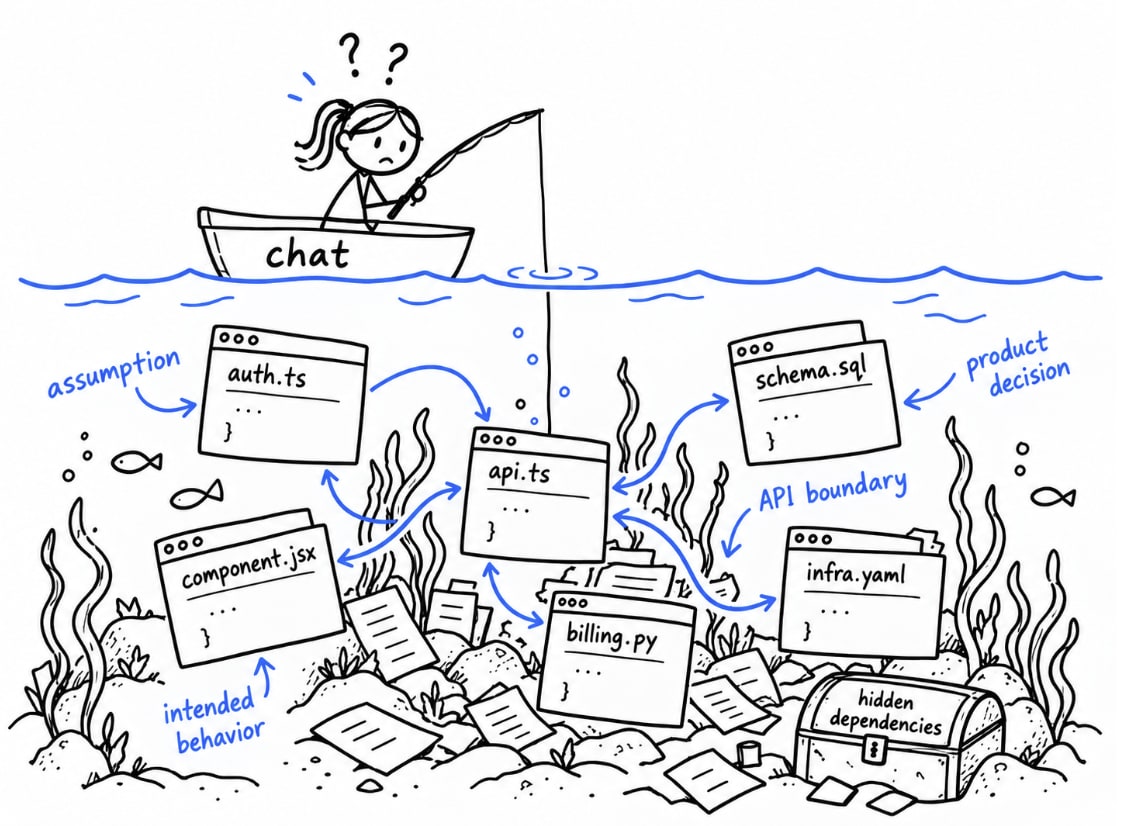
A developer reflects on the failure of 'plan-based' AI coding interfaces, arguing that evolving model capabilities have rendered explicit planning steps unnecessary. The shift suggests a move toward more fluid, agentic workflows in software development.
The Decline of Plan-Based AI Workflows
Earlier this year, a prevailing sentiment among software architects was that the future of AI-assisted development rested on the efficacy of 'plan modes.' The underlying hypothesis was that as AI models increased the volume and velocity of code generation, the primary bottleneck would shift from writing code to effectively structuring and orchestrating it. This conviction led to the development of Nuanced, a desktop coding application specifically engineered to center the development experience around an explicit planning phase.
The Failure of the Planning Paradigm
Despite the initial promise of a structured development environment, the practical application of Nuanced revealed a fundamental disconnect between developer intent and AI utility. The creator observed that while planning was intended to serve as a bridge between human design and machine execution, it ultimately became a friction point rather than an accelerant. The failure of this specific approach serves as a broader case study for the current evolution of AI-integrated development environments (IDEs).
Why Plan Modes Are Becoming Obsolete
Historically, plan modes functioned in two distinct capacities: providing precise, actionable instructions for an agent, and maintaining a high-level mental map for the human developer. As LLMs continue to improve in reasoning and context retention, the first requirement—the need for hyper-precise, pre-defined instructions—is rapidly eroding. Modern models are increasingly capable of interpreting intent and managing complex codebases without requiring a rigid, step-by-step roadmap provided by the user.
The Shift in Human-AI Collaboration
While the utility of the 'instructional' component of planning is fading, the second aspect—human comprehension—remains a complex challenge. The developer notes that the traditional planning interface, which was designed to help humans track what they are building, is no longer the most effective way to achieve that understanding. In an era where code is generated at unprecedented speeds, the static nature of a 'plan' often fails to keep pace with the fluid, iterative nature of AI-generated software.
Future Trends in Software Development
As we move past the era of explicit plan modes, we can expect a shift toward more dynamic, agentic workflows. Instead of front-loading the development cycle with detailed plans, the focus will likely pivot to real-time observability and conversational refinement. Future tools will likely prioritize seamless interaction and rapid feedback loops over the rigid, pre-planned architectures that defined the early days of generative coding tools.
Concluding Thoughts
The pivot away from plan-based interfaces marks a significant maturation in the AI coding ecosystem. As models become more autonomous and capable of handling ambiguity, the developer's role is shifting from that of an architect of rigid plans to a curator of emergent outputs. While the original vision for Nuanced did not manifest as intended, its failure provides a critical lesson: the future of AI-assisted software is not in forcing machines to follow human plans, but in creating systems that can keep up with the machine's own capacity for iteration.