Norway to Australia and now New Zealand, questions chase PM Modi's no-press-conference policy
Source Entity
Latest News: Today's Latest News Headlines from India & World | Hindustan Times | Hindustan Times
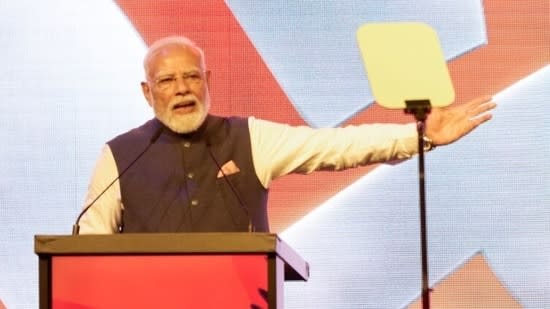
New Zealand exchange came day after remark by Australian TV reporter about Modi's media policy went viral; two months after big row in Oslo, Norway
The Diplomacy of Silence: Analyzing PM Modi's Global Media Strategy
Prime Minister Narendra Modi's recent diplomatic engagements in Norway, Australia, and New Zealand have been overshadowed by a recurring point of contention: his refusal to hold traditional press conferences. This policy, which avoids direct, unscripted questioning from journalists, has transitioned from a domestic point of debate in India to a visible friction point during international state visits. The sequence of events—beginning with a significant confrontation in Oslo, Norway, followed by a viral exchange with an Australian reporter, and culminating in similar questioning in New Zealand—suggests a growing international awareness and critique of the Indian administration's communication strategy.
A Pattern of Avoidance: From Oslo to Wellington
The timeline of these events reveals a compounding effect. The "big row" in Oslo served as a catalyst, highlighting the disconnect between the expectations of Western democratic media and the Prime Minister's controlled communication style. When the narrative shifted to Australia, the tension escalated as a reporter's viral remark brought the issue into the public eye, transforming a procedural preference into a talking point about transparency. By the time the delegation reached New Zealand, the "no-press-conference" policy was no longer a footnote but a primary question being chased by the media. This pattern indicates that the international press is increasingly unwilling to accept the absence of a Q&A session as a standard diplomatic protocol.
The Democratic Tension and Media Accessibility
At the heart of this controversy is the fundamental role of the press in a democracy. Traditionally, state visits include a joint press conference where leaders are held accountable for their policies and the outcomes of their meetings. By bypassing this, the Indian government maintains absolute control over the narrative, utilizing curated statements and social media updates rather than spontaneous dialogue. While this strategy minimizes the risk of "gaffes" or uncomfortable admissions, it creates a perception of opacity. In the context of Norway and New Zealand—countries with high indices of press freedom—this approach clashes sharply with local journalistic norms, leading to the visible friction reported.
Strategic Communication vs. Journalistic Transparency
From a strategic standpoint, the administration likely views the avoidance of press conferences as a way to ensure that the focus remains on bilateral achievements and economic partnerships rather than political controversies. However, the "viral" nature of the Australian reporter's comments suggests that the attempt to control the narrative may be backfiring. In the digital age, the absence of an answer often becomes the story itself. The irony is that by avoiding the press to prevent negative headlines, the government has created a recurring negative theme that follows the Prime Minister across borders, potentially coloring the perception of India's democratic health on the world stage.
Future Implications for Indian Diplomacy
Looking ahead, this trend suggests that India may face increasing pressure to modernize its diplomatic communication if it wishes to deepen its ties with Western liberal democracies. As India seeks to position itself as a leading global power and a "mother of democracy," the discrepancy between its rhetoric and its media engagement policies will likely be scrutinized. We can predict that future visits to G7 or OECD nations will see more aggressive questioning from the press regarding transparency. The government may eventually be forced to adopt a hybrid model—such as moderated town halls or limited Q&A sessions—to mitigate this diplomatic friction.
Conclusion
The friction witnessed in Norway, Australia, and New Zealand is more than a series of awkward media encounters; it is a clash of political cultures. While PM Modi's communication style has been effective domestically, its application in an international setting is creating a narrative of avoidance. As the global community continues to prioritize transparency and accountability, the "no-press-conference" policy remains a significant liability that threatens to distract from the substantive goals of India's foreign policy.
Verification Required?