The tiniest MMO
Source Entity
Andrew Webster
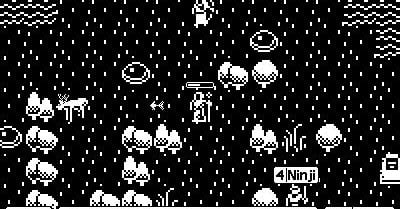
PointlessQuest, a new indie MMO, has garnered attention for its remarkably small scale, peaking at just 15 concurrent players on launch day, serving as a satirical or modest contrast to industry giants like World of Warcraft.
The Paradox of the "Massive" in PointlessQuest
In the landscape of modern gaming, the term "MMO" (Massively Multiplayer Online) typically evokes images of sprawling digital metropolises populated by millions of users. From the legendary heights of World of Warcraft, which saw peaks of 12 million subscribers, to contemporary giants like Final Fantasy XIV, the industry standard for "massive" is measured in the millions. However, the launch of PointlessQuest introduces a refreshing, albeit ironic, subversion of this expectation. By peaking at a mere 15 concurrent players on its launch day, PointlessQuest challenges the very definition of the genre, pivoting from a global phenomenon to a hyper-intimate digital gathering.
Redefining Scale in a Saturated Market
The stark contrast between 12 million players and 15 players highlights the extreme polarization of the current gaming market. While AAA studios invest hundreds of millions of dollars into infrastructure capable of supporting massive concurrency, PointlessQuest represents the "indie" extreme. This disparity underscores a growing trend where small-scale developers create "boutique" experiences. Rather than competing for the global spotlight, these projects often serve as passion pieces, technical experiments, or satirical commentaries on the bloat of modern gaming. The naming of the game itself—PointlessQuest—suggests a self-aware embrace of its own modest ambitions.
The Intimacy of Small-Scale Digital Communities
From a sociological perspective, a concurrent player base of 15 creates a fundamentally different social dynamic than a population of millions. In a massive MMO, players are often anonymous cogs in a giant machine, interacting with thousands of strangers. In a "tiniest MMO" like PointlessQuest, every single player becomes a known entity. This transforms the gameplay from a quest for power or prestige into a shared social experiment. The "massiveness" is replaced by a tight-knit community where the social bonds are likely deeper and more personal, as the survival and activity of the game world depend on every single individual present.
Technical Barriers and the Indie Struggle
Launching any MMO, regardless of size, is a significant technical undertaking. The architecture required to synchronize state across multiple clients in real-time is notoriously complex. The fact that PointlessQuest exists and is functional, even with a handful of players, speaks to the democratization of game development tools. However, the low turnout also reflects the immense difficulty indie developers face in gaining visibility in an era of algorithmic discovery. For many small projects, the "launch day peak" is less about commercial success and more about the validation of a working build among a small circle of enthusiasts.
Future Trends: The Rise of the "Micro-MMO"
Looking forward, the emergence of projects like PointlessQuest may signal a shift toward "Micro-MMOs" or "Social Sandboxes." As players experience burnout from the "infinite grind" associated with massive corporate titles, there is a burgeoning interest in smaller, more manageable digital spaces. We may see a trend where developers intentionally cap player counts to maintain a specific atmosphere or social cohesion, prioritizing quality of interaction over quantity of users. PointlessQuest, whether by design or circumstance, stands as a beacon for this minimalist approach to online connectivity.
Conclusion
While PointlessQuest may lack the commercial footprint of World of Warcraft, its value lies in its subversion of industry norms. By stripping away the "massive" from the MMO, it highlights the charm of small-scale digital interactions and the bravery of indie development. In a world obsessed with scale and growth, there is something profoundly human about a game that finds its peak in a group of just 15 people exploring a digital realm together.