To protect pomegranate yield, farmers use CCTV shield – solar powered, with night vision
Source Entity
Sushant Kulkarni
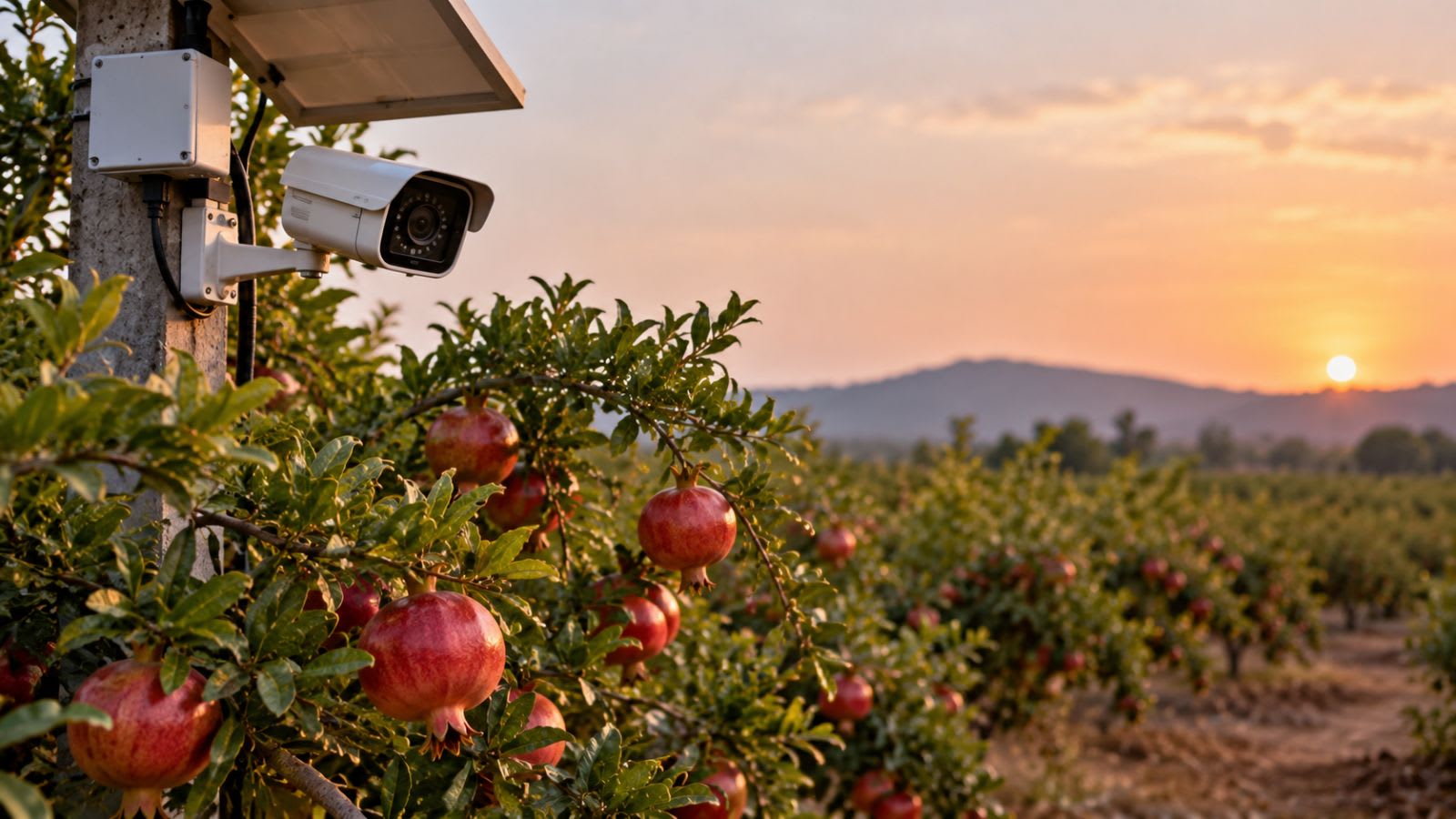
Pomegranate farmers in Maharashtra are deploying solar-powered night-vision CCTV systems to prevent massive crop theft during harvest season. This strategic move follows significant losses of the premium Bhagwa variety in previous years.
Securing the Harvest: The Rise of Farm Surveillance
The agricultural landscape in Maharashtra, specifically across the districts of Pune, Solapur, Nashik, and Ahilyanagar, has reached a critical turning point. Following a wave of organized thefts last year that saw tons of the premium Bhagwa variety of pomegranates stolen right before harvest, farmers have shifted toward proactive technological defense. The vulnerability of these orchards, which represent a significant financial investment, has necessitated a move from traditional manual guarding to modern, automated surveillance.
The Economic Stakes of the Bhagwa Variety
The Bhagwa pomegranate is highly prized for its quality, color, and market value, making it a target for illicit activities. When the fruit turns deep red and reaches maturity, it signals the culmination of months of intensive labor and financial input. The theft incidents reported last year caused devastating economic losses for farmers who had anticipated a high-yield season. By stealing the produce under the cover of darkness, perpetrators managed to bypass traditional security measures, leading to a loss of livelihood for many in the region.
Technological Adaptation: Solar and Night Vision
To counter these threats, farmers are increasingly adopting specialized CCTV infrastructure. The choice of solar-powered units is particularly strategic, as many orchards are located in remote areas where consistent access to the power grid may be unreliable or non-existent. Furthermore, the integration of night vision technology is essential, as the primary threat window occurs during the dark hours. These cameras provide a critical layer of deterrence, allowing farmers to monitor their fields during the vital weeks when the fruit is most valuable and susceptible to theft.
Shifts in Agricultural Security Trends
This trend highlights a broader transition in Indian agriculture, where farmers are integrating IoT and surveillance technology to protect their assets. Unlike year-round installations, these seasonal deployments are highly targeted to the harvest window, demonstrating a cost-effective approach to security. By focusing resources specifically on the weeks when the fruit is ripe and ready for the market, farmers are effectively mitigating risk without the prohibitive costs of full-time, year-long security systems.
Implications for Future Farming
As the agricultural sector continues to face challenges related to supply chain security, the adoption of surveillance technology is likely to become more standardized. The successful implementation of these solar-powered systems in Pune and its neighboring districts could serve as a model for other high-value crop growers across India. This development not only protects the immediate financial interests of the farmers but also stabilizes the market supply of premium produce by reducing the impact of criminal activity on overall output.
Conclusion
The proactive measures taken by pomegranate farmers in Maharashtra demonstrate a sophisticated response to localized security threats. By combining renewable energy solutions with advanced monitoring, these producers are safeguarding their harvest and ensuring that their months of hard work result in legitimate market success. This technological intervention marks a significant evolution in how rural communities manage risk and protect their economic future.